DIMO AI
Building the intelligence layer on top of connected vehicles.

Role
Product Strategy, UX Architecture, Systems Design, User Research, and Cross-Functional Alignment
Platforms
IOS, Android & Web
Timeline
Aug 2025 — Jan 2026
Category
Automotive, AI
In summer 2025, DIMO faced slowing hardware sales, team reductions, and limited distribution just as AI capabilities were accelerating. In partnership with the CEO, I helped shift the product from passive vehicle telemetry to proactive, AI driven ownership intelligence.
Rather than layering a chatbot onto existing screens, we repositioned AI as the organizing layer connecting live data, documents, and financial context into actionable guidance. Working without a PM or marketing function, I expanded into product architecture and growth strategy. Early testing showed strong resonance and clear advocacy intent, despite performance and scale constraints.
This project marked my transition from feature focused design to founder level product thinking.
Context & constraints
The business was heavily tied to hardware distribution and paid marketing. When marketing capacity disappeared, so did the main growth engine. At the same time, engineering resources were primarily allocated to mobile because that was where the team historically operated. We had no dedicated analytics bandwidth and no PM to formalize measurement. Decisions moved quickly, which required me to think more holistically about product direction, not just execution.
These constraints forced sharper prioritization. If AI was going to matter, it had to solve real ownership problems in a way users could immediately feel, not simply exist as a feature.
Problem space
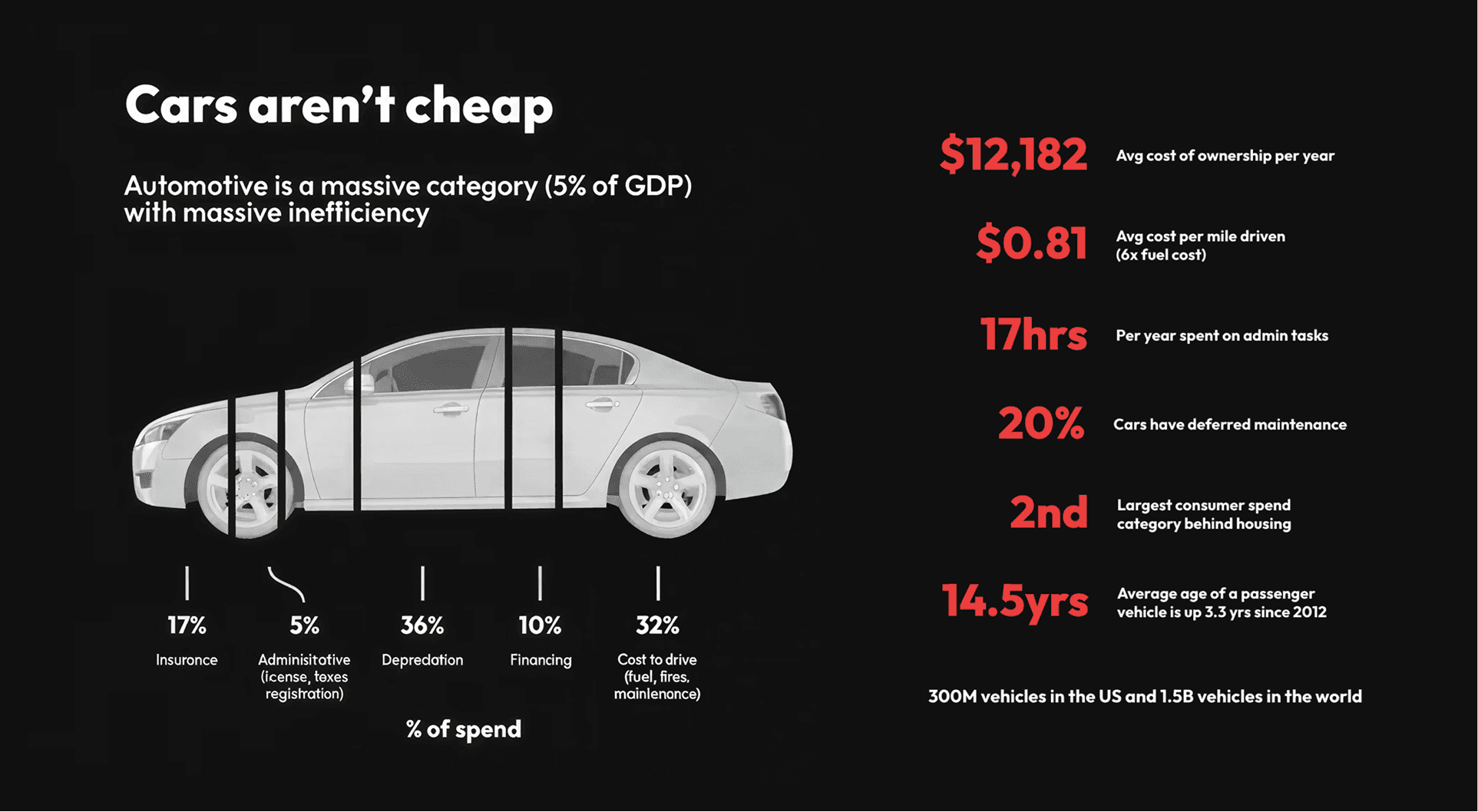
Automotive is one of the largest consumer spend categories, yet ownership remains fragmented and opaque. Cars are expensive to purchase, insure, maintain, and repair. Most drivers do not understand the tradeoffs, timing, or risks involved. Anxiety around being overcharged or missing critical maintenance is high.
This combination of high spend, high uncertainty, and high complexity makes automotive uniquely suited for AI decision support. The opportunity was not to answer questions about cars, but to reduce ownership friction at scale.
Vision
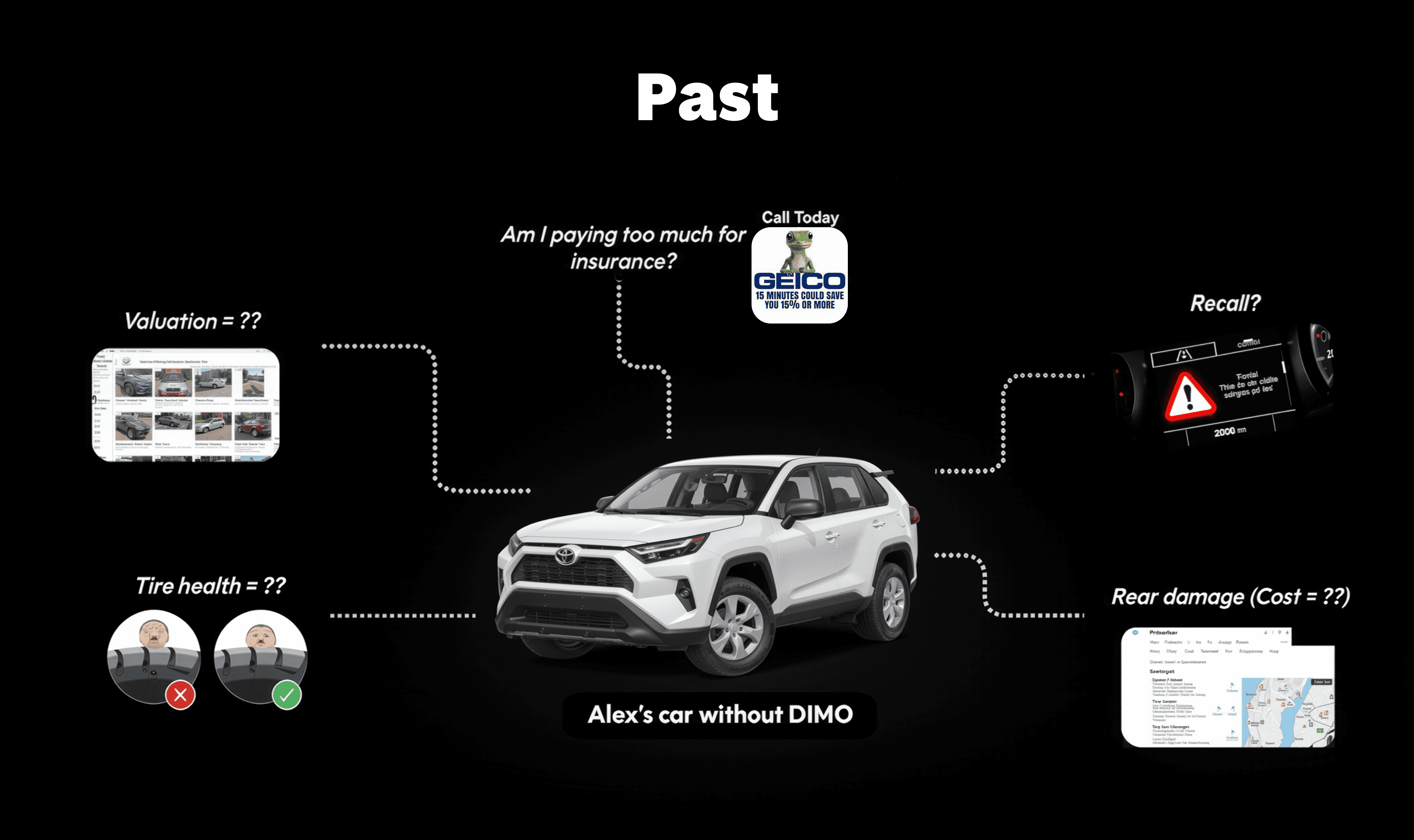
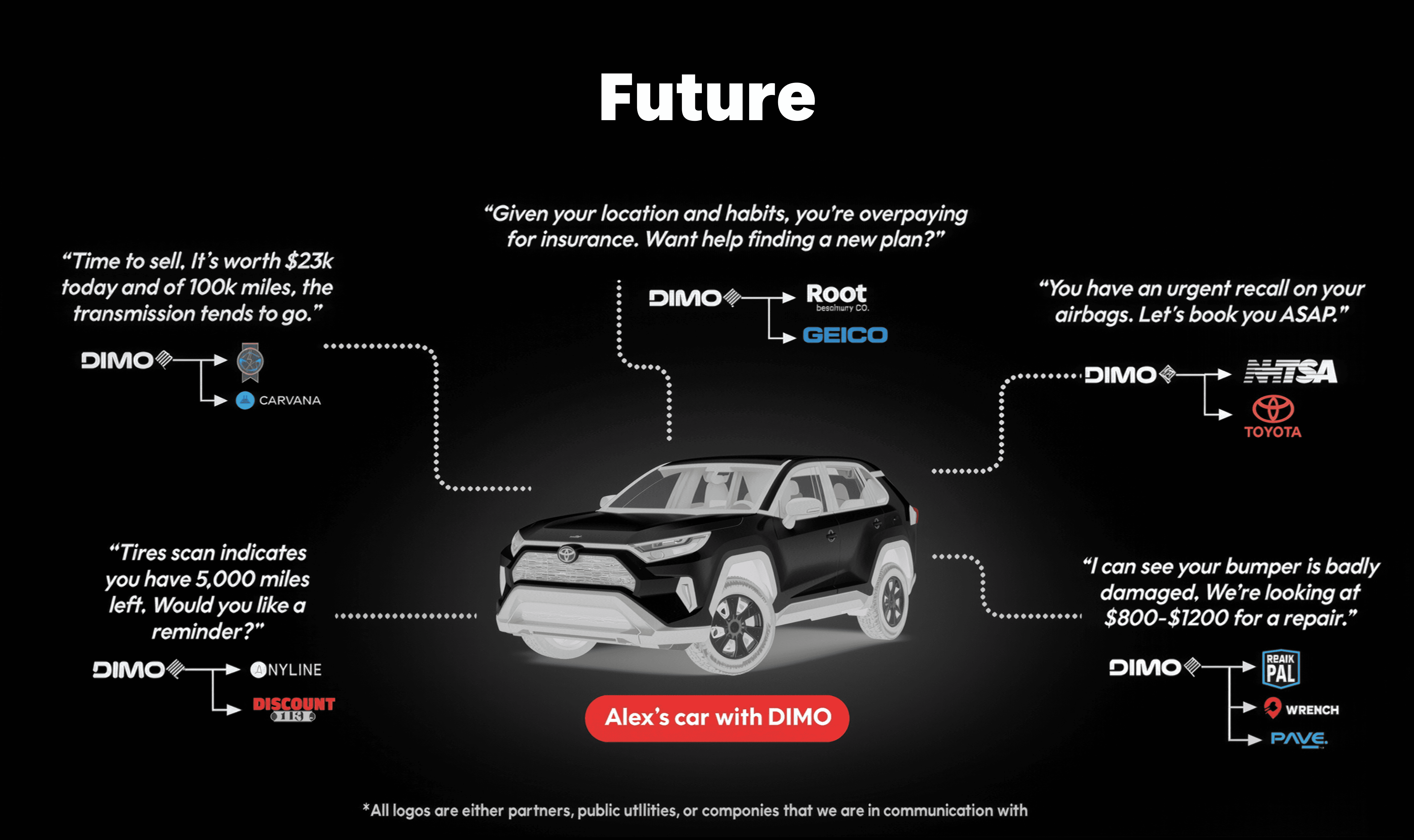
Ownership today is reactive and fragmented. Apps show status. Search engines answer questions. Drivers still connect the dots themselves. We believed DIMO could evolve into an ownership decision system. Instead of showing vehicle data, the product would guide actions. Instead of dashboards, it would manage outcomes.
How do we evolve from vehicle data platform to ownership decision system?
Data foundation
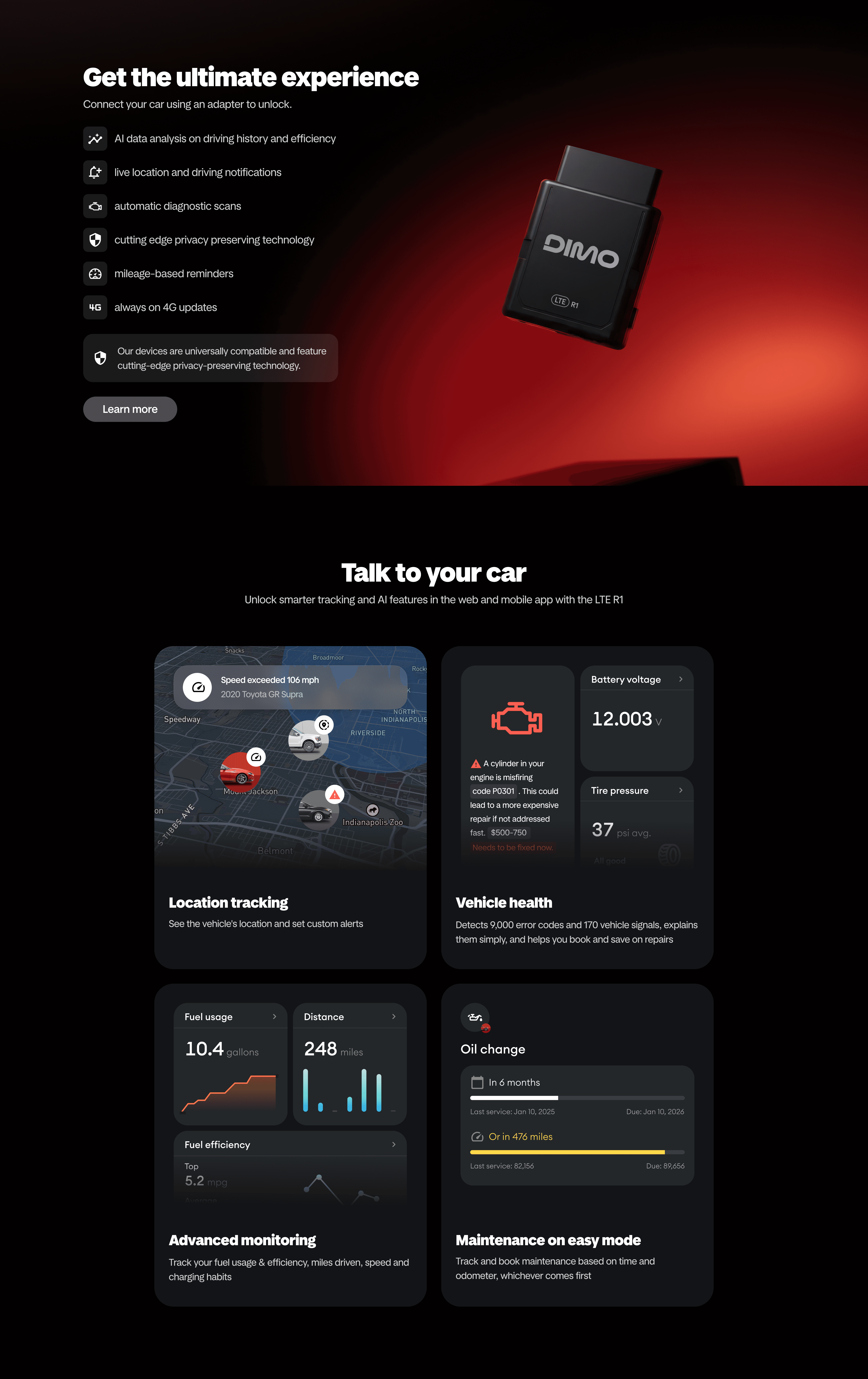
DIMO already owned the live vehicle layer. We collected real time signals such as error codes, odometer readings, tire pressure, and over 170 additional data points through hardware and OEM integrations. We also stored historical telemetry, which gave us memory over time.
This meant we were not starting from zero. We had live signals and longitudinal data. What we did not yet have was structured ownership context.

Experimenting within legacy mobile architecture
Capturing documents
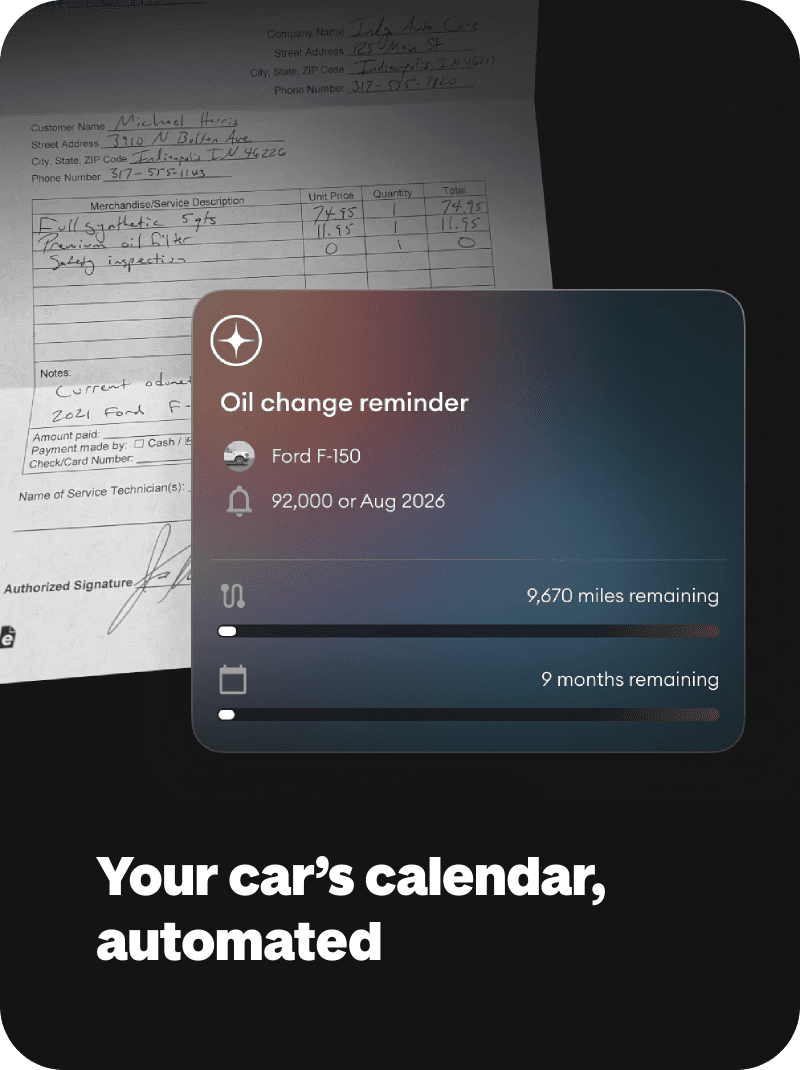
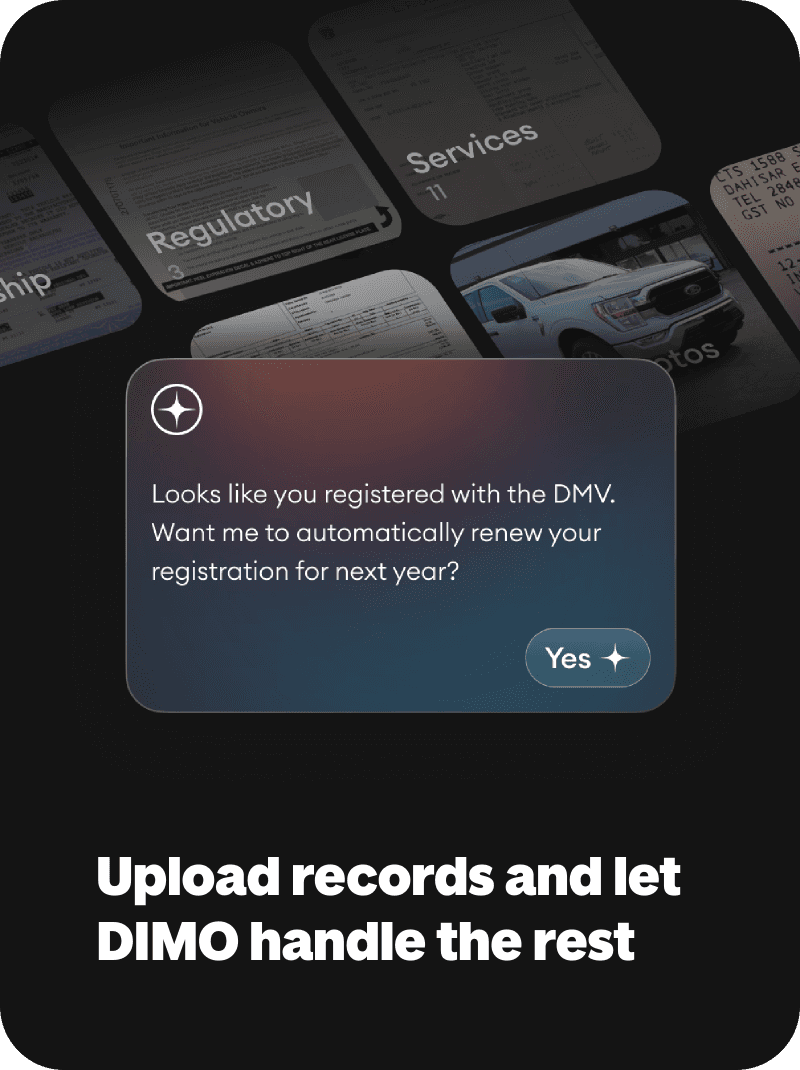
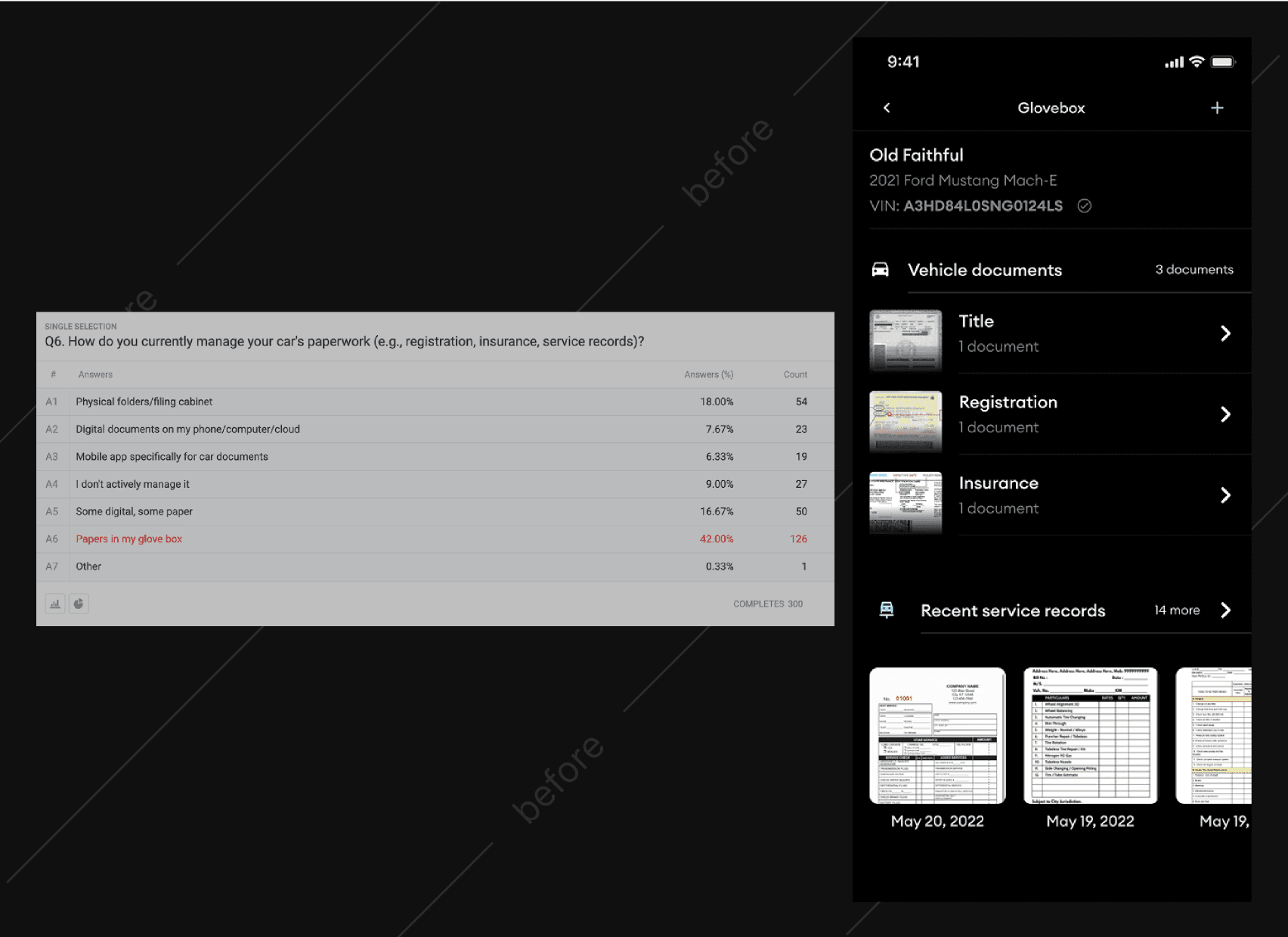
We began integrating AI into the existing mobile app and uncovered a structural opportunity around documents. 42 percent of surveyed users managed critical car paperwork as loose papers in their glovebox, creating friction and risk. They could not quickly answer questions about coverage or service history and were exposed to missed renewals or lost documents.
Inside DIMO, the Glovebox feature was the fourth most visited vehicle data page but functioned purely as storage. After a few uploads, the experience felt complete. There was no parsing, surfaced due dates, reminders, or intelligence. Discoverability was weak, buried at the bottom of the car page and separated by vehicle, forcing duplicate uploads for shared policies. The system stored documents but did not activate them.
This was a strategic gap. For AI to guide ownership decisions, it needed structured context. Service records, insurance policies, registrations, and receipts turned telemetry into ownership memory.
Architectural decisions
As we integrated documents into the system, we faced a structural decision. Should uploads live inside a conversational interface, or should they form a structured ownership hub? Chat interfaces are flexible but hide structure. Dedicated hubs are clearer but risk fragmentation.
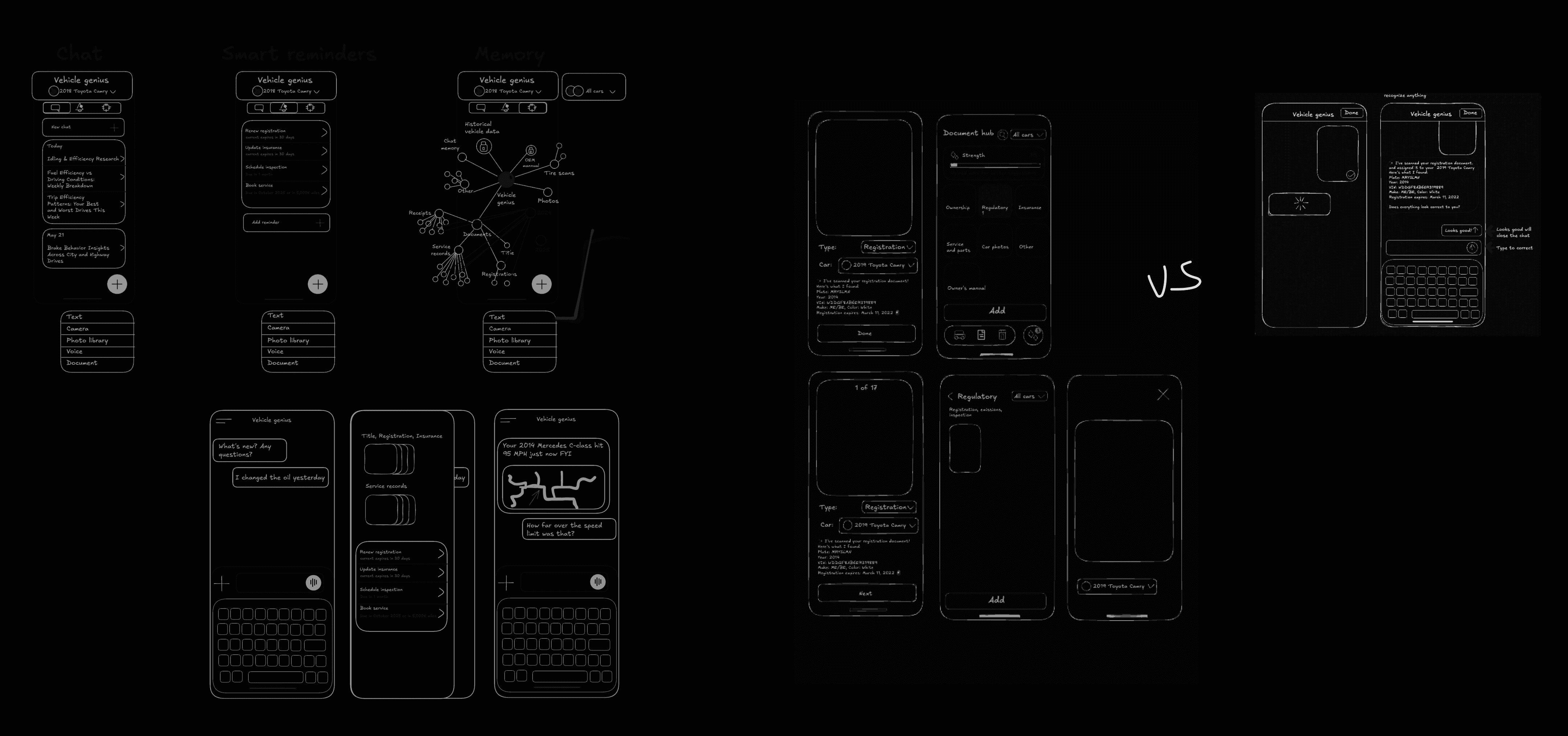
Capturing documents
After defining the architectural direction, I translated the ownership intelligence system into a coherent high fidelity layer across mobile. The goal was not visual polish alone, but clarity of system behavior.
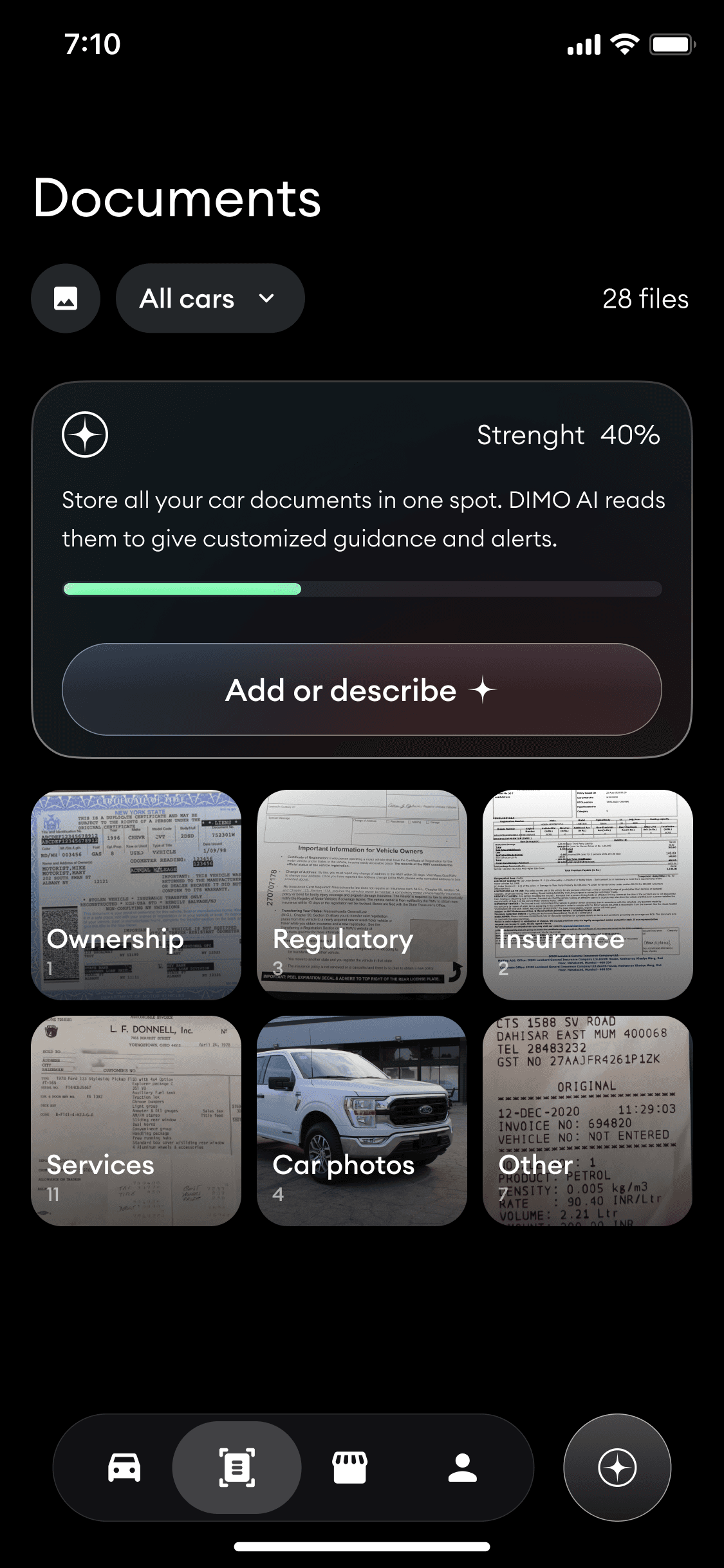
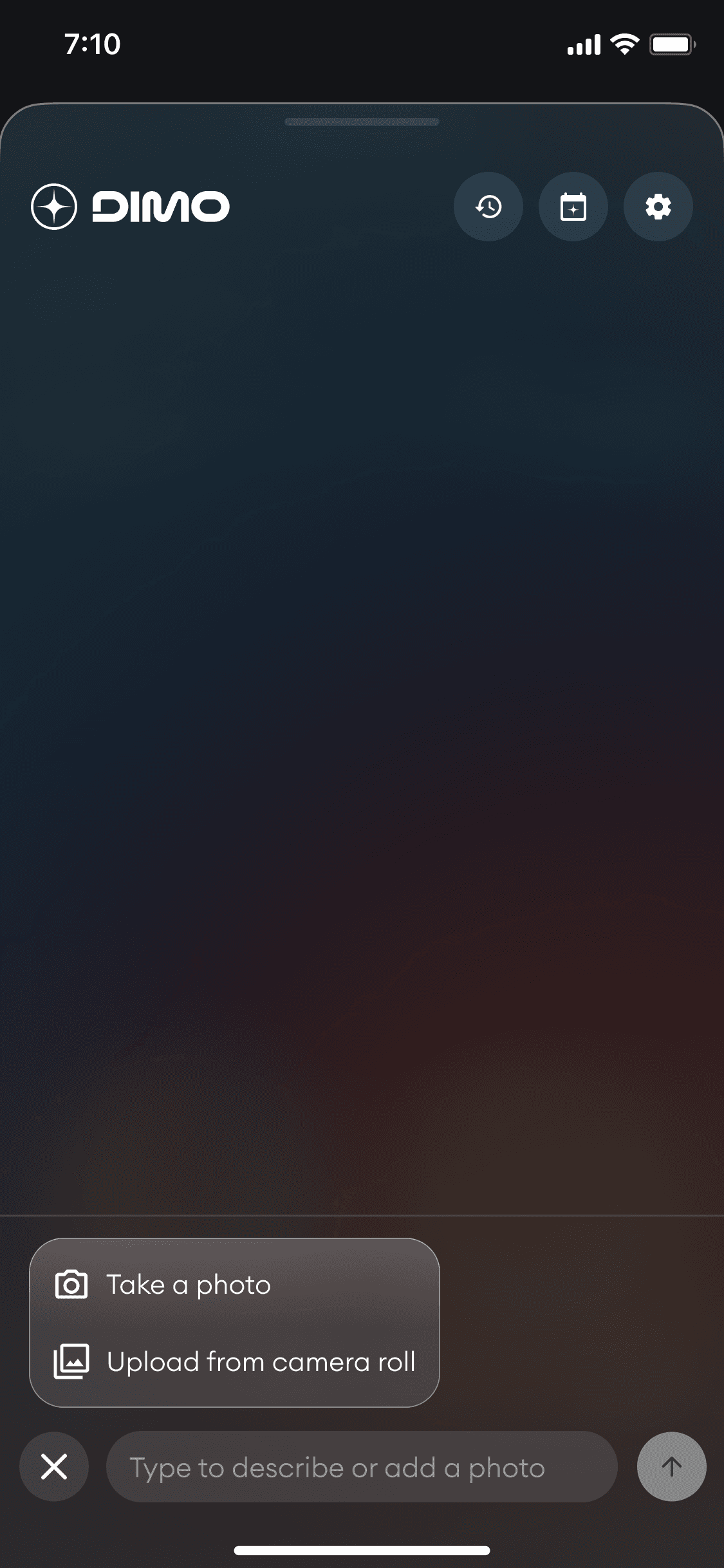
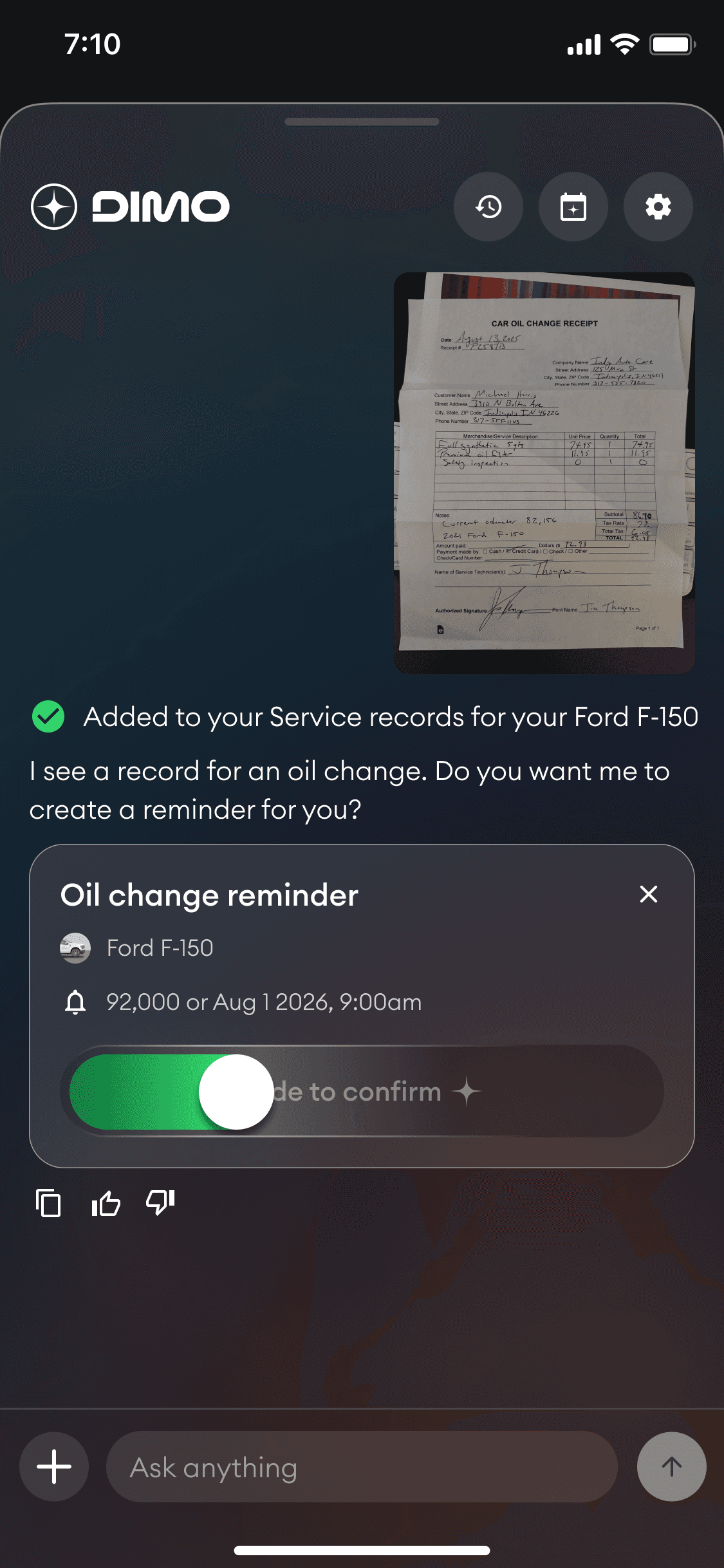
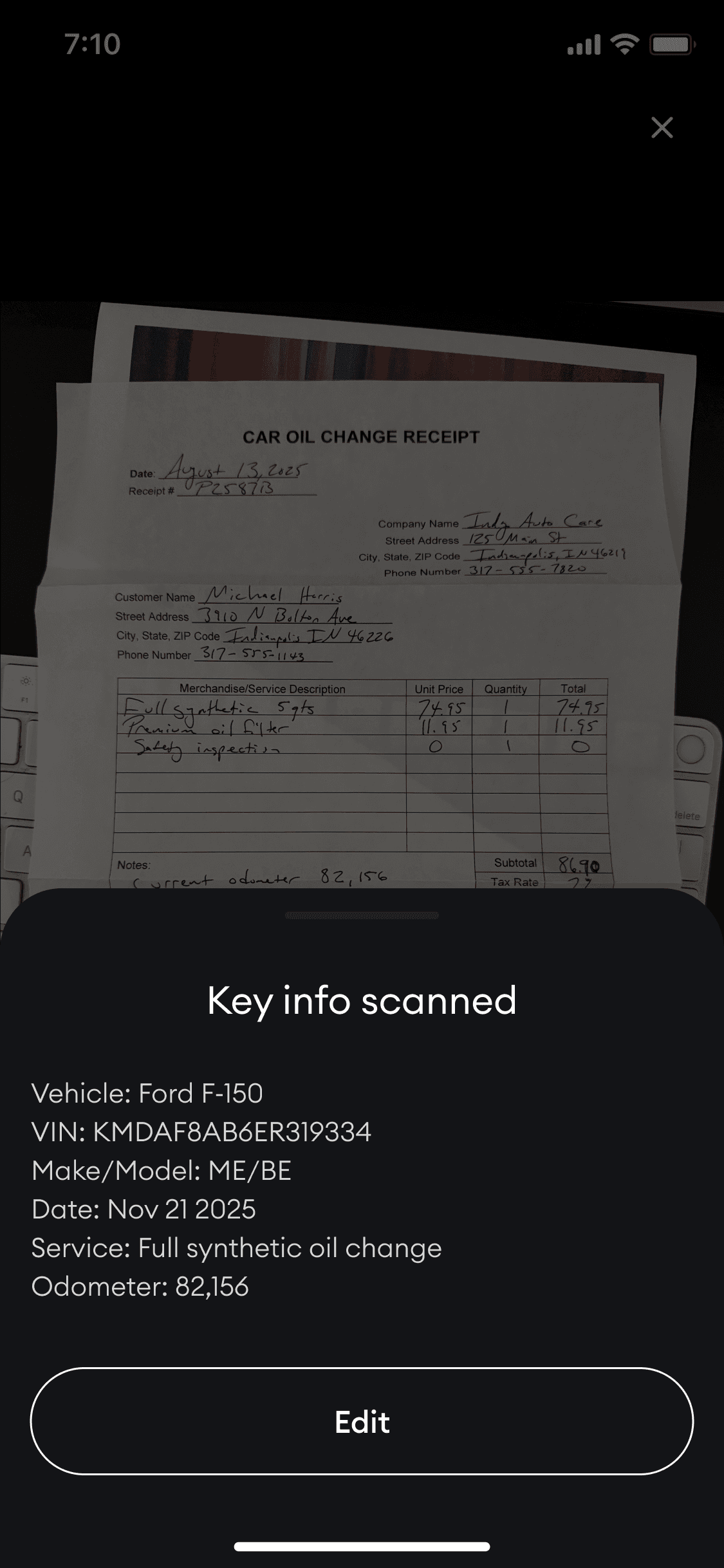
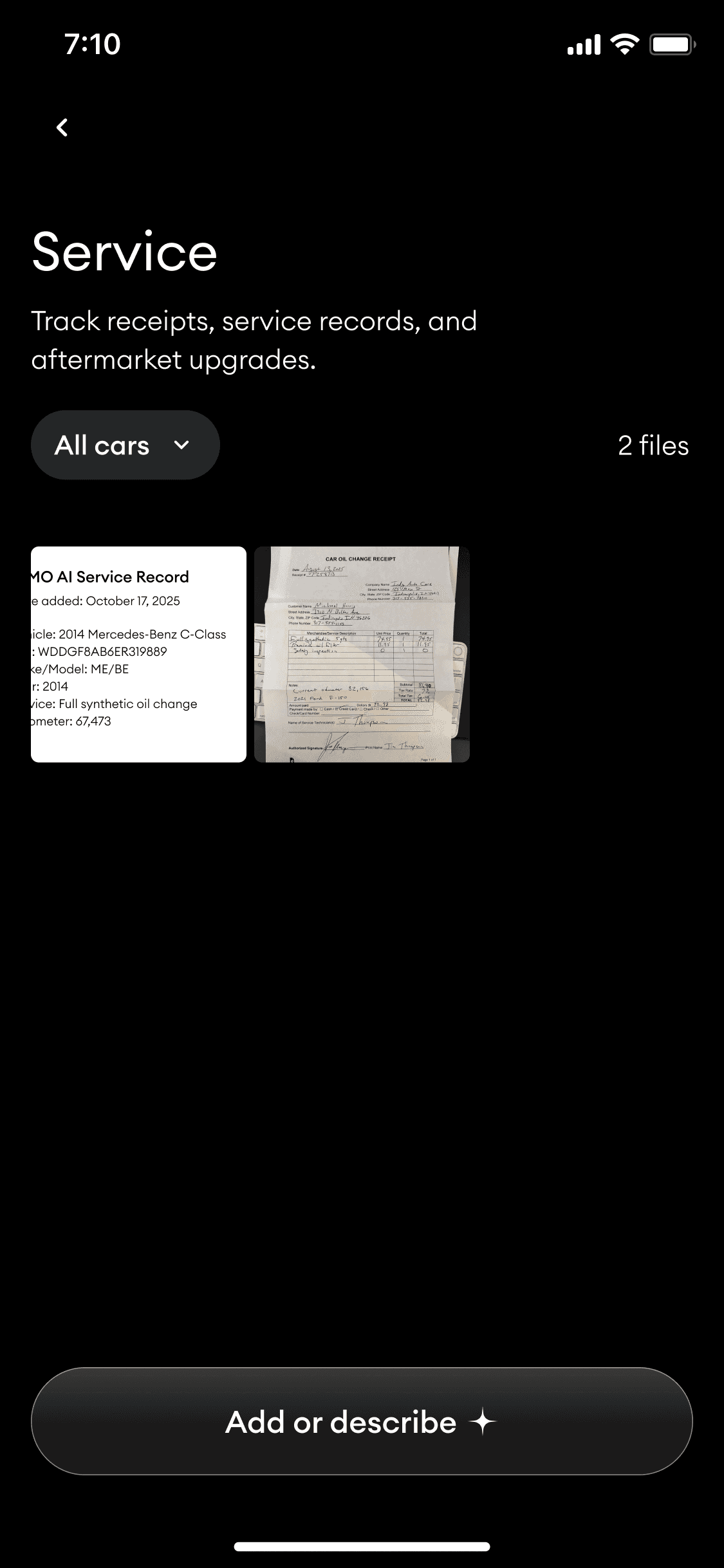
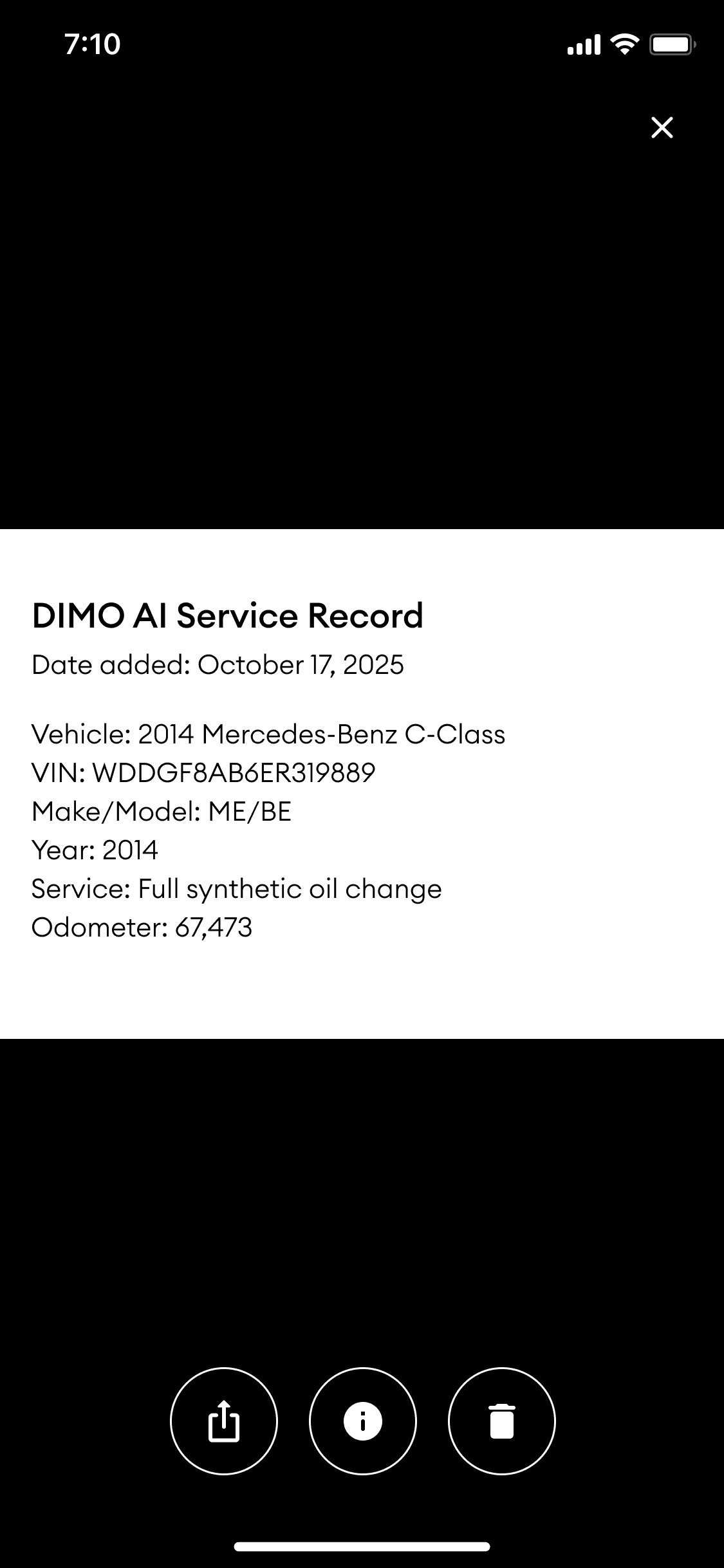
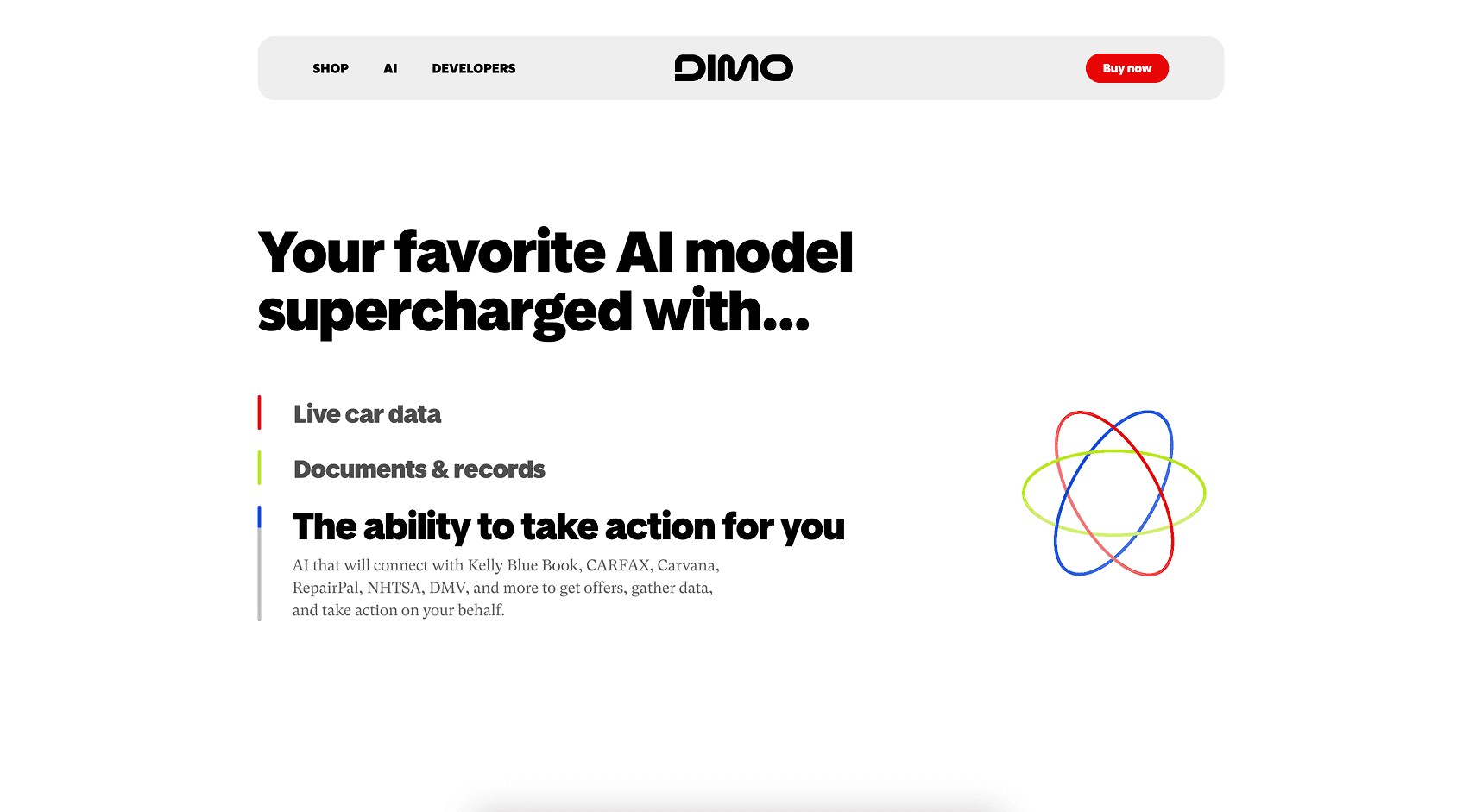
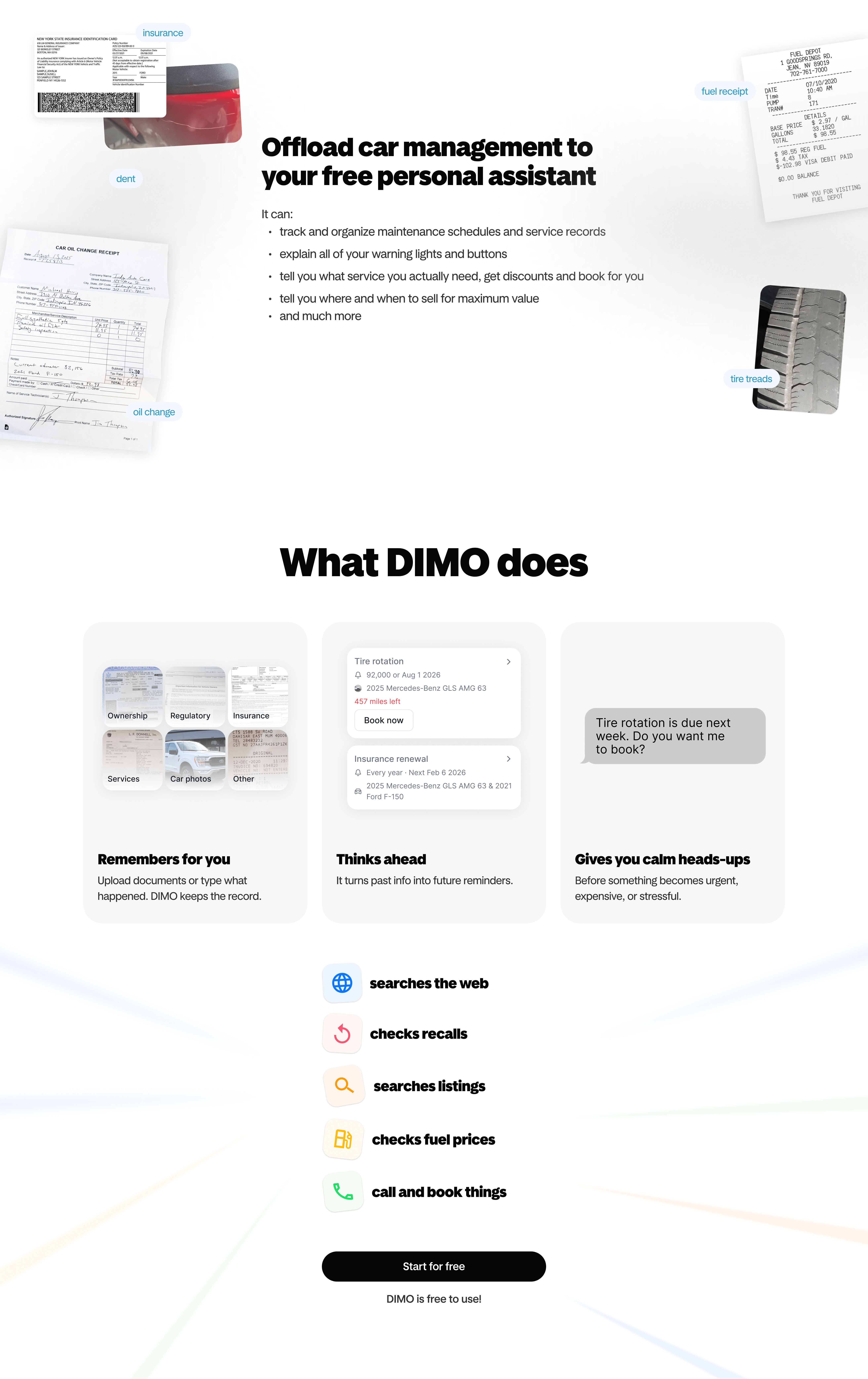
A subtle in product gradient system differentiated AI driven surfaces, while a more expressive extension powered the waitlist and marketing narrative. Color carried semantic meaning across live signals, document memory, and action layers, making AI feel structural rather than decorative. This system helped build early community and clarify positioning before deeper product restructuring. The full landing experience can be viewed at https://ai.dimo.co/.

Expanding AI across surfaces
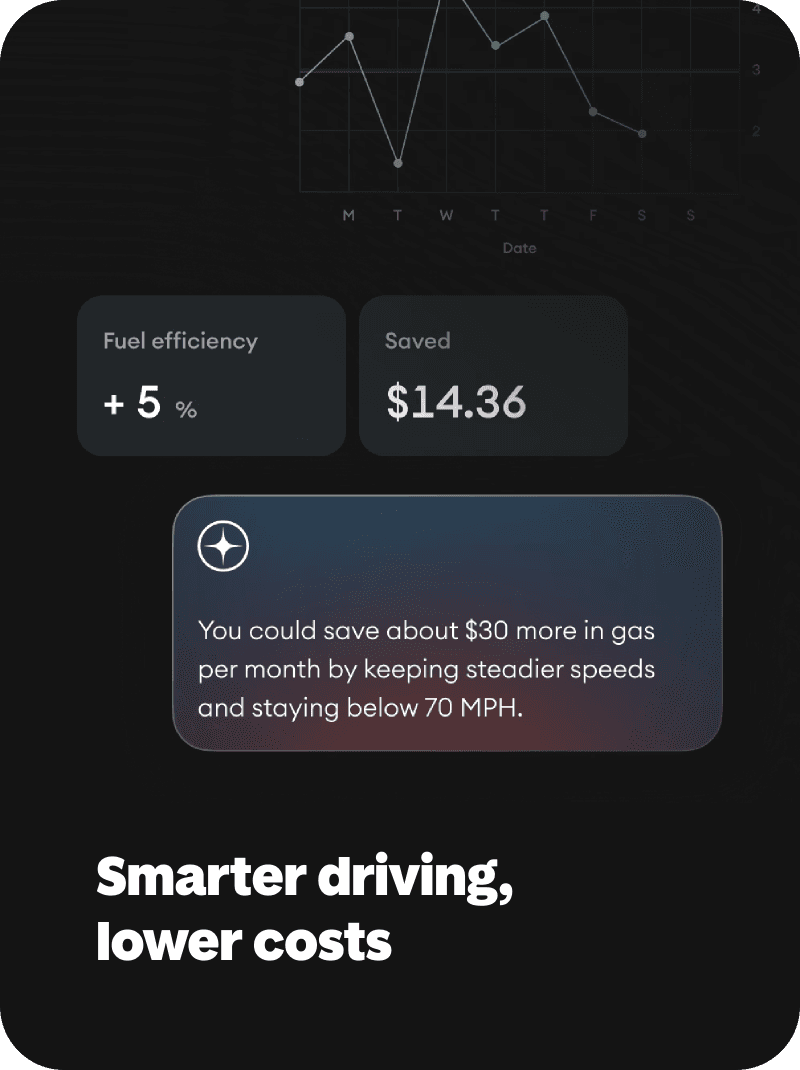
As documents and telemetry became structured, we began embedding AI insights directly inside existing widgets rather than isolating them in chat. Battery health, tire pressure, and vehicle diagnostics screens surfaced contextual guidance and next actions in place.
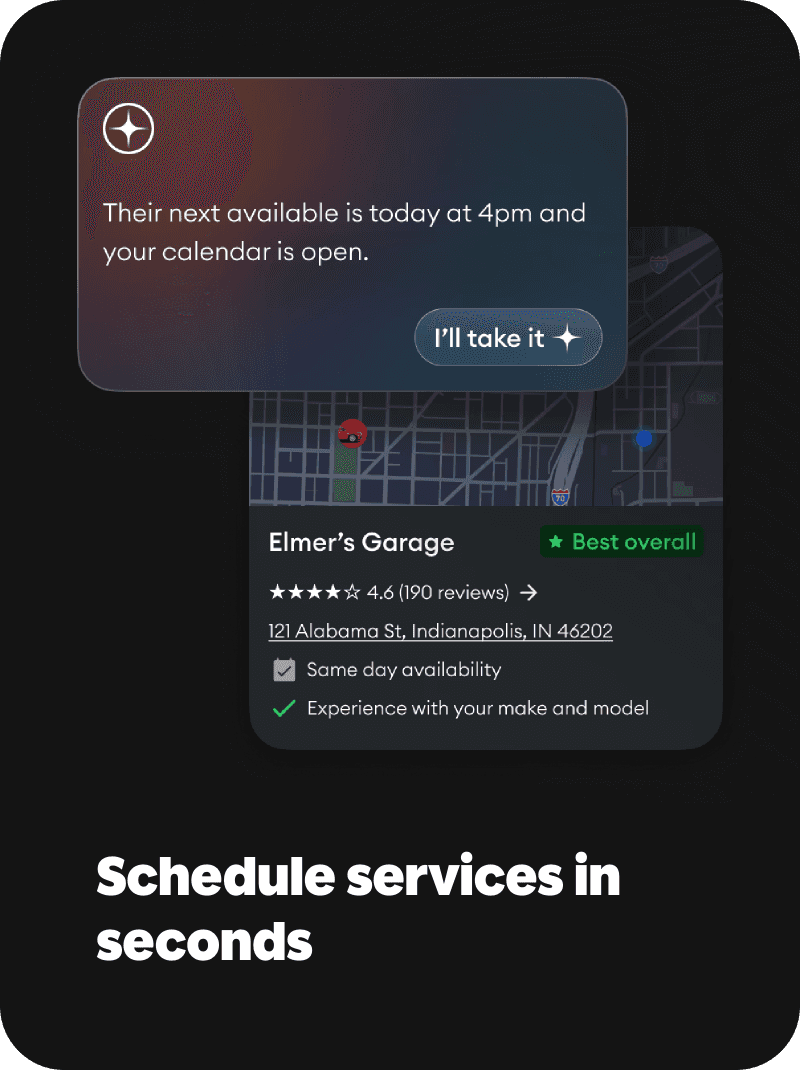
This approach turned passive data screens into action surfaces. On the tires page, AI could recommend replacement timing, estimate cost, and surface potential partner offers. The same pattern created clear integration paths with service providers, tire marketplaces, and repair networks.

AI UI and brand system
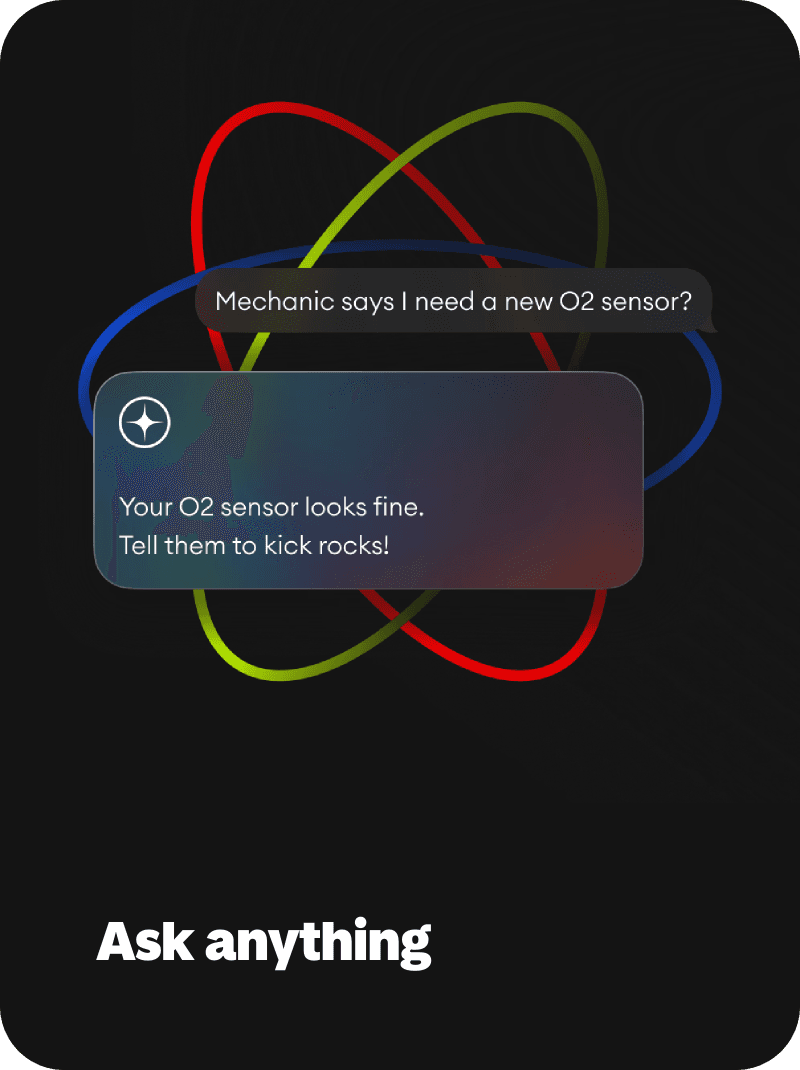
As AI became embedded into the mobile experience, it needed a distinct identity. I designed the AI chat interface and introduced a visual language that separated intelligence from raw telemetry without disrupting the core product.
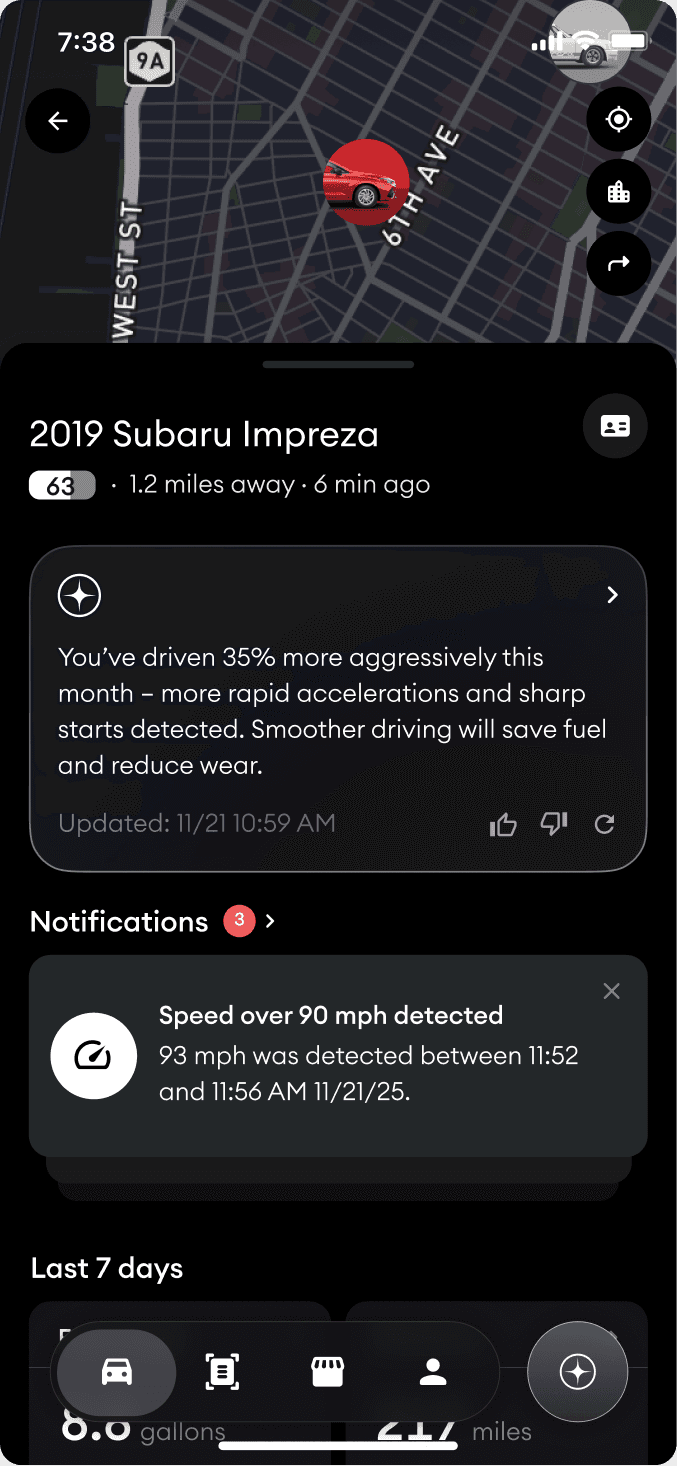
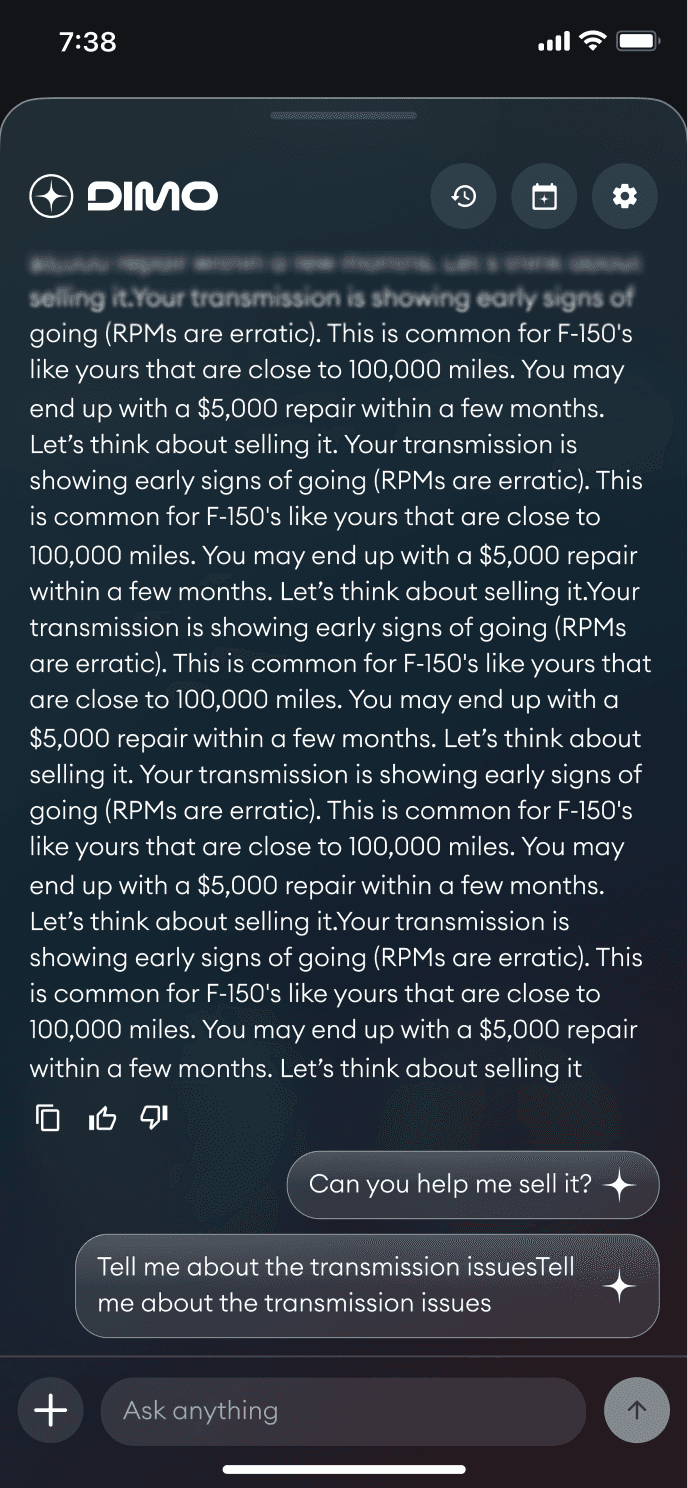
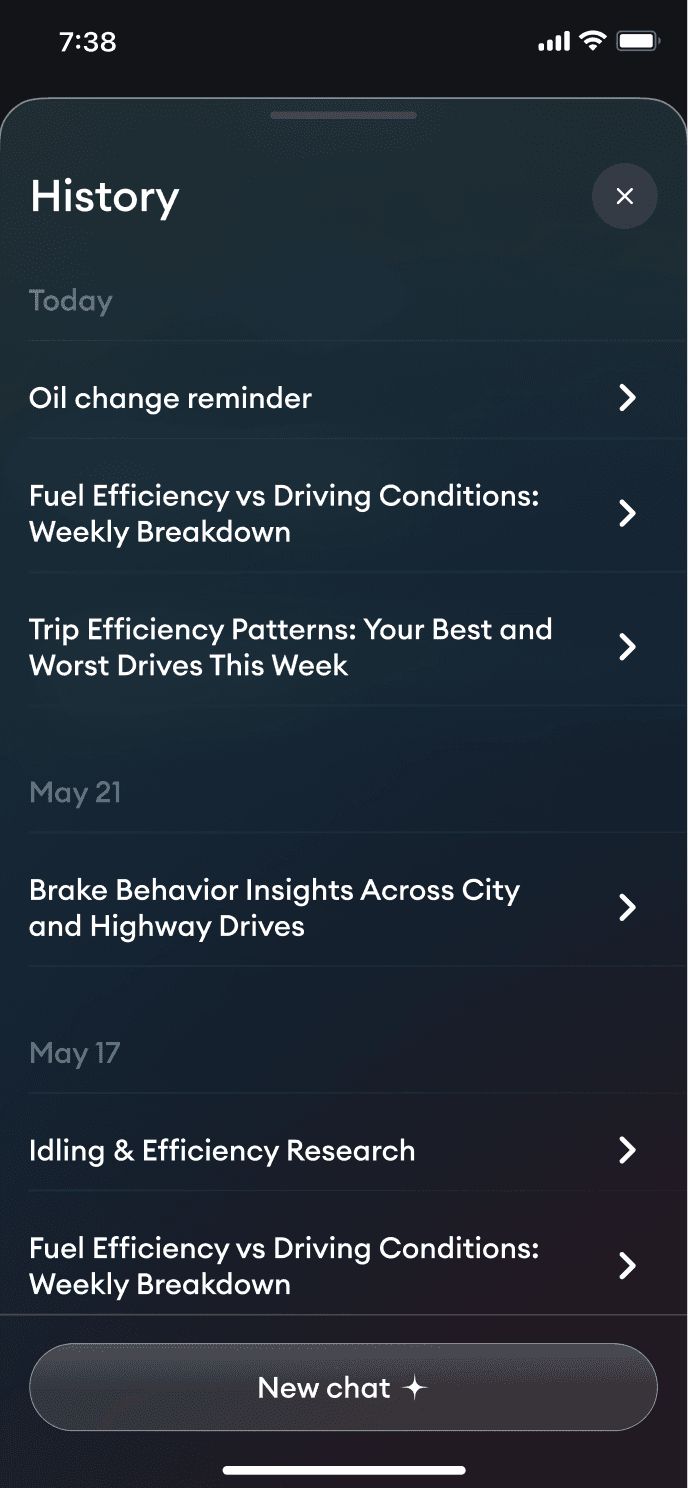
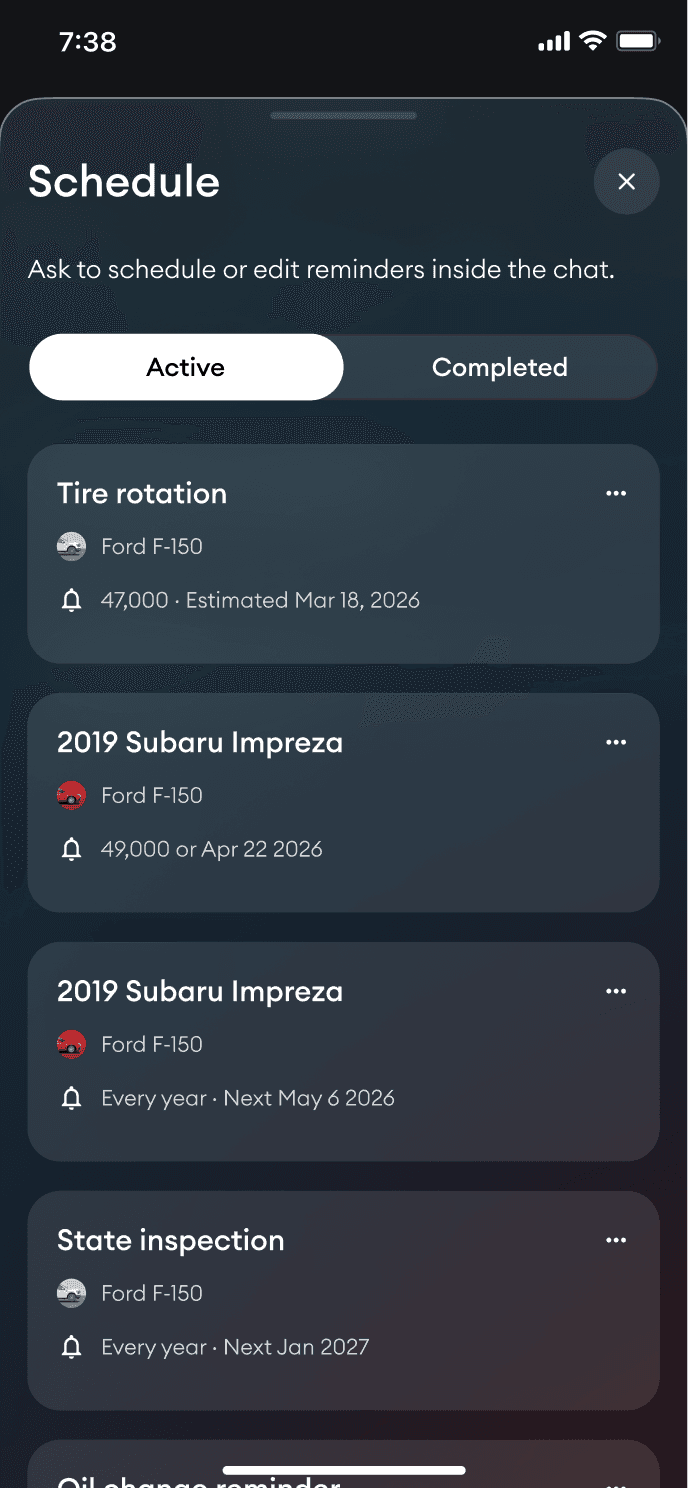
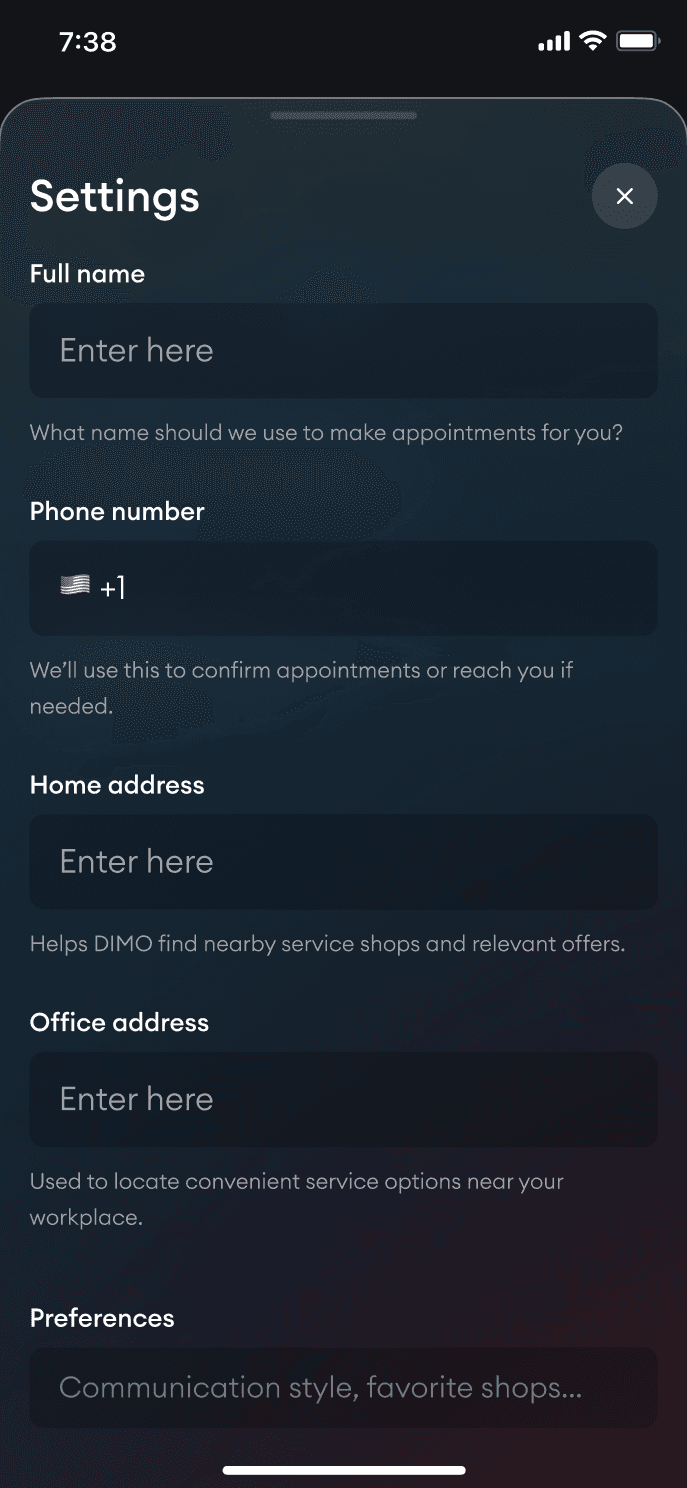
A subtle in product gradient system differentiated AI driven surfaces, while a more expressive extension powered the waitlist and marketing narrative. Color carried semantic meaning across live signals, document memory, and action layers, making AI feel structural rather than decorative. This system helped build early community and clarify positioning before deeper product restructuring. The full landing experience can be viewed at https://ai.dimo.co/.
Mapping the full insight opportunity
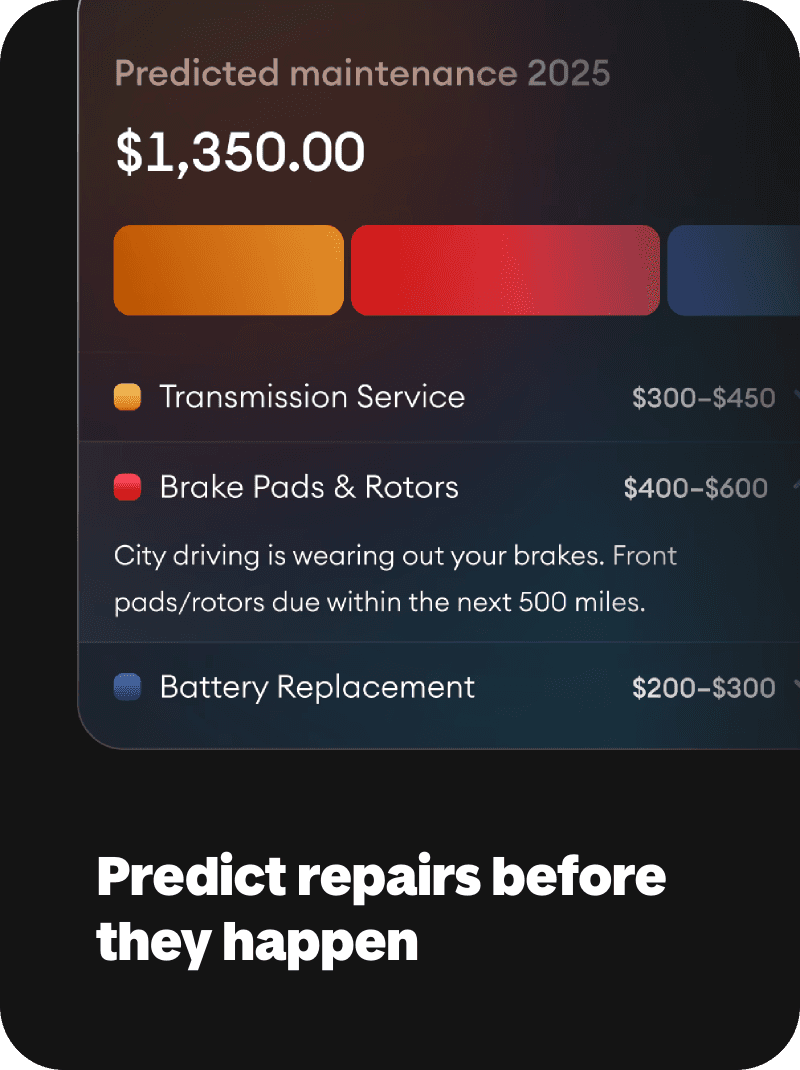
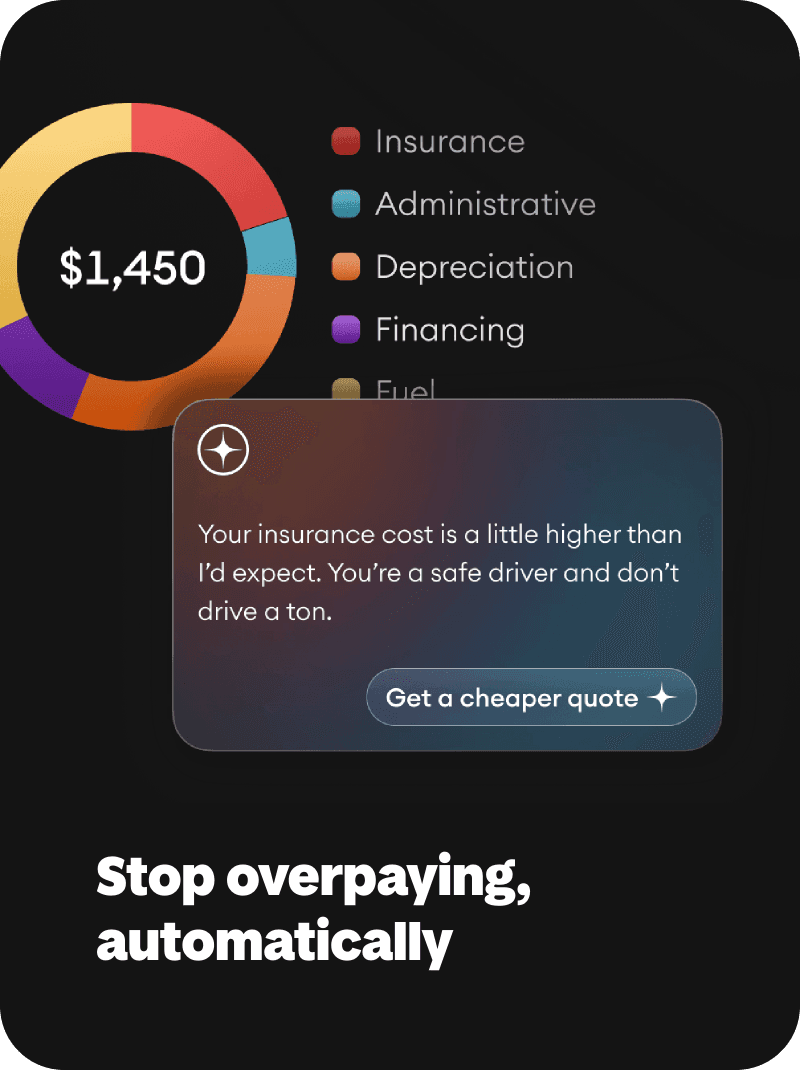
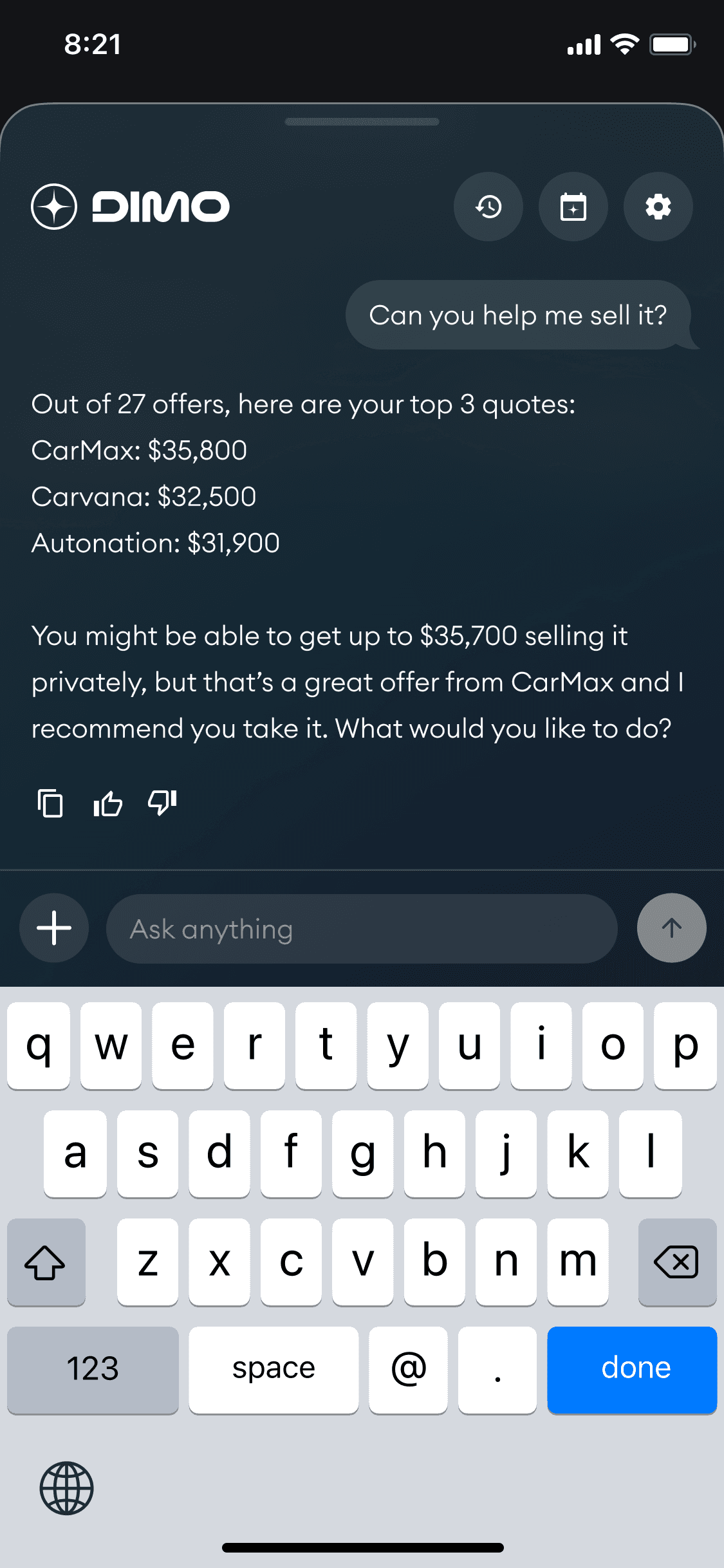
To avoid incremental thinking, I mapped every data signal against potential ownership questions and decisions. The result was a comprehensive mindmap connecting telemetry, documents, and financial context to insight surfaces such as resale timing, total driving cost, maintenance forecasting, and price per mile.
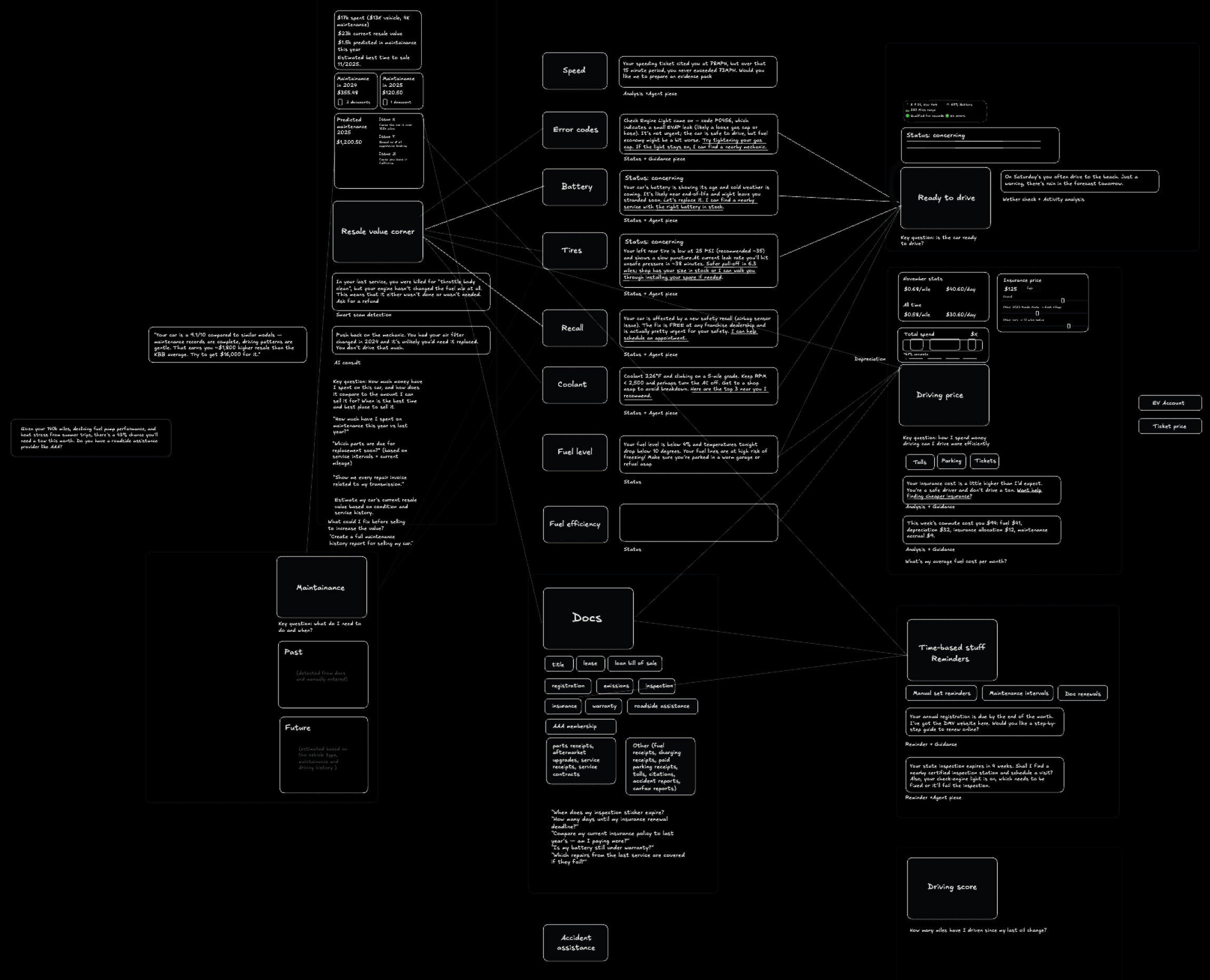
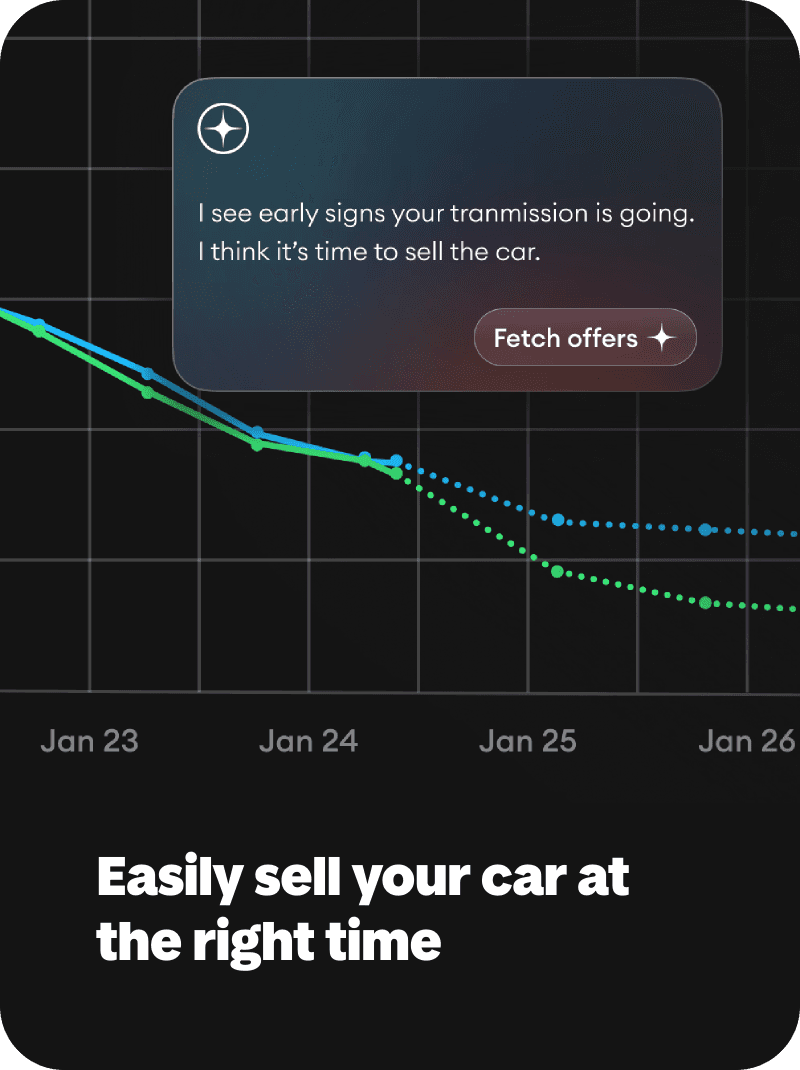
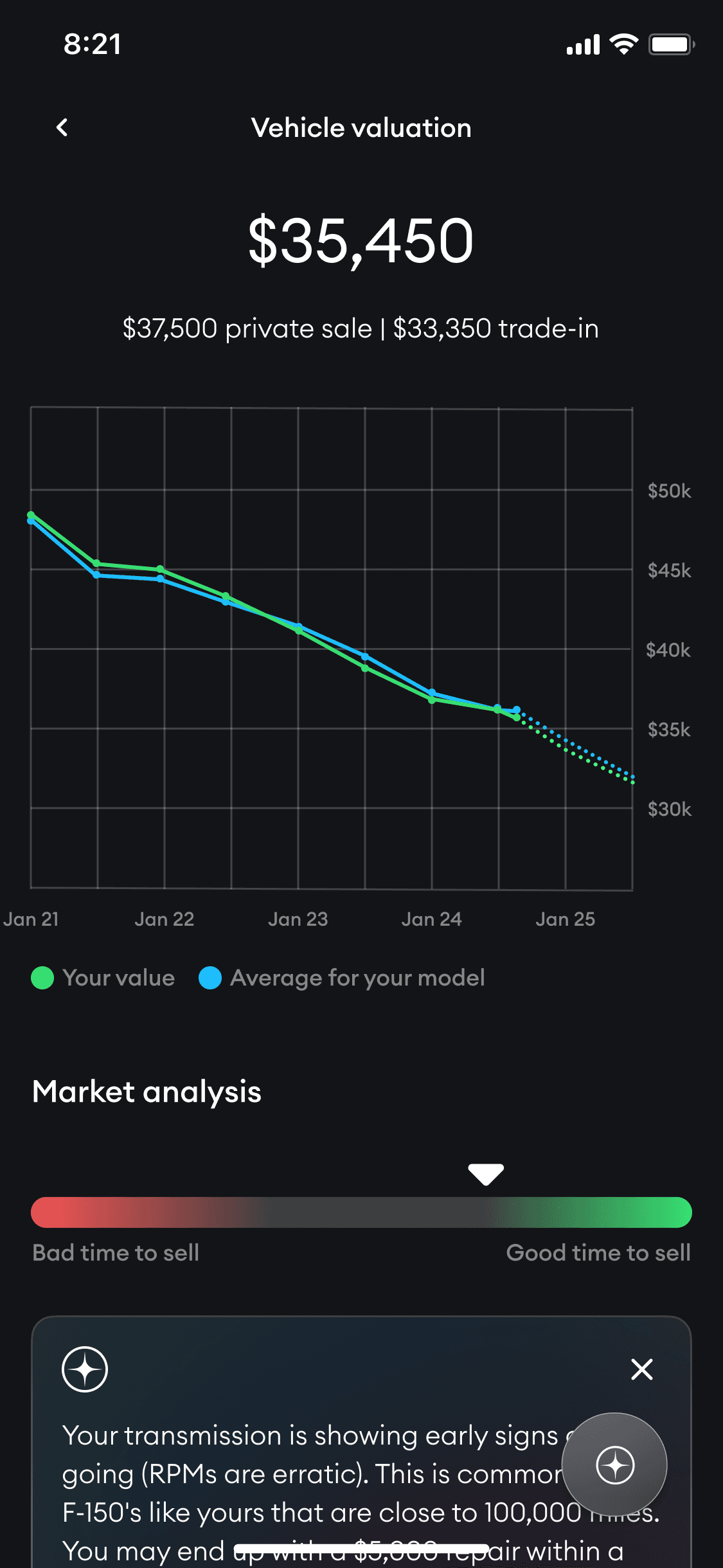
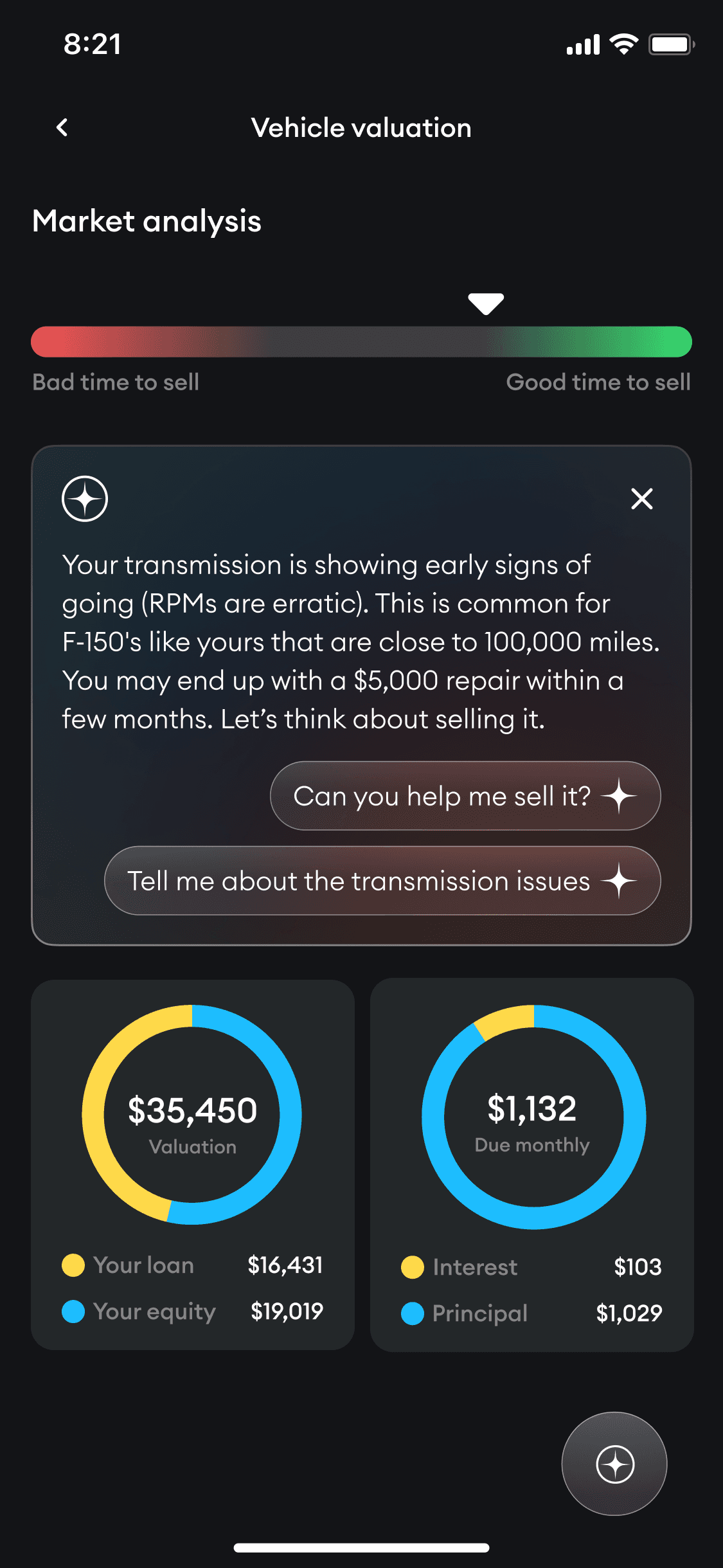
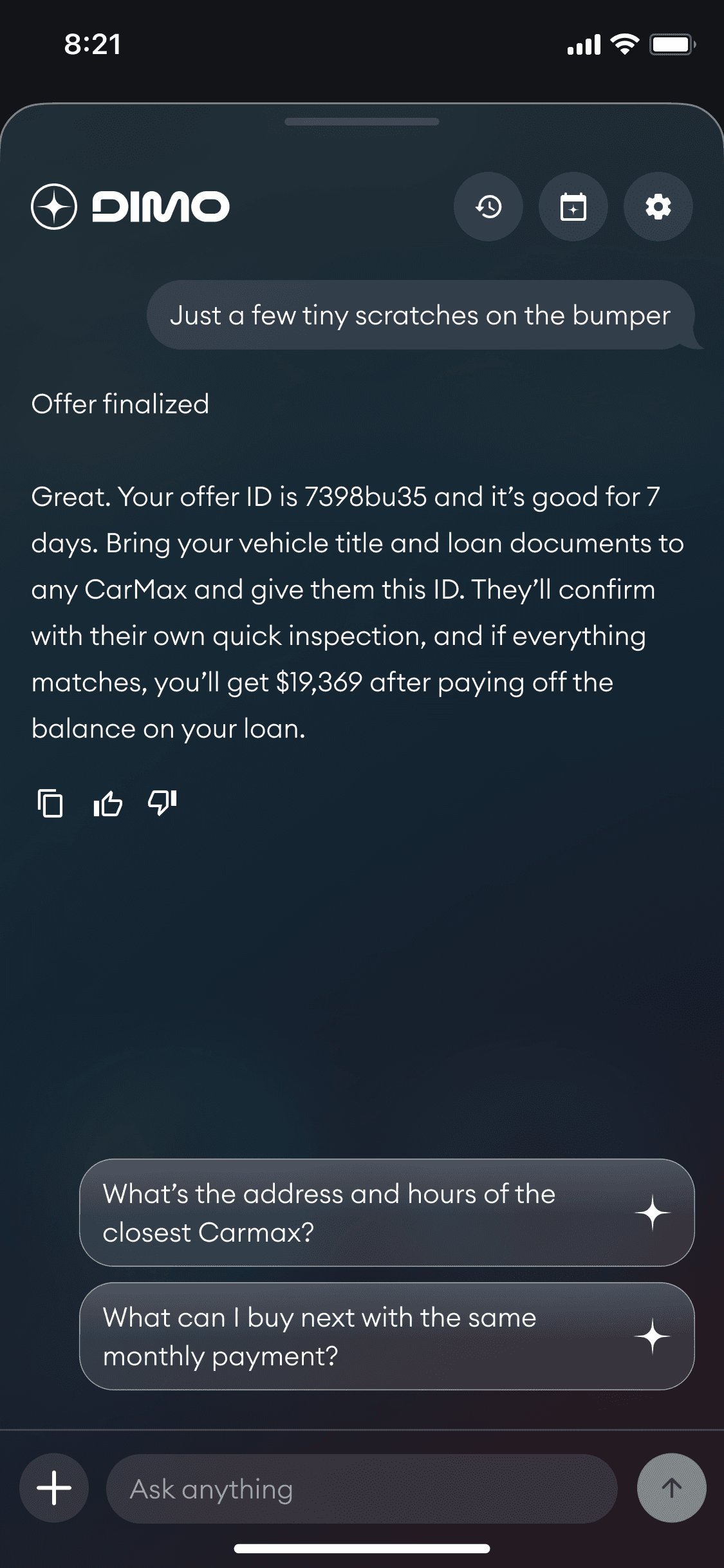
This exercise revealed that we were positioned to participate in higher value ownership moments, not just maintenance reminders. We could support decisions like when to sell, whether to repair or replace, and how much a vehicle was worth over time.
The system was evolving from insight generation to transaction influence, expanding both user value and monetization potential.
Re architecting around AI web first
The strategic reframe
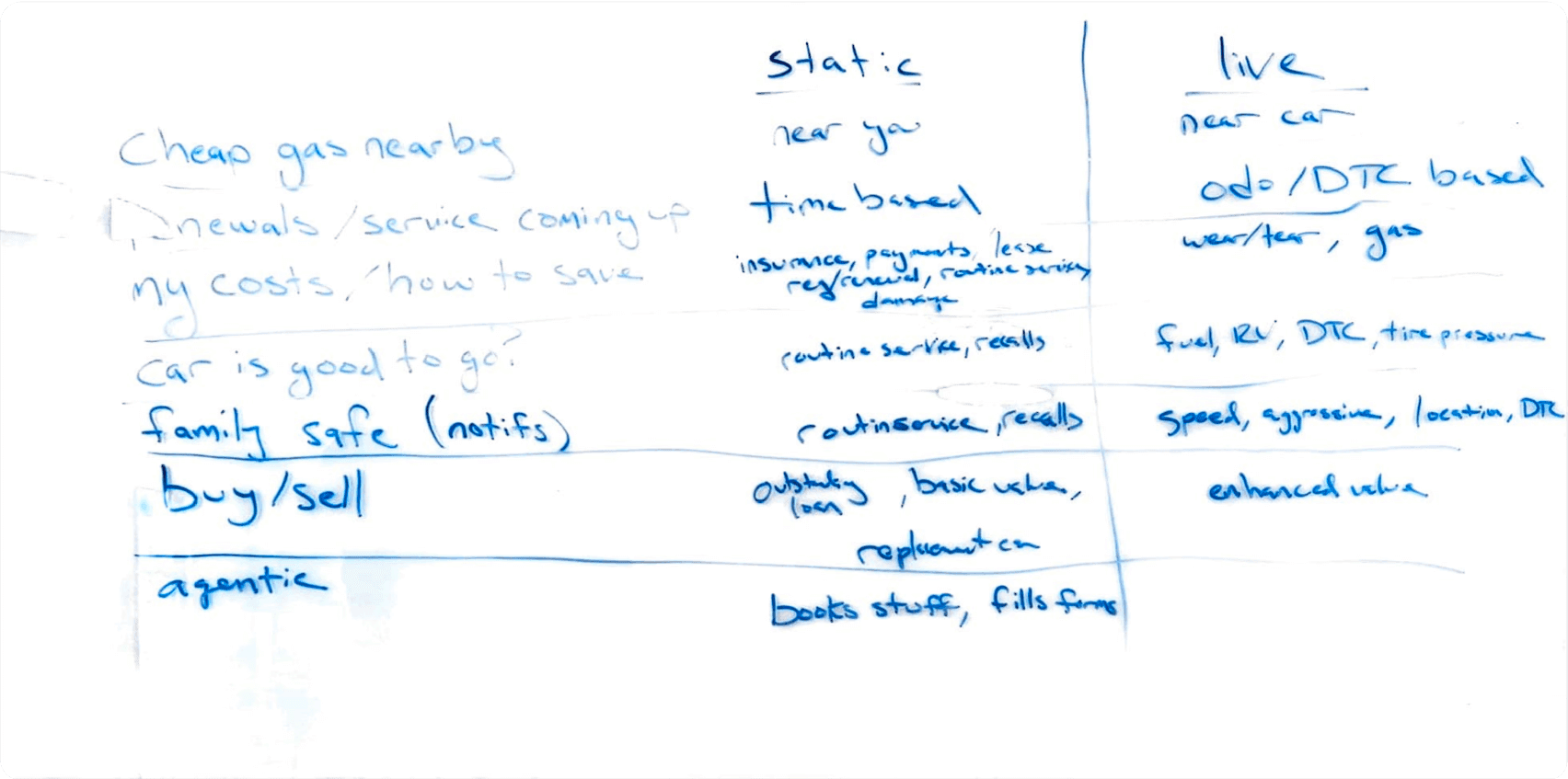
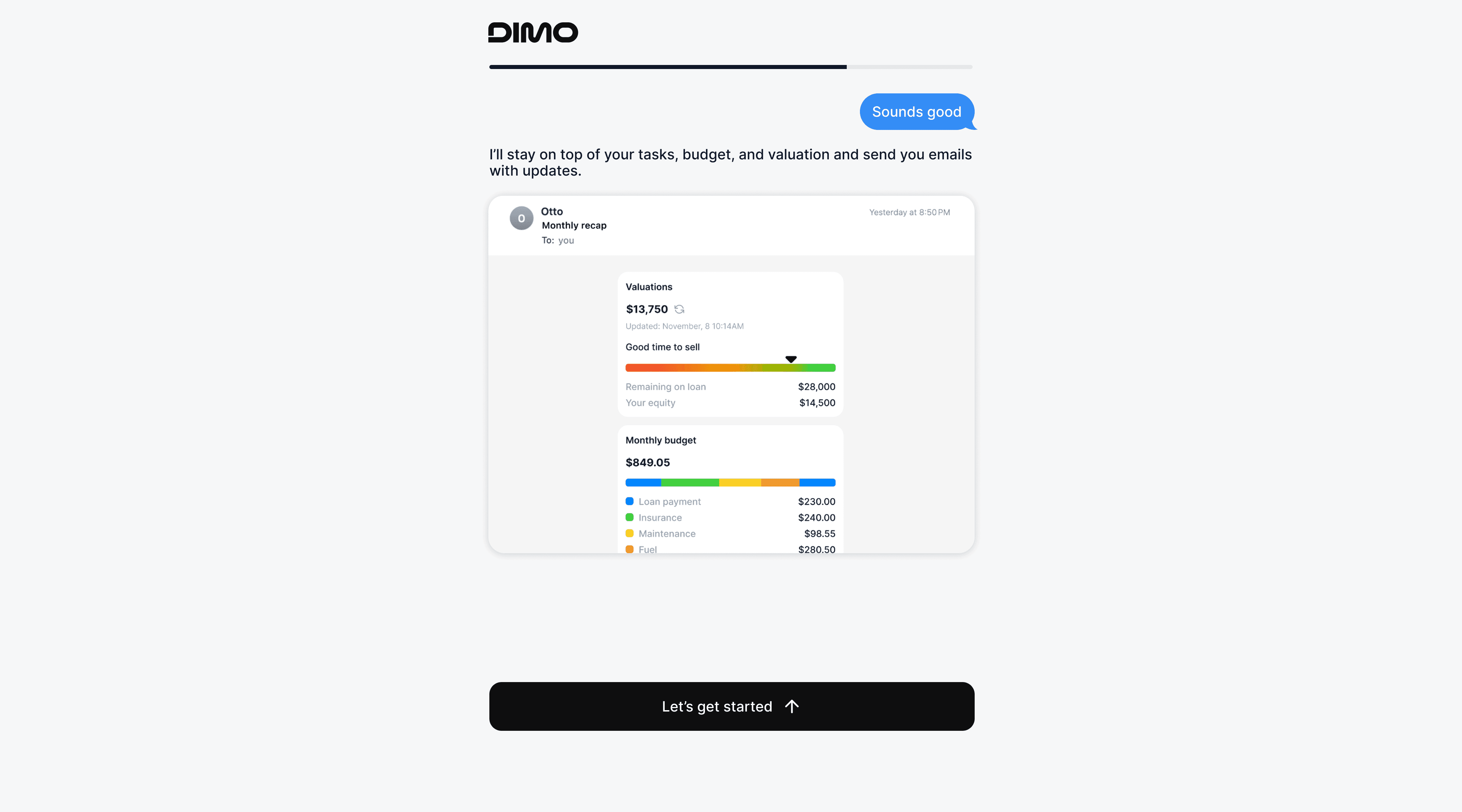
After early experimentation, we stepped back and reframed the problem from first principles. Instead of asking where AI could fit, we asked what people actually need from their car. Drivers care about saving money, staying safe, planning maintenance, understanding costs, and selling at the right time. Some of that value works without live data, but real time signals make it significantly stronger.
Providing value before device connection
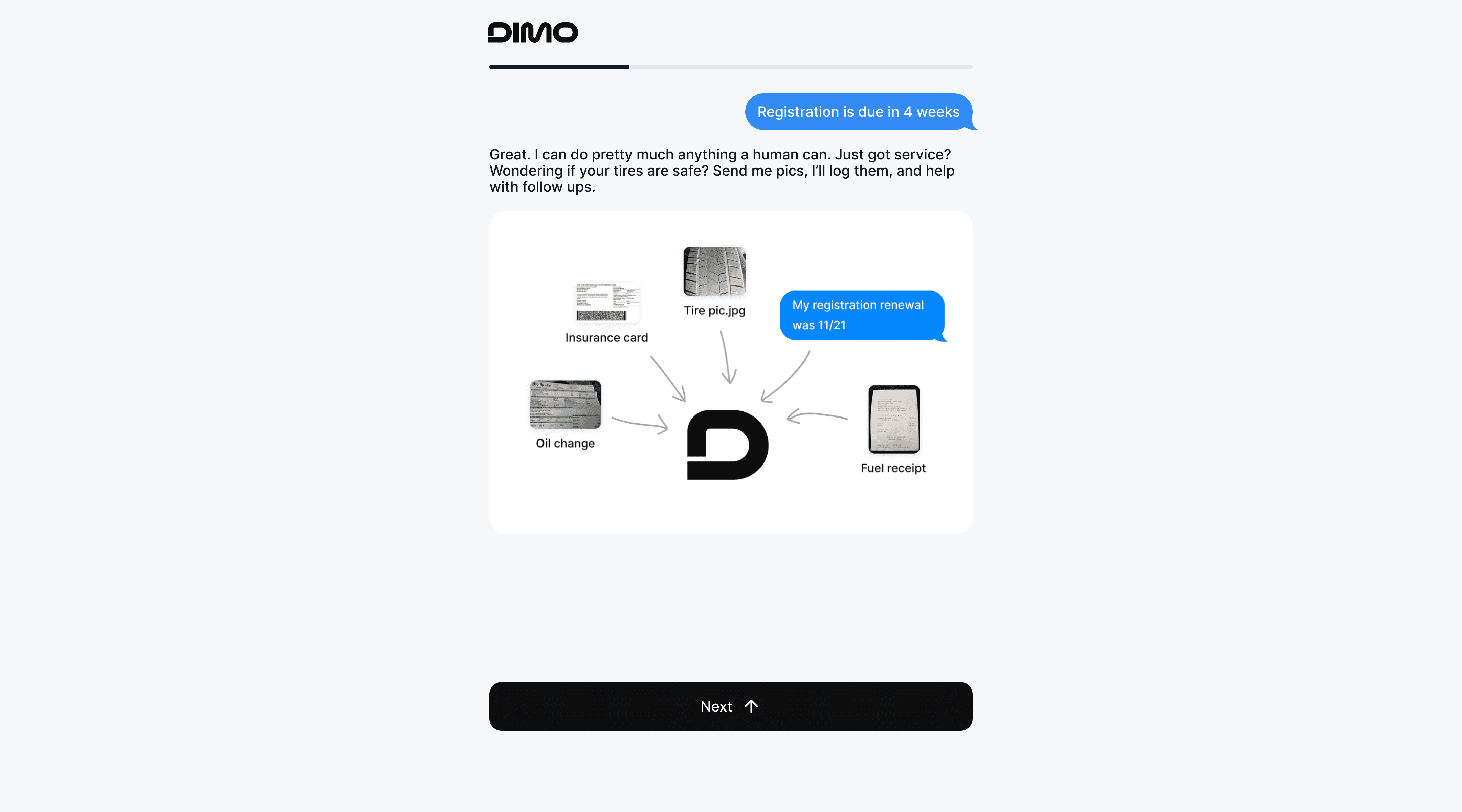
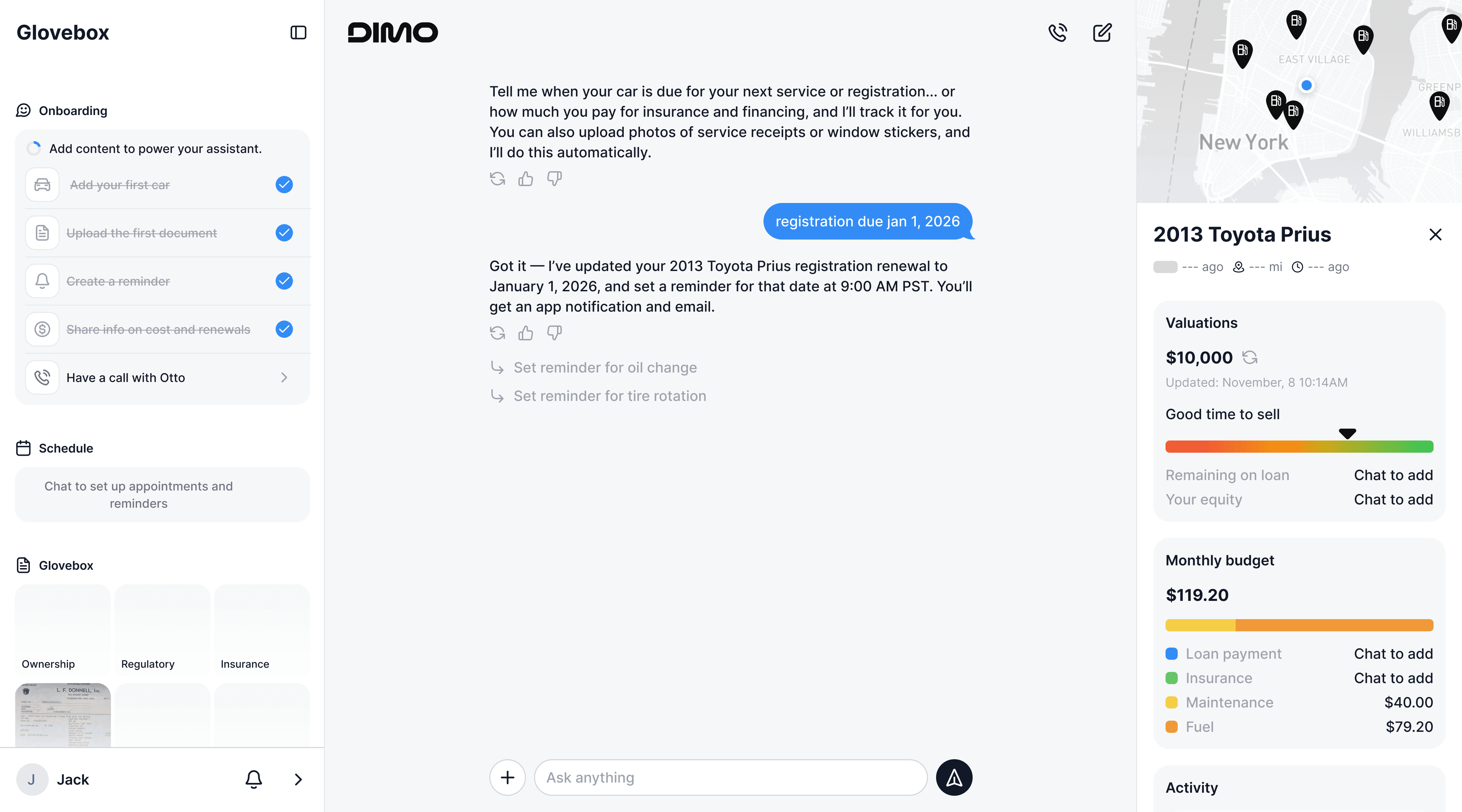
Recognizing that legacy mobile constraints limited experimentation, we shifted to a web first experience built from core principles rather than inherited navigation. Web allowed faster iteration, cleaner information architecture, and testing with new audiences who were not primarily reward focused. It also enabled value before hardware connection, or even the app download, reframing the device as an upgrade rather than a requirement and shortening time to a-ha moment.
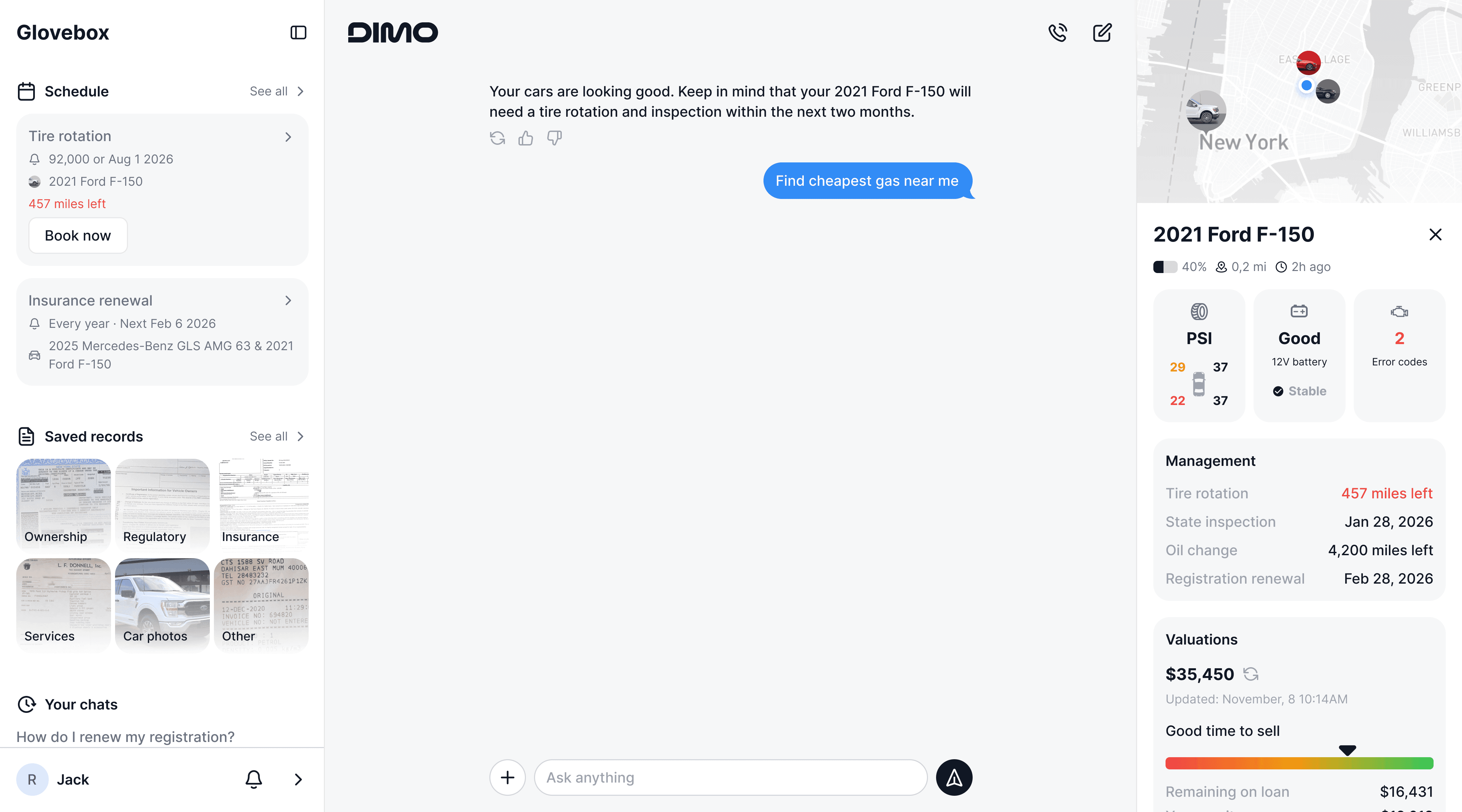
Through the web experience, users entered their make, model, and year and could upload any available service records. Based on that information, we automatically generated a starter maintenance schedule and prefilled relevant recommendations. Within a short session, users created their first reminder, shared their email, and gave us their vehicle details for continued engagement.
The dashboard then organized maintenance, costs, resale insights, and documents into a unified layer. Instead of displaying raw data, the system surfaced structured actions and next steps, while clearly highlighting the additional value unlocked once a device was connected. This was the first version of the product that felt truly AI native.
Early validation signals
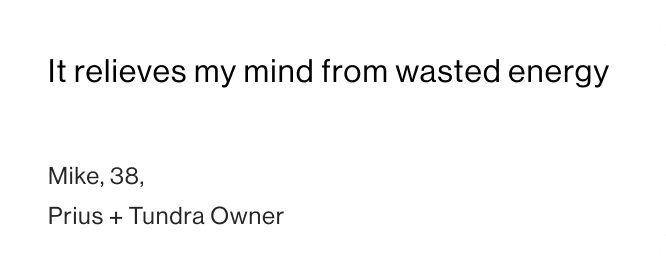
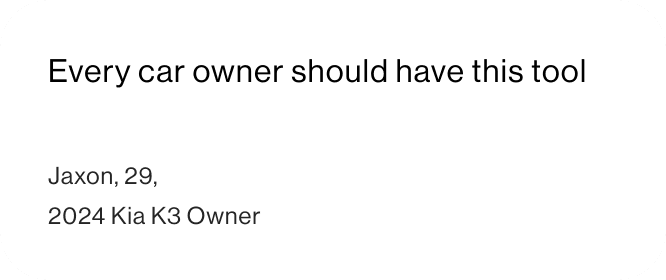
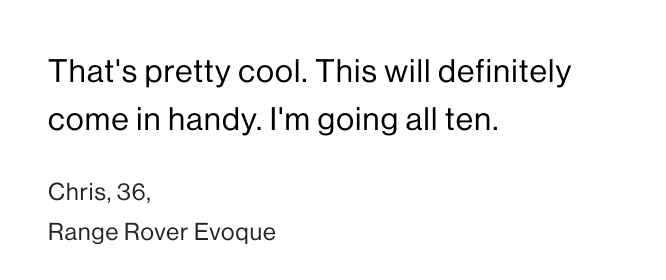
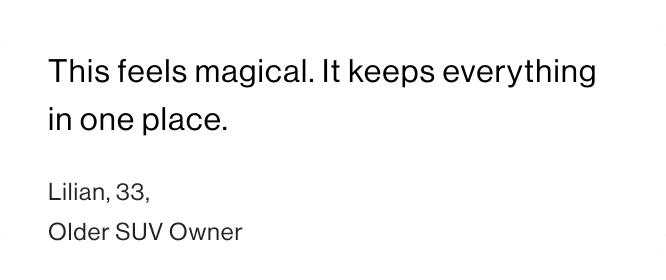
Even without large scale distribution or full analytics infrastructure, early tester feedback was directionally strong. Recommendation and continued use intent both skewed high, even when users experienced noticeable latency in AI responses. The friction was operational, not conceptual. Interest in the device showed similar upside once it was framed as an enhancement to unlock deeper intelligence within the ownership system.
Across signals, the pattern was consistent. The ownership intelligence model resonated. The primary blocker was speed and execution polish, not product direction.


If resourced to scale
With full engineering, marketing, and analytics support, my focus would be on tightening the system rather than expanding features.
Only once engagement and retention were stable would I invest in high conversion landing expansion and device funnel optimization. To support this, I would track activation tied to first value, goal based engagement depth, weekly active AI users, 7 and 30 day retention cohorts, and device upsell progression.
Key learnings
This project transformed how I operate. I moved from layering features within constraints to shaping product direction under uncertainty. I learned to connect motivation, data, AI, and monetization into a coherent system.
Shortly after these experiments, the company restructured and shifted focus toward infrastructure and B2B priorities. The consumer AI initiative did not continue beyond this phase. The pause was organizational, not directional. Even without full scale rollout, we validated that an AI native ownership platform could resonate strongly with real users, and the conviction behind that model remains strong.
Credits
Product & Engineering partner – Rob Solomon
UI Animator – Kolom