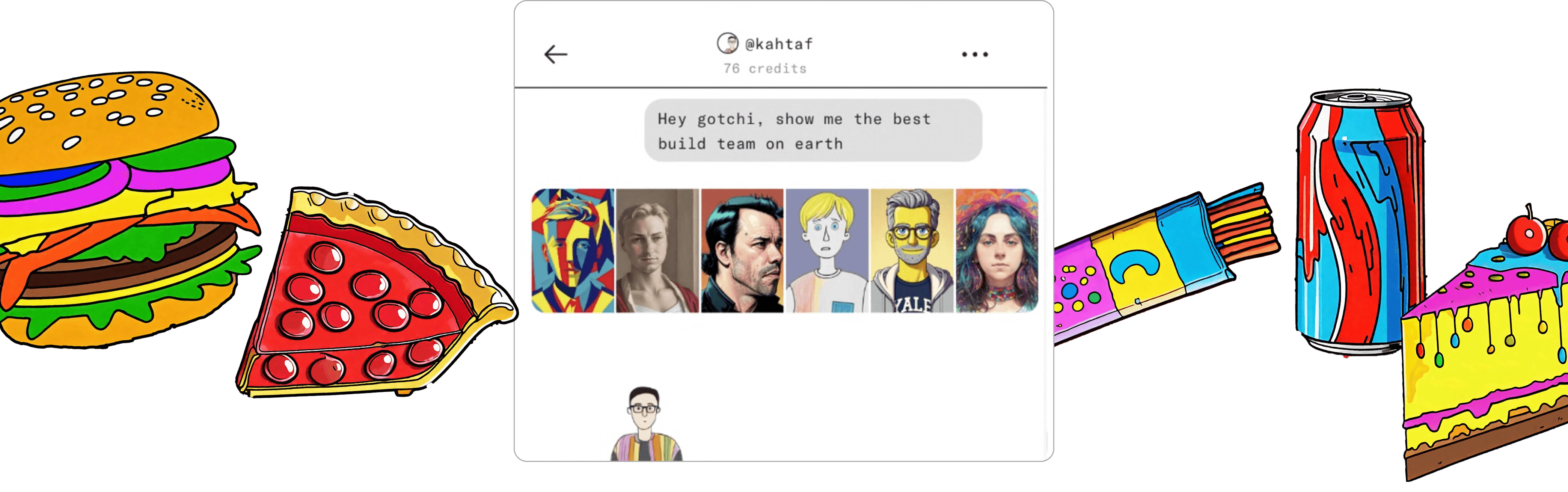
Vana Gotchi
New dimension in AI

Role
Product Strategy & Brand Direction
Platforms
Web
Timeline
Sep 2023 — Feb 2024
Category
AI, Consumer, Social
At Vana, I led the end-to-end product vision and design for Gotchi, our second core product. My role was to translate an ambitious infrastructure vision into a consumer experience people could understand, adopt, and genuinely enjoy using.
Vana’s long-term goal was to enable user-owned AI powered by personal data and distributed computing. The immediate challenge was behavioral: before any infrastructure could scale, users had to willingly upload their personal data. Uploading data is abstract, high-friction, and often intimidating. My responsibility was to turn that friction into motivation.
Context
AI models are largely trained on user data, yet users rarely control or benefit from it. Vana aimed to reverse that dynamic by building infrastructure that allowed individuals to own, manage, and eventually monetize their data.
However, infrastructure products do not sell themselves. For developers to build on top of Vana, users first needed to upload and structure their data. Without user activation, the ecosystem could not function.
How do you motivate people to voluntarily upload personal data into a system they do not yet fully understand
Challenges
Before defining the product direction, I led a focused research sprint to understand both market perception and behavioral barriers.
Desk research
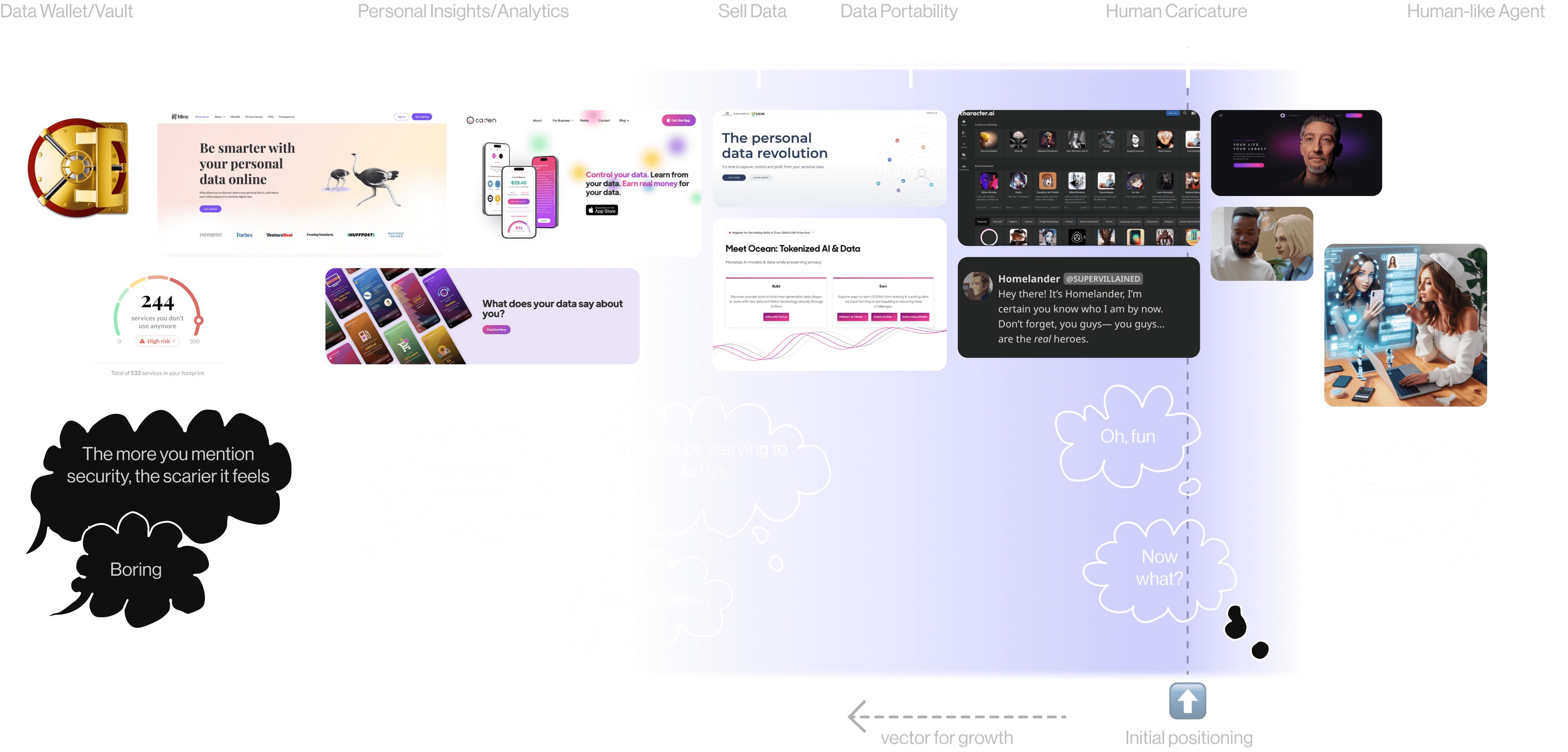
We analyzed current AI initiatives, positioning patterns, and public sentiment across media and online forums. The signal was clear: strong excitement about personalization and AI capabilities, paired with deep skepticism around privacy, job displacement, and surveillance. The opportunity was not just technical. It was psychological.
In-depth interviews
We conducted detailed interviews with individuals matching our target persona to gauge their perceptions of AI and different projects in the sphere. These discussions revealed a diverse range of attitudes, from enthusiastic support to cautious skepticism.
Smoke test validation
To pinpoint the most promising approach for our key audience, we conducted a fake ad campaign on Meta. The results were clear: the Marketplace campaign was four times more effective than any other tested approach. Despite these results, we approached the data with a degree of skepticism, particularly concerning its quality in this context.
Trend analysis
We reviewed AI search trends and behavioral signals. While interest in image generation remained stable, searches related to voice cloning and personalization were increasing. This reinforced the hypothesis that identity and embodiment were emerging vectors of curiosity.
Smoke test for terminology
In our effort to identify the most resonant term for our product, we launched another round of fake Meta ads, testing the words 'clone,' 'doppel,' 'digital persona,' and 'gotchi'.
Strategic opportunity
We identified a core tension: people were excited about AI and personalization, but deeply cautious about privacy and surveillance, and uploading data felt dull and transactional. If the experience felt like paperwork, adoption would stall. If it felt personal and playful, it could drive activation. This insight reframed the product. Instead of asking users to upload data, we invited them to build a mini digital version of themselves.
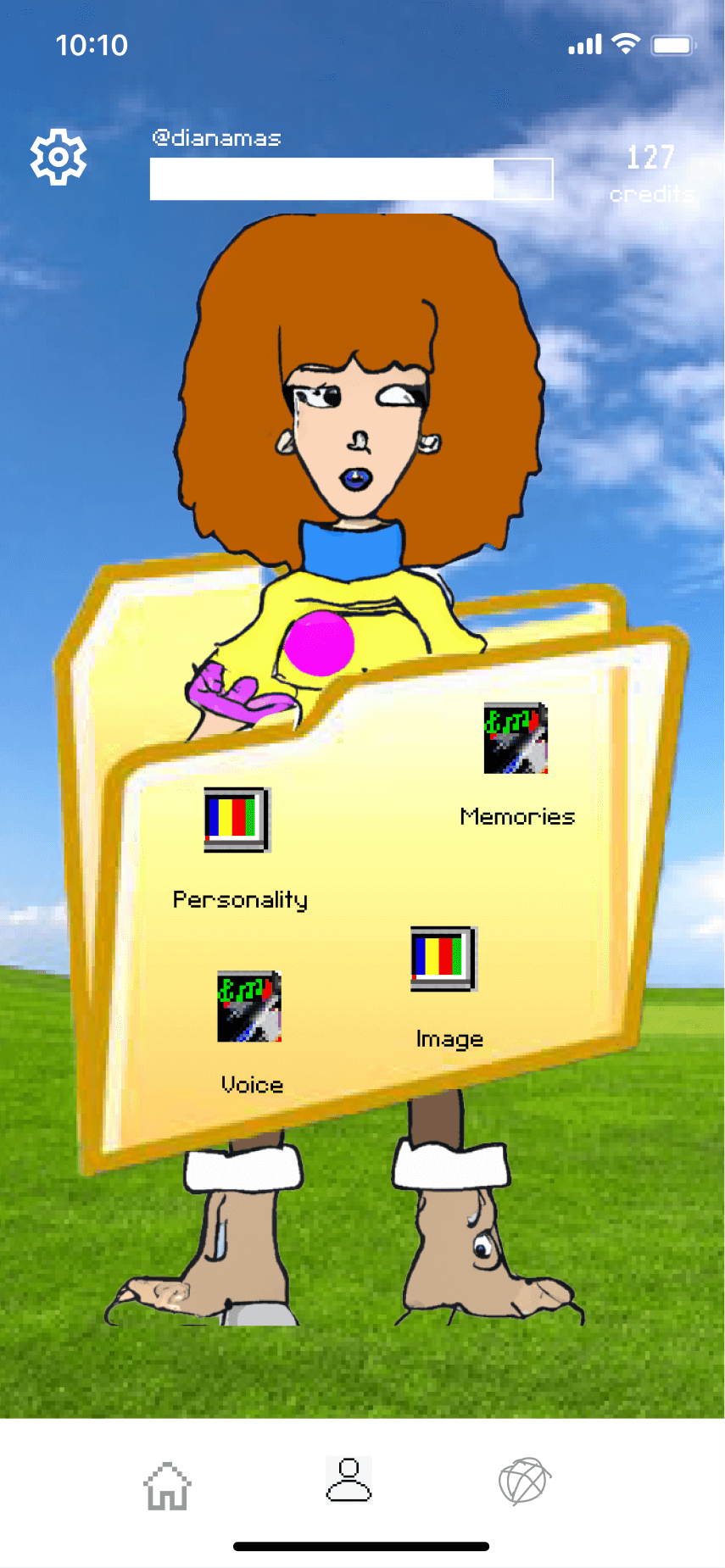
The concept evolved into a human caricature that lets users create miniature digital versions of themselves in the app. To enhance perceptions of security, we experimented with Progressive Web Apps to reinforce the idea that these digital copies remain on the user's device. We also embraced a deliberately low-tech aesthetic to manage expectations and avoid the intimidation often associated with near-human AI agents.
Gotchi – a mini version of you that you build in Vana app
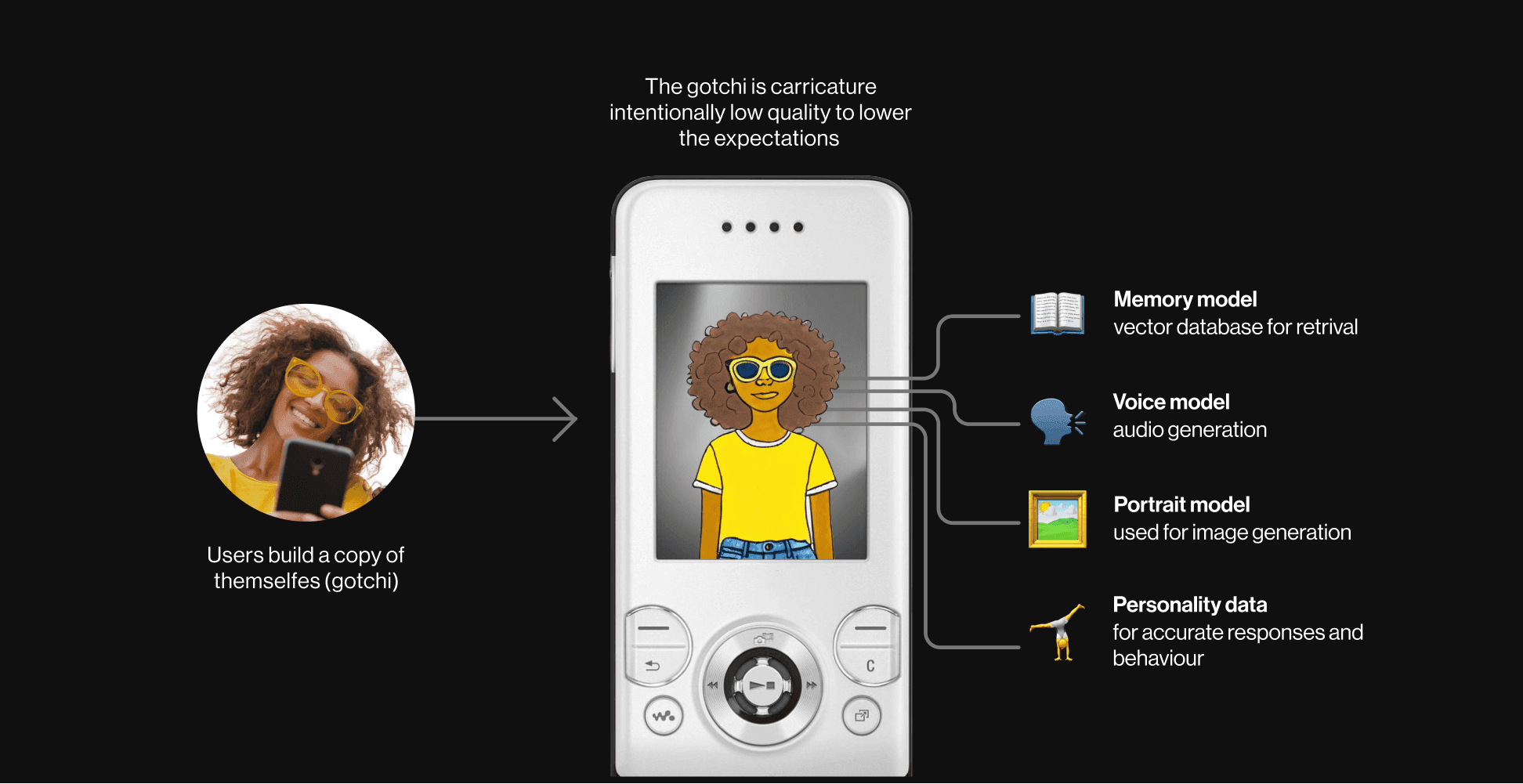
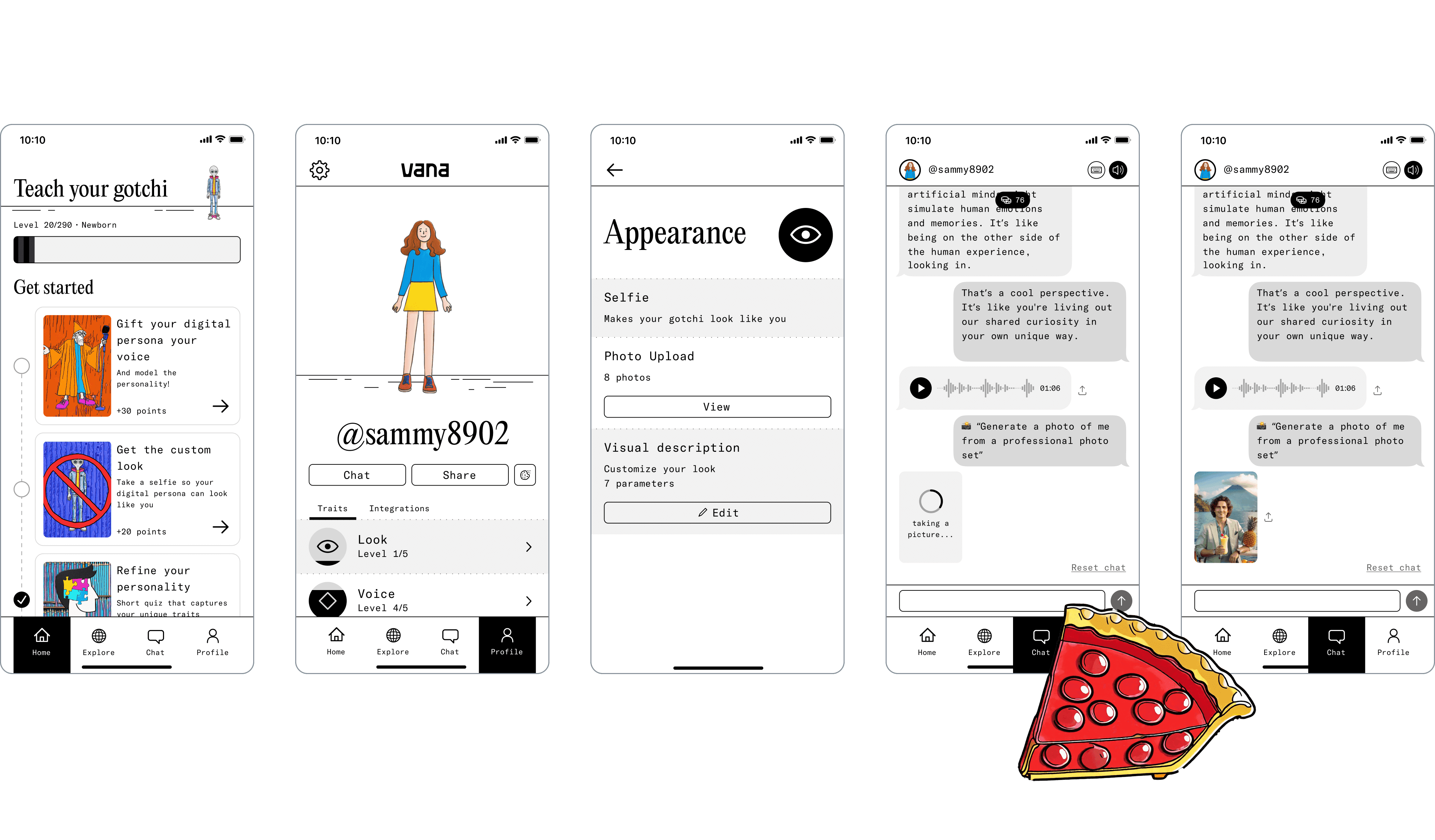
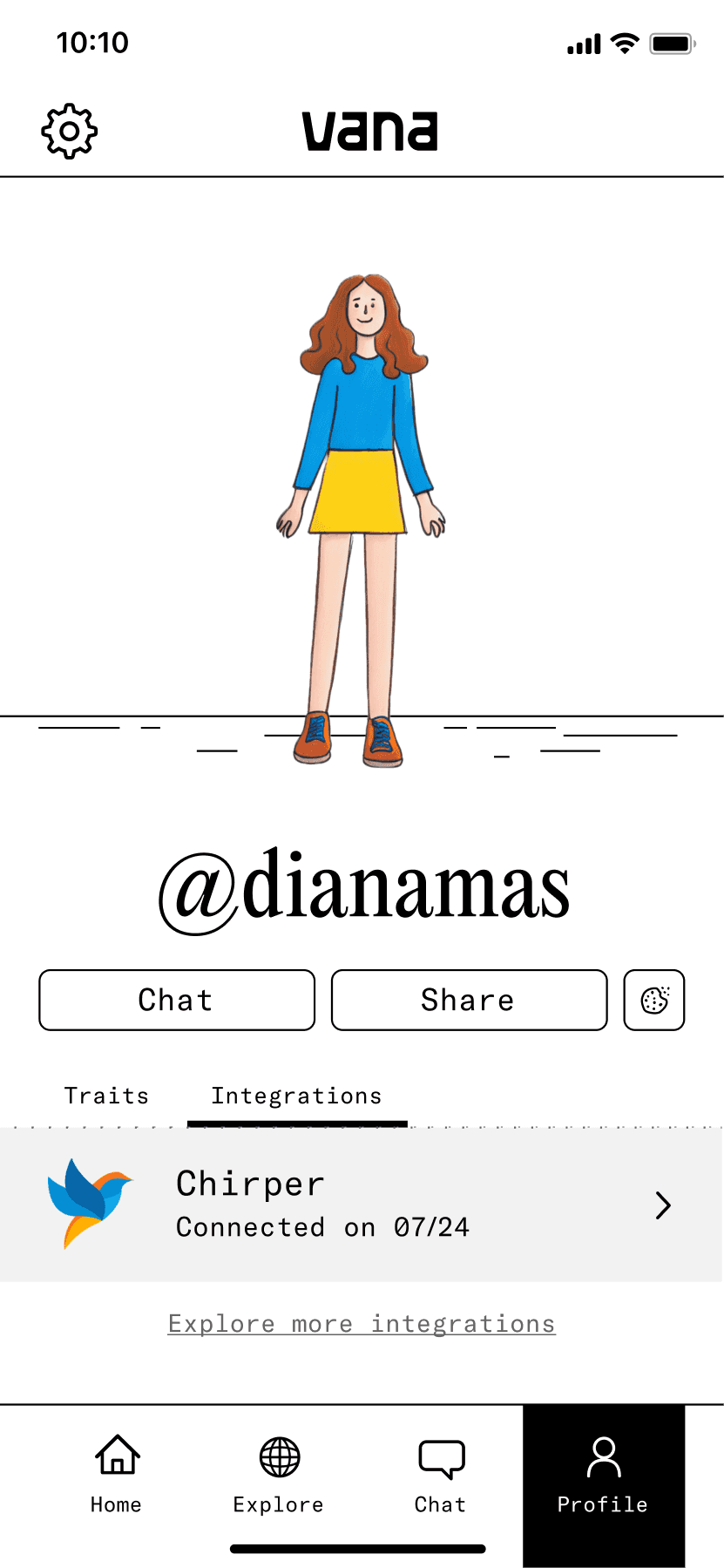
Once users finish building their Gotchi, they can chat with it, share it with friends, generate personalized audio and images based on their likeness, export their digital twin to third-party apps for tailored experiences, and, over time, contribute their data to help train AI models in exchange for incentives.
UI exploration
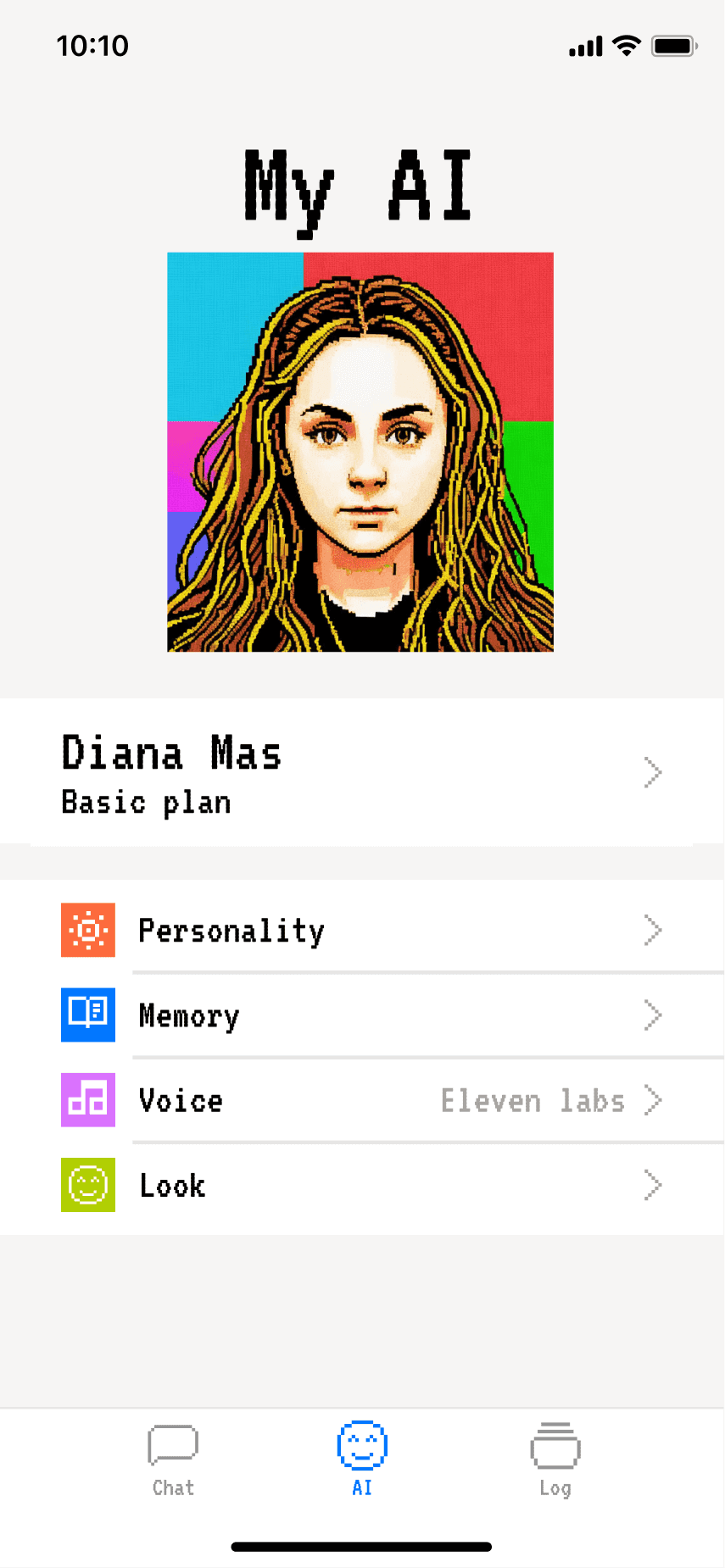
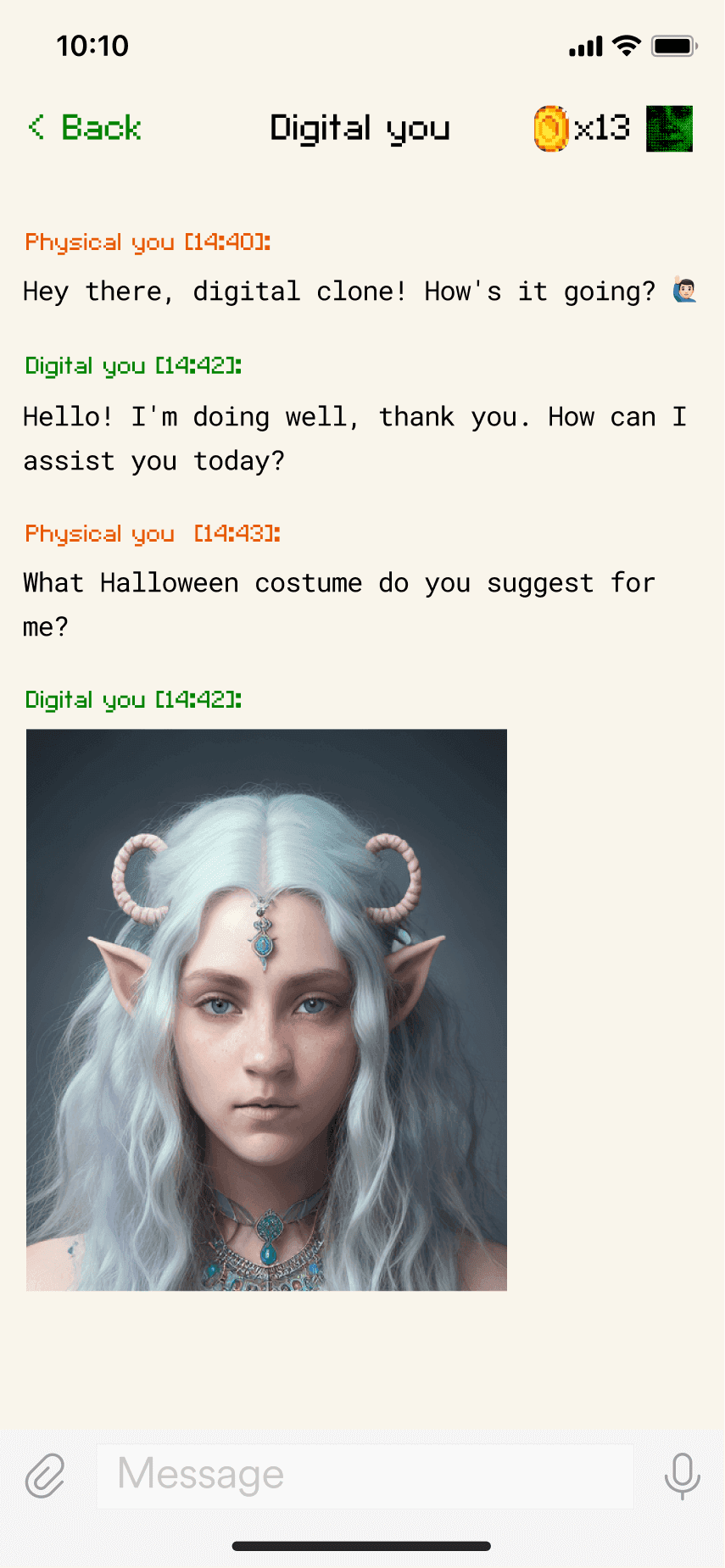
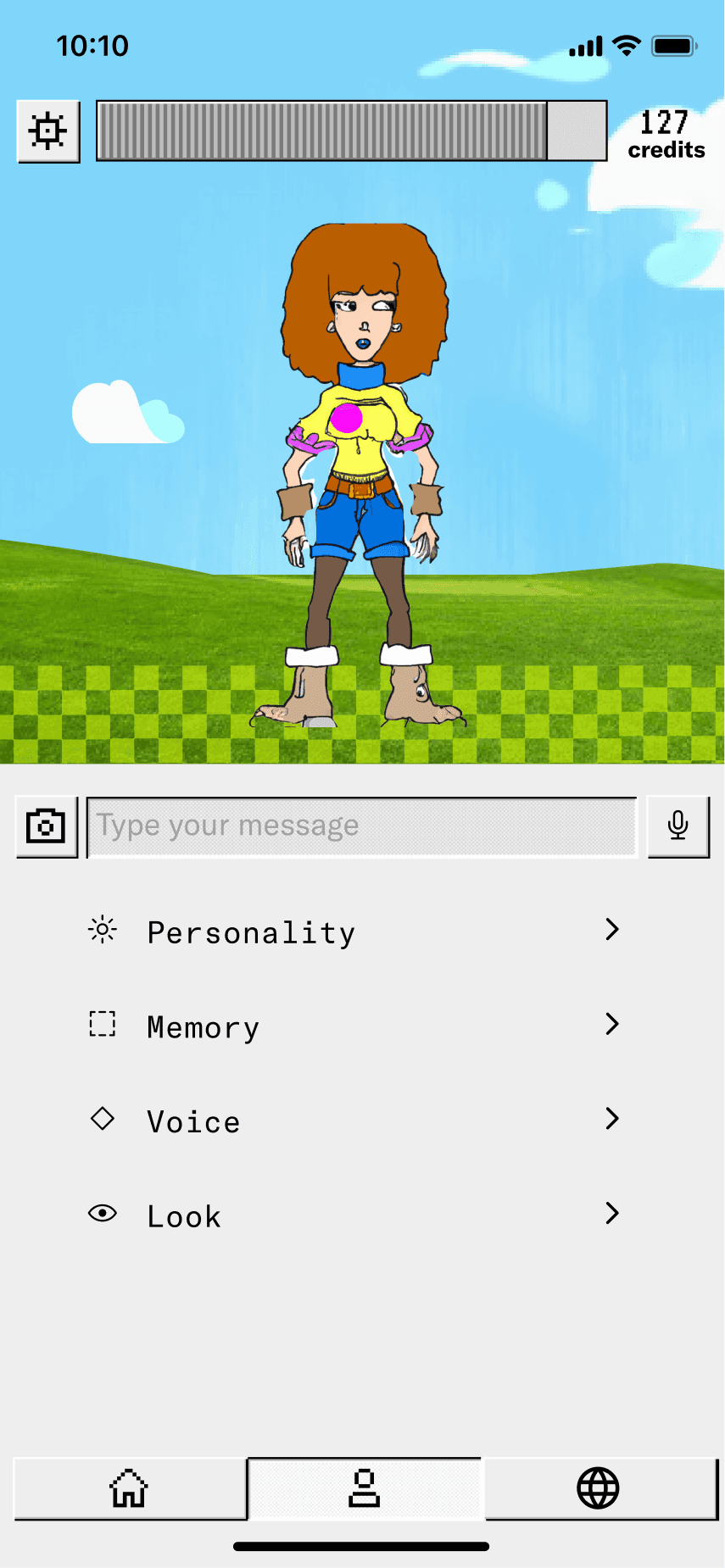
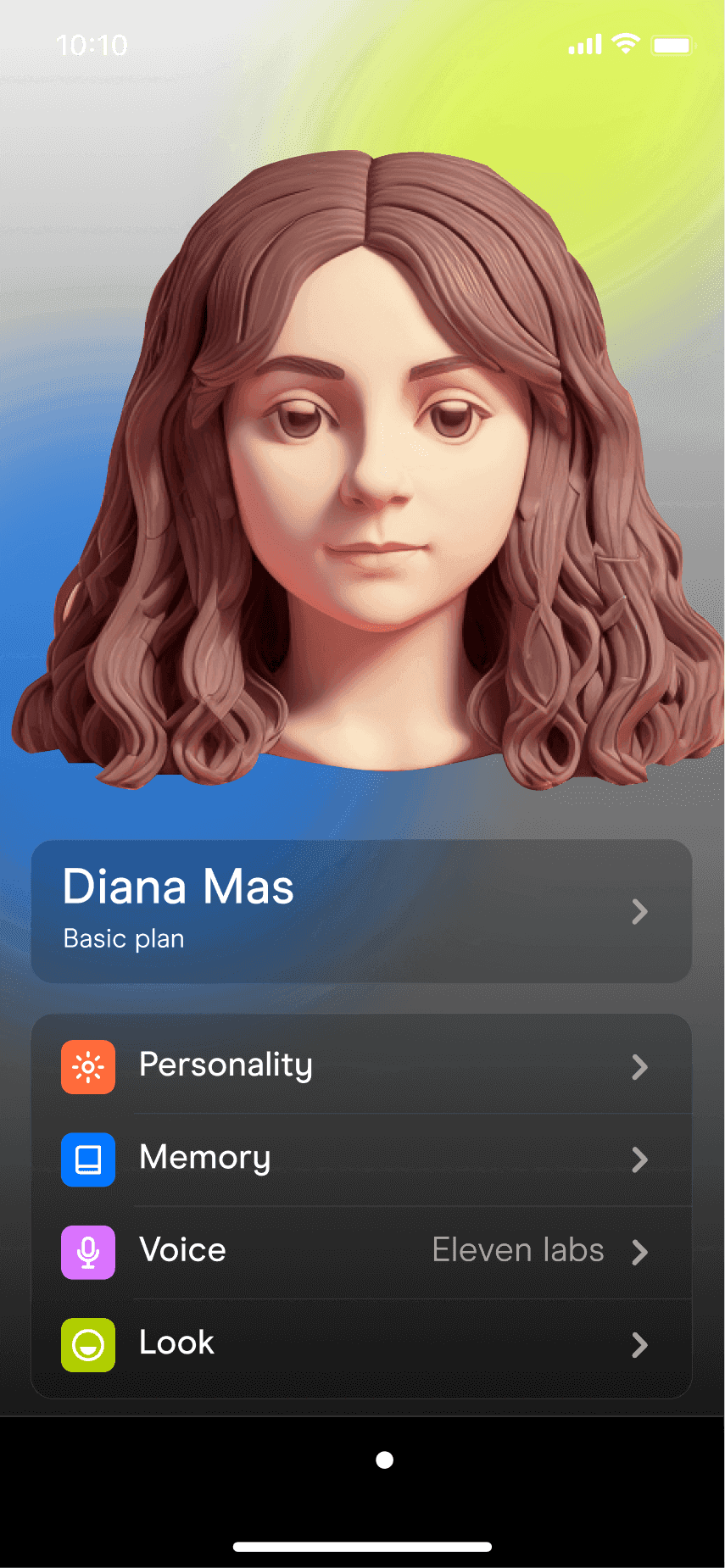
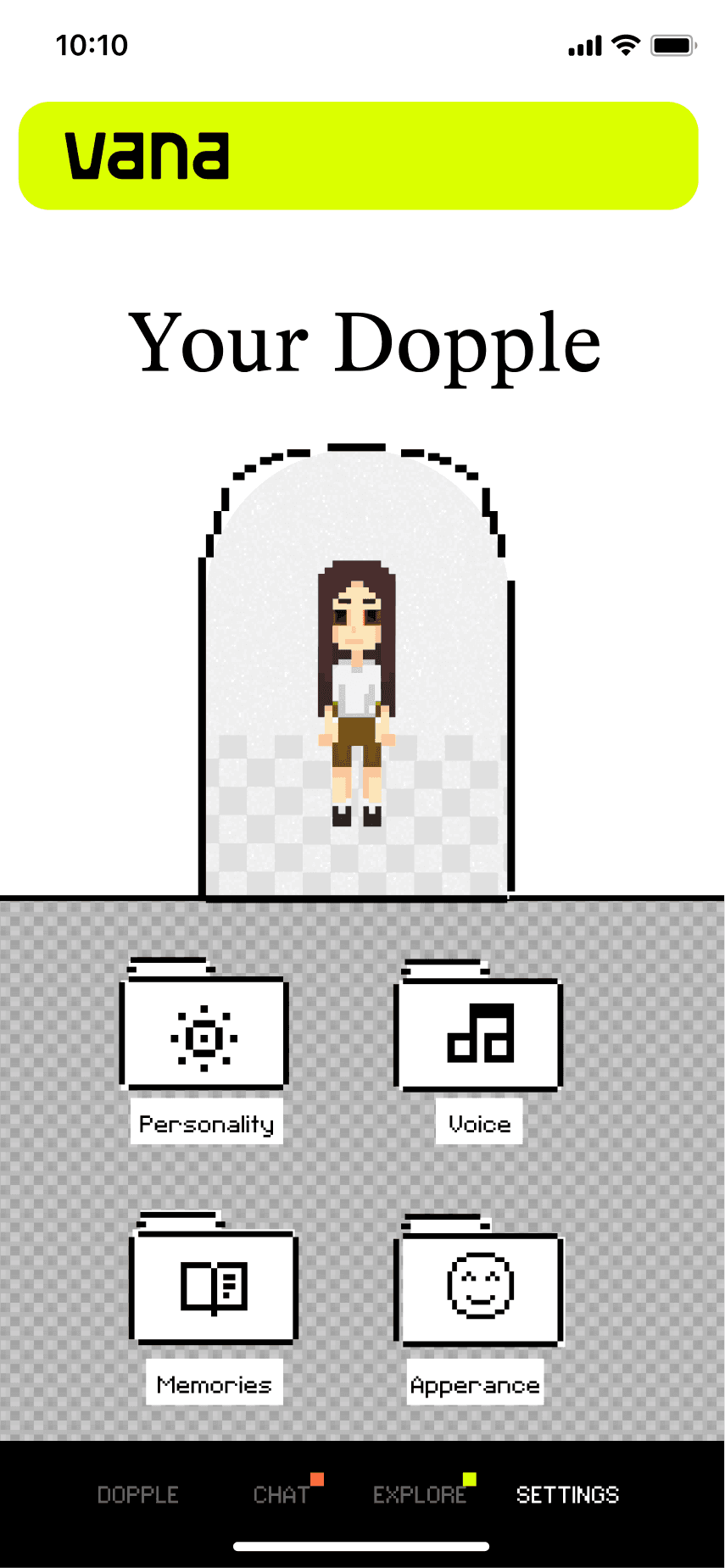
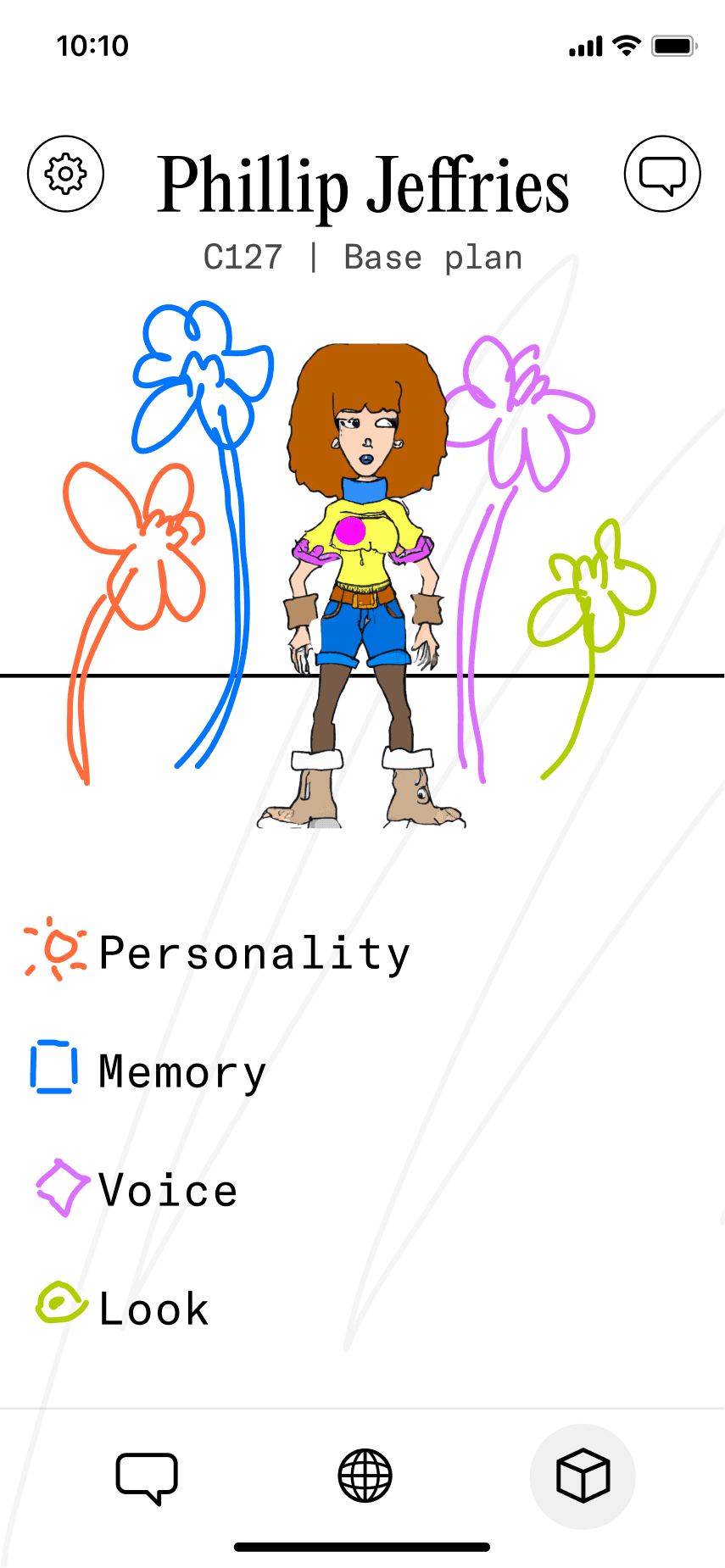
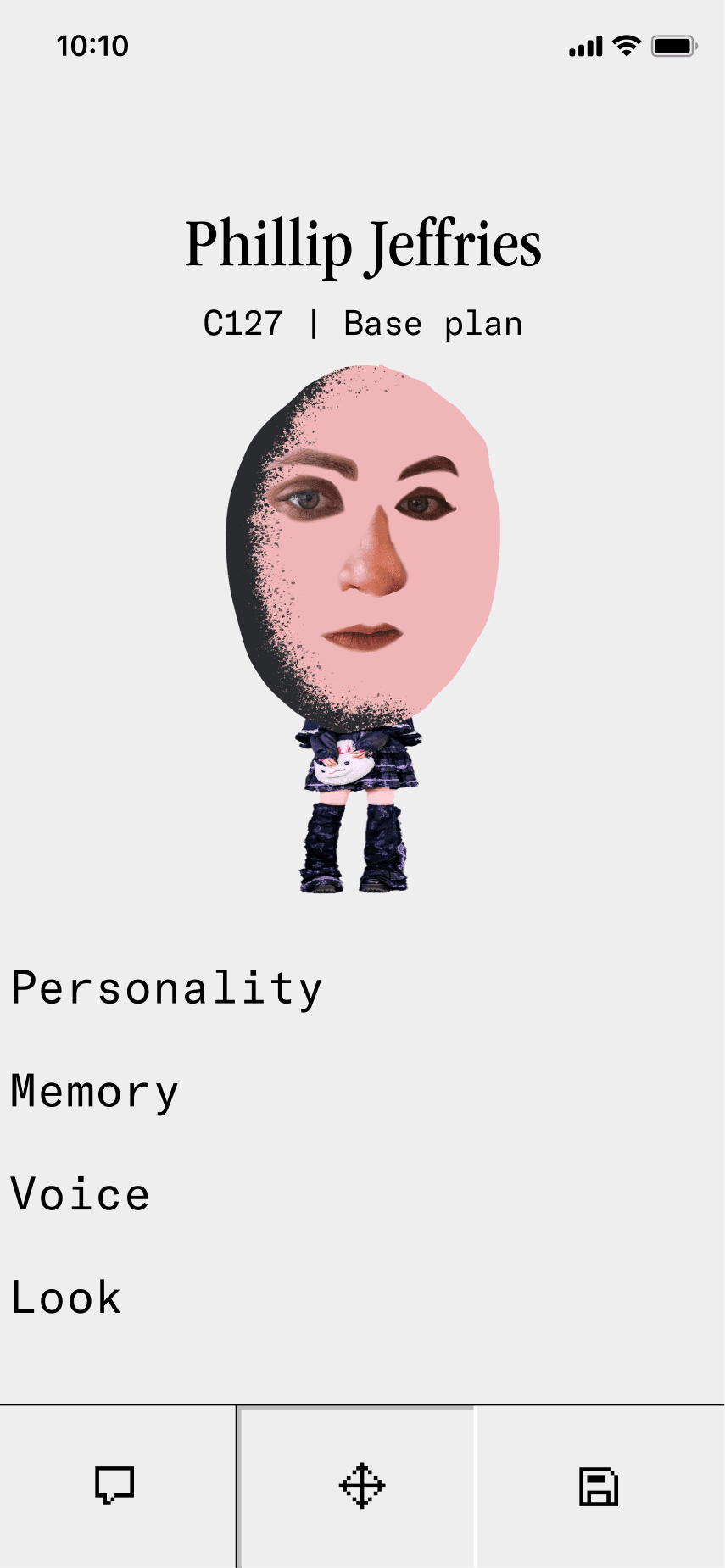
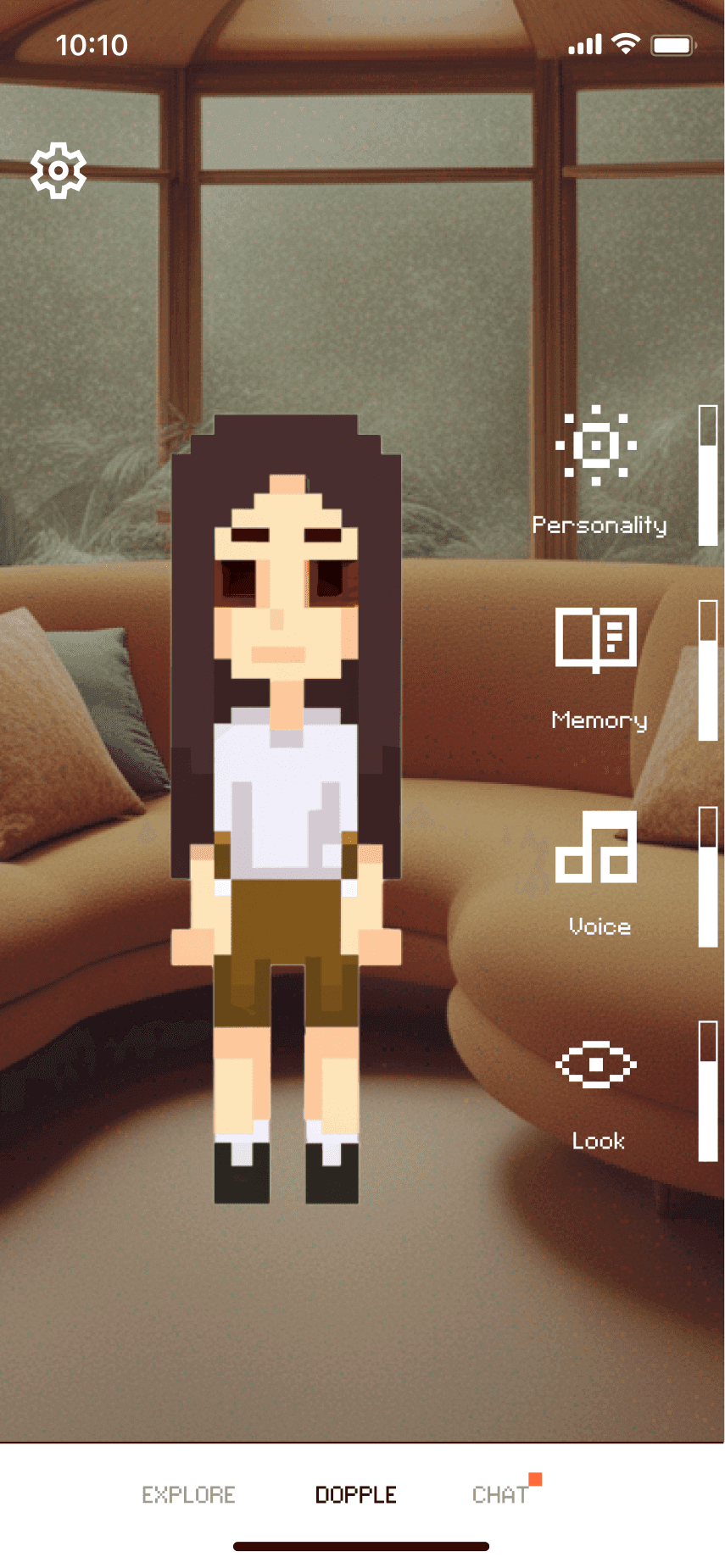
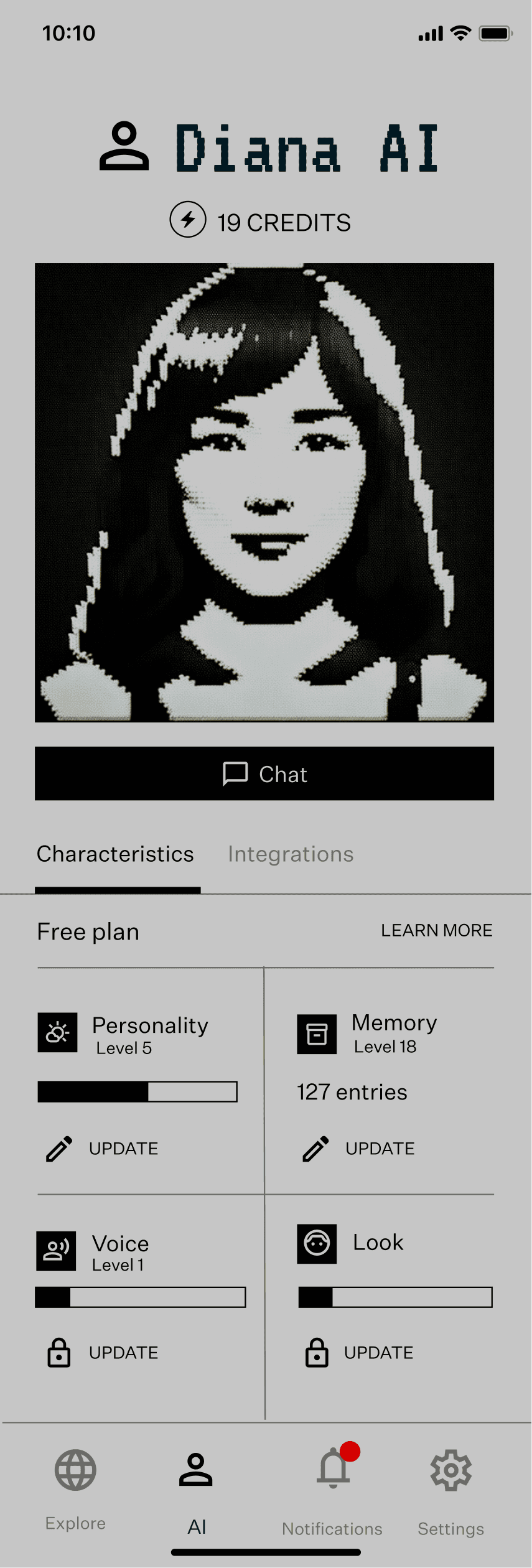
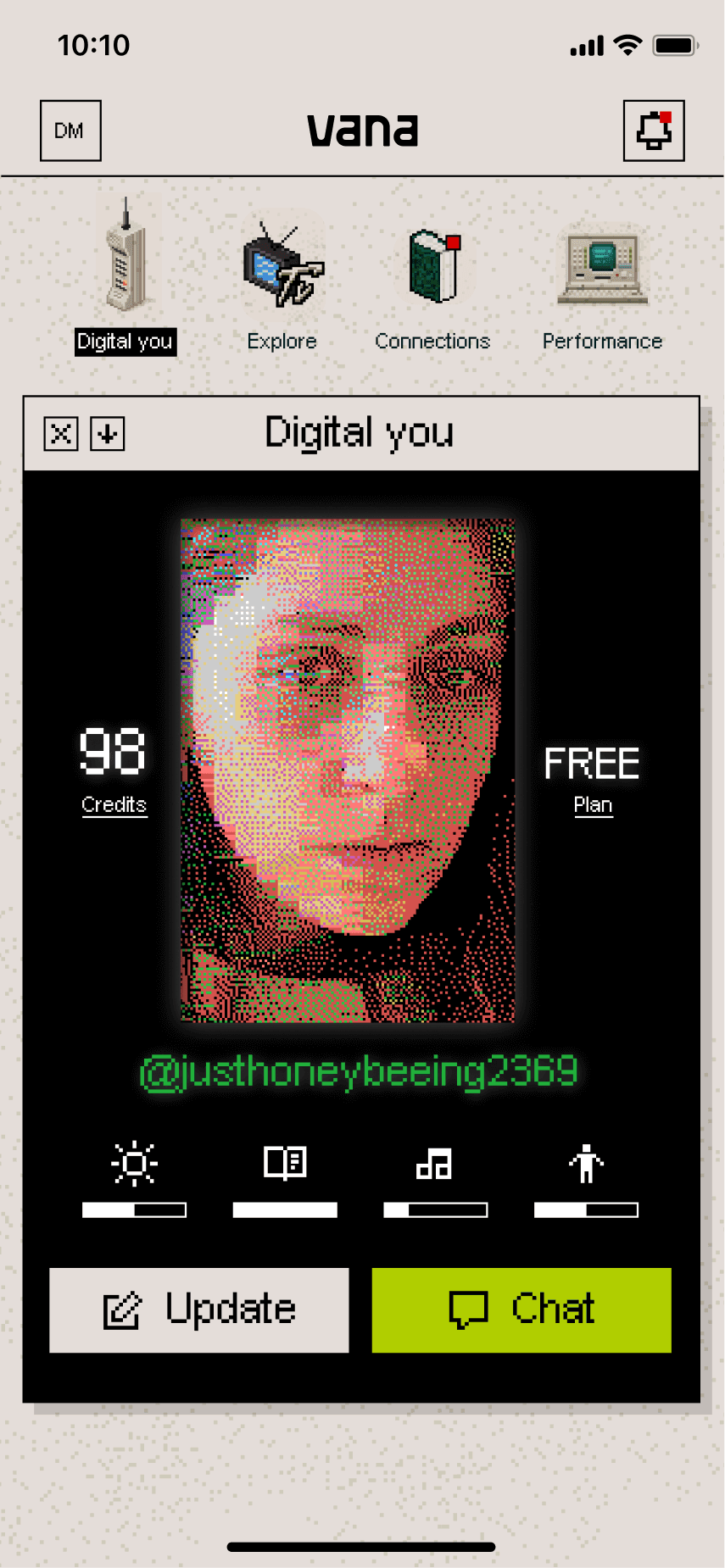
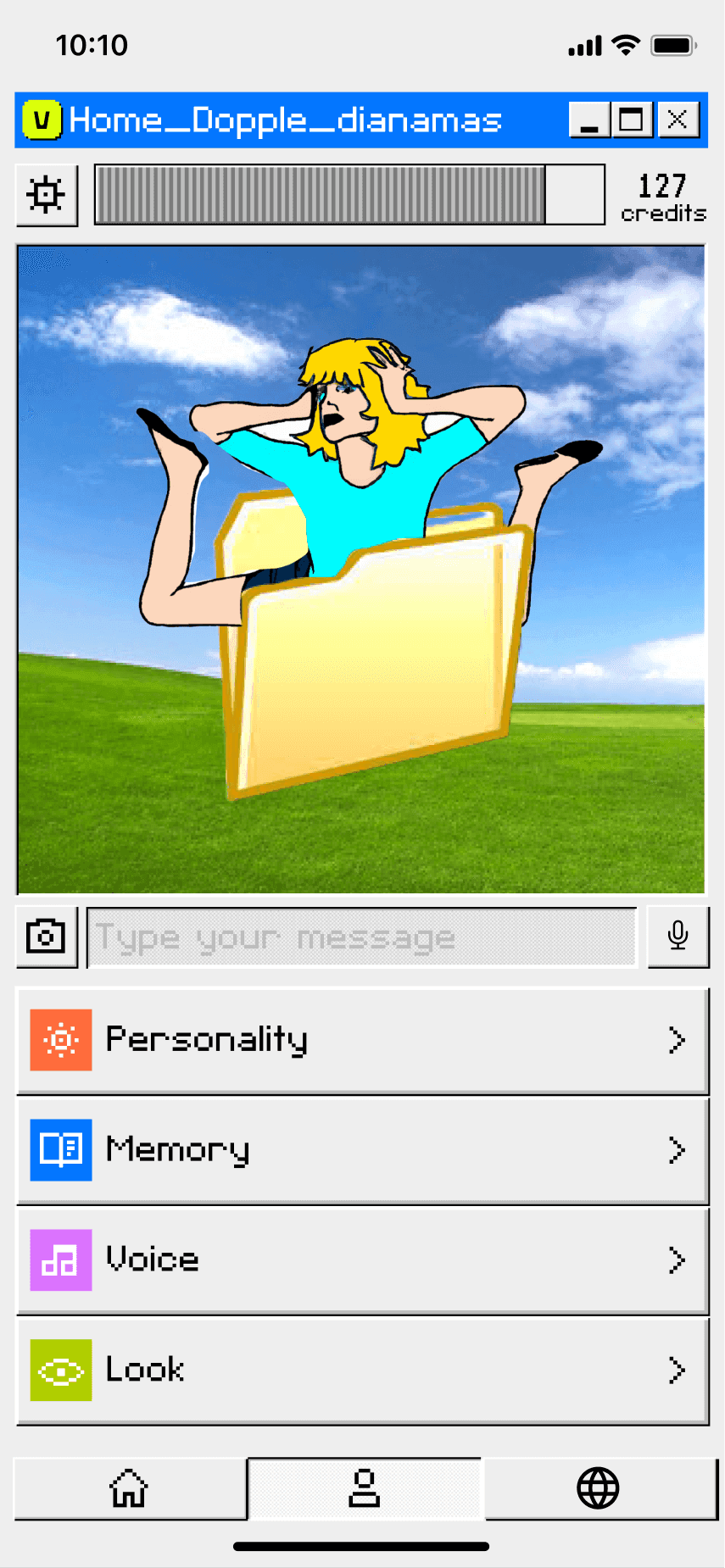
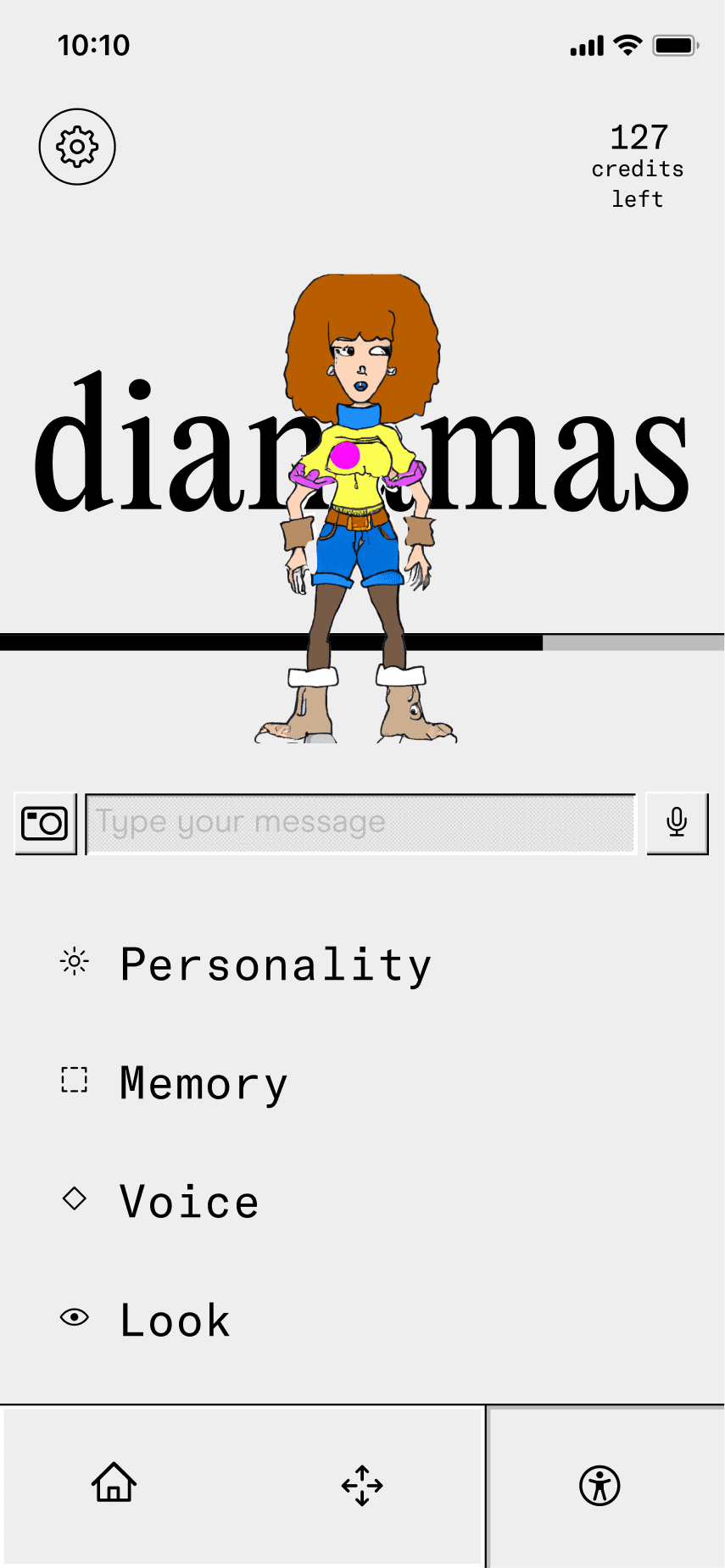
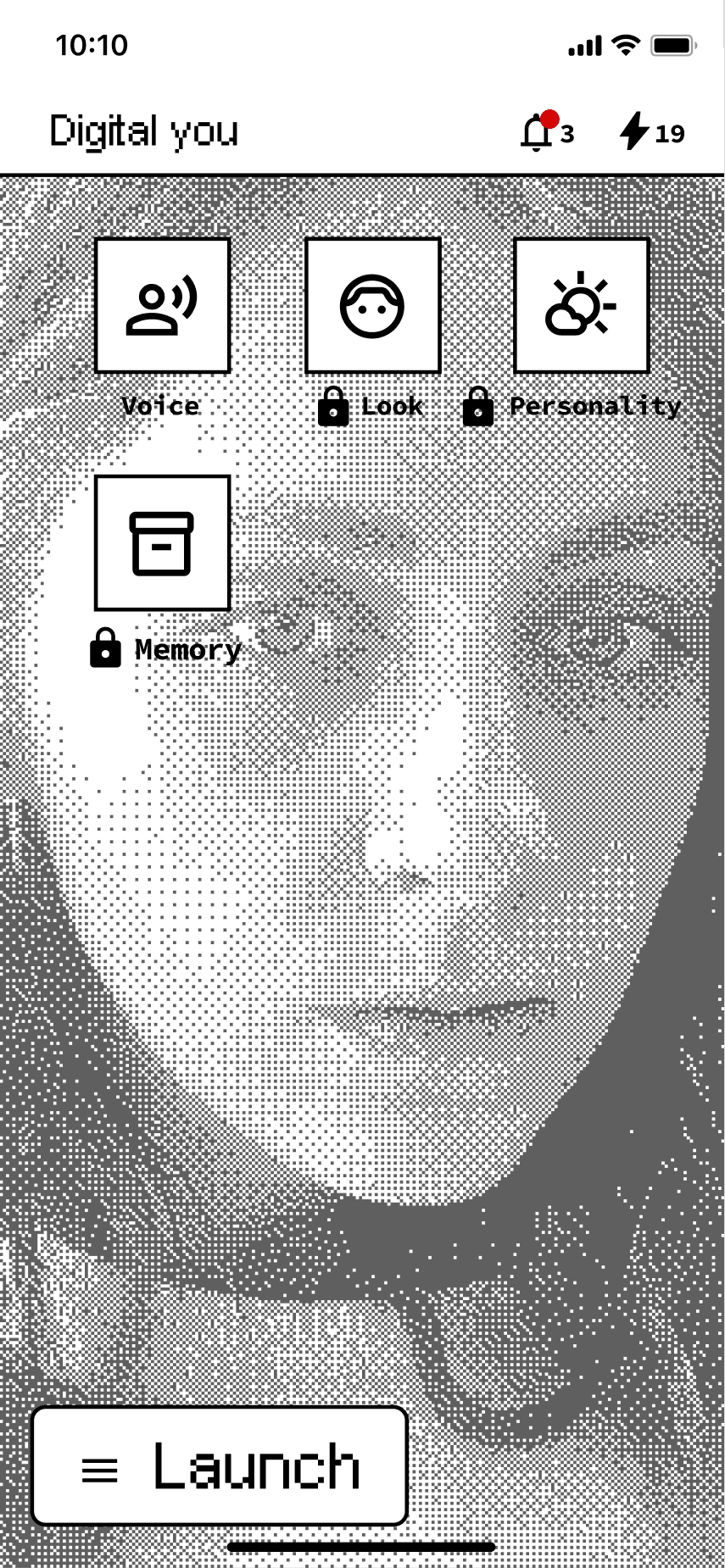
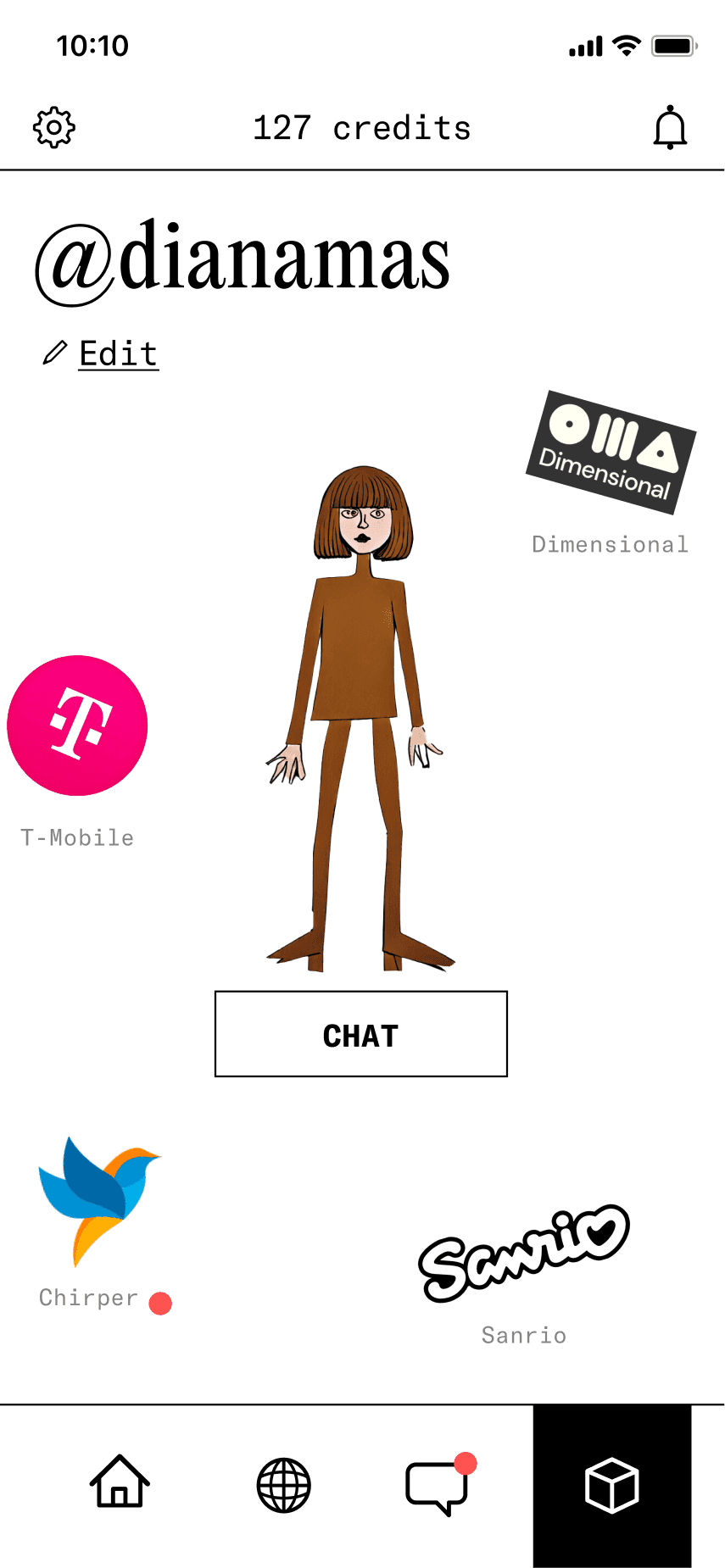
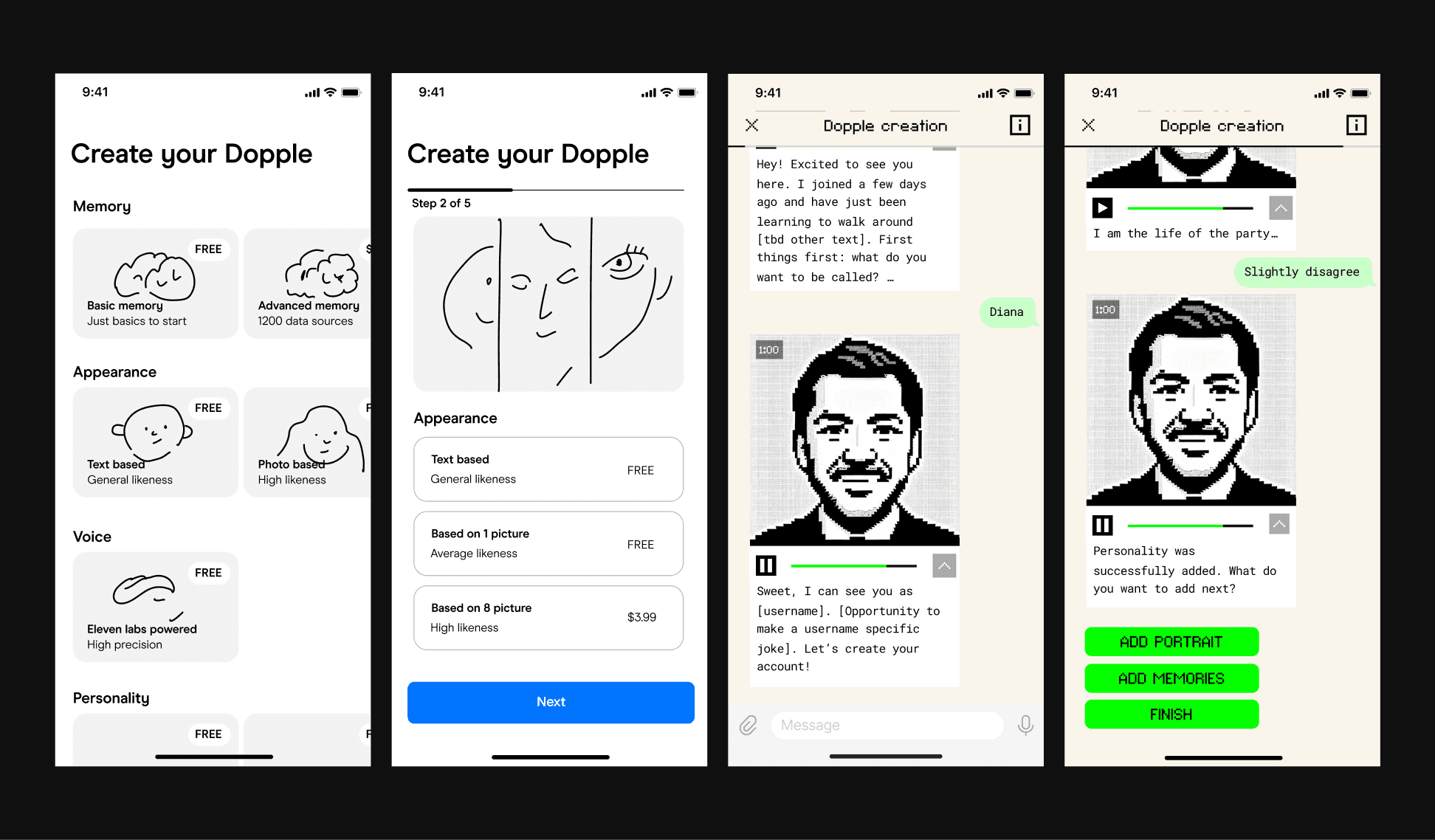
Our team dedicated considerable time to crafting a unique visual identity for our app, opting for a simple, low-technology aesthetic. We aimed to convey the feeling of a living entity residing within the user's phone. The app's design was anchored by the procedurally generated image of the user's avatar, requiring a user interface that seamlessly aligned with our engineering possibilities.
Onboarding research
Building your digital persona, gotchi is the key to unlock all of the other experiences. (You can't chat with your gotchi if you don't have your gotchi). We wanted to move away from the classic form-filling onboarding process as far as possible, to make the whole process more fun. While we tried multiple concepts, including a constructor-type of experience and a chatbot-type of onboarding, a linear, gamified chat-based process stood out the most for us.
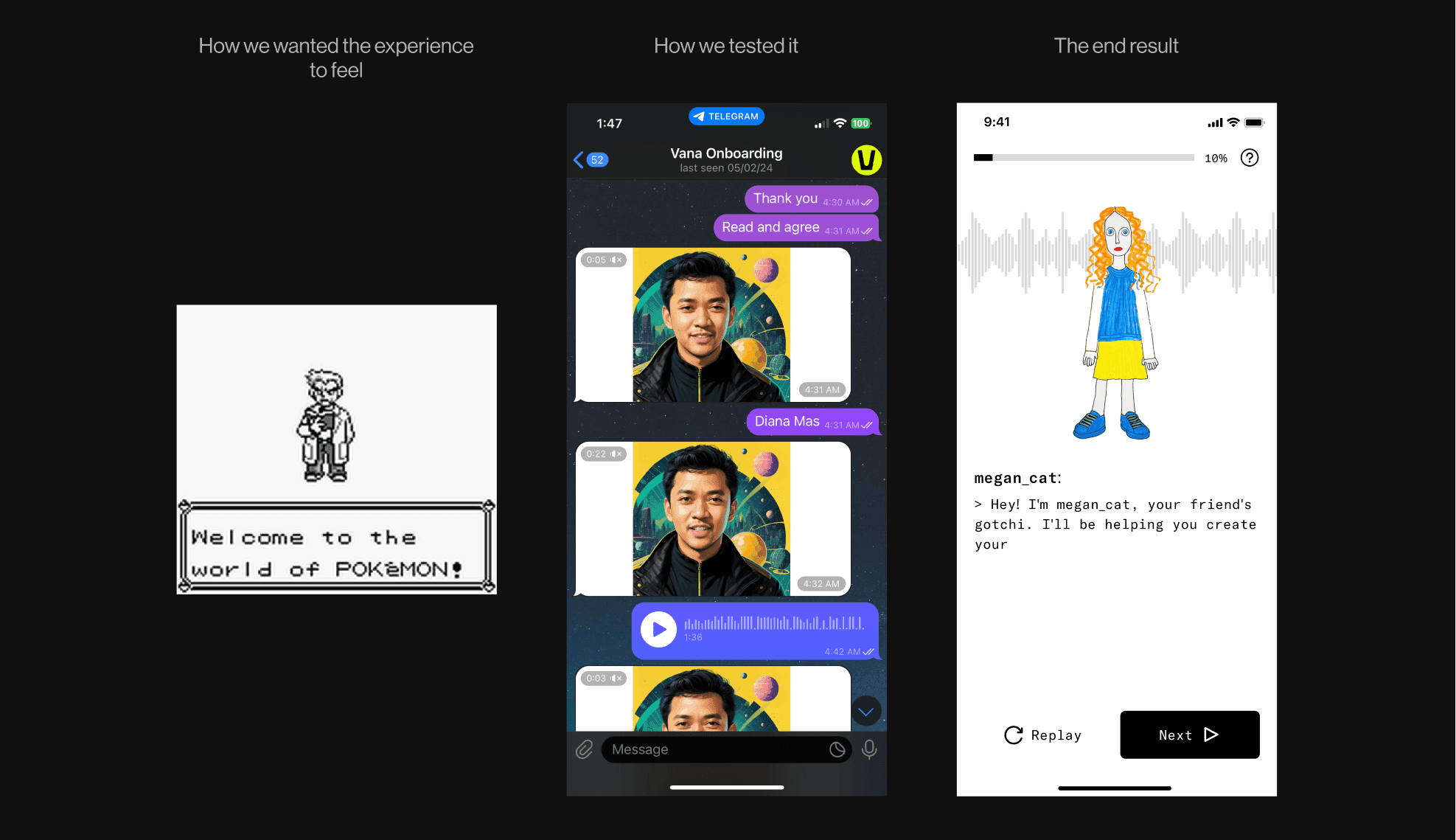
To explore the effectiveness of our onboarding strategy, we conducted a simulated session on Telegram, using one of our founders as an animated guide. This method allowed our support team to handle backend processes manually, offering a realistic experience. Testers were notably impressed and actively engaged in the process of creating their digital personas.
Onboarding flow
In our final onboarding designs, we incorporated the successful techniques from our tests. A special guide greets each new user, their friend's gotchi, which makes the process both unique and personal. We enhanced engagement by linking onboarding steps with delightful mini revelations.
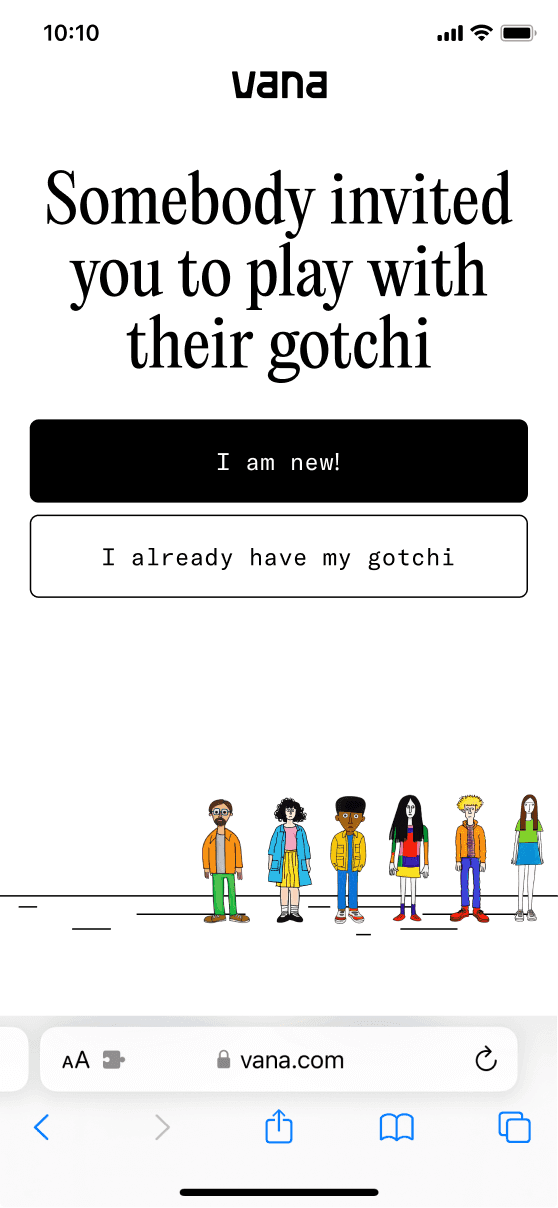
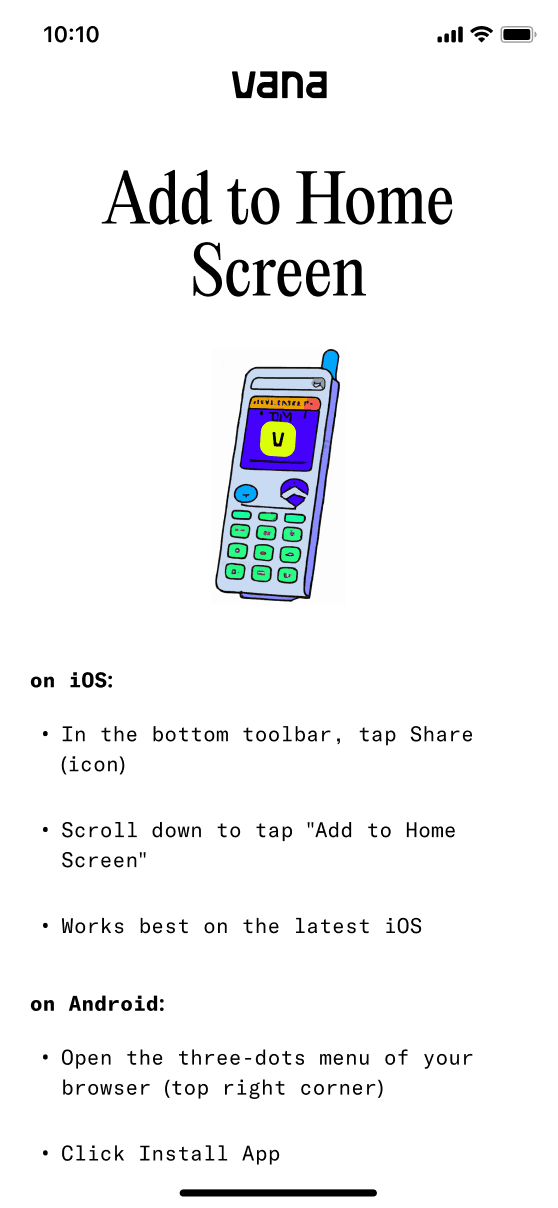
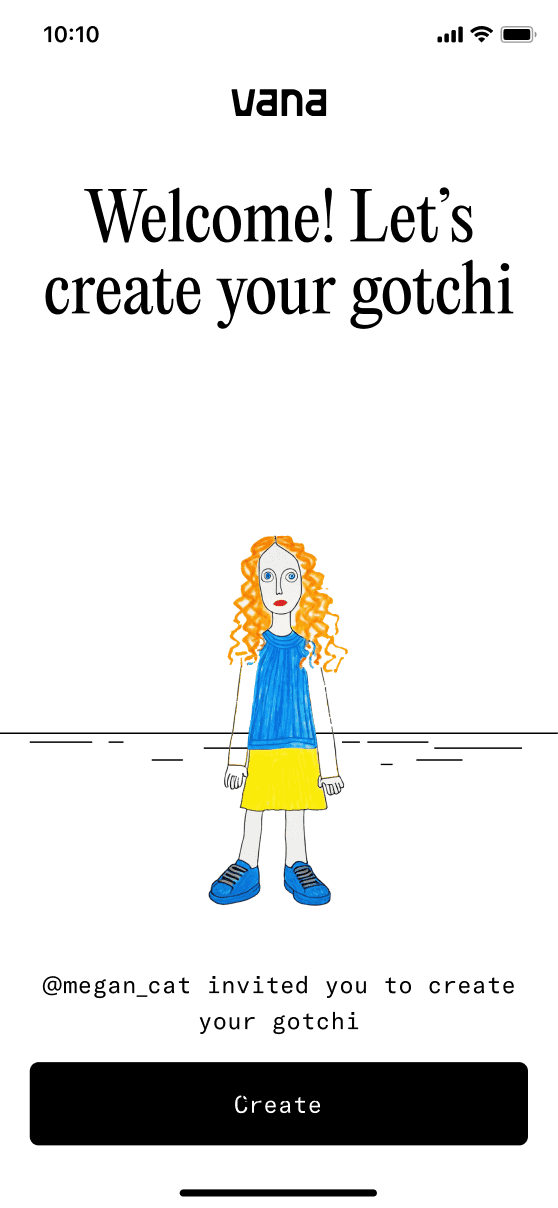
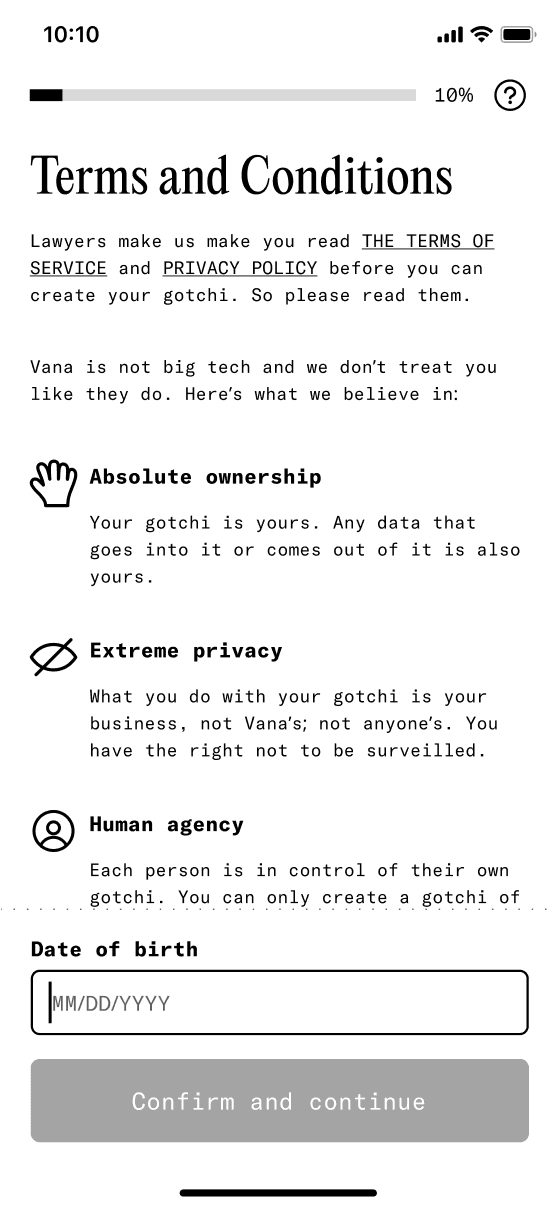
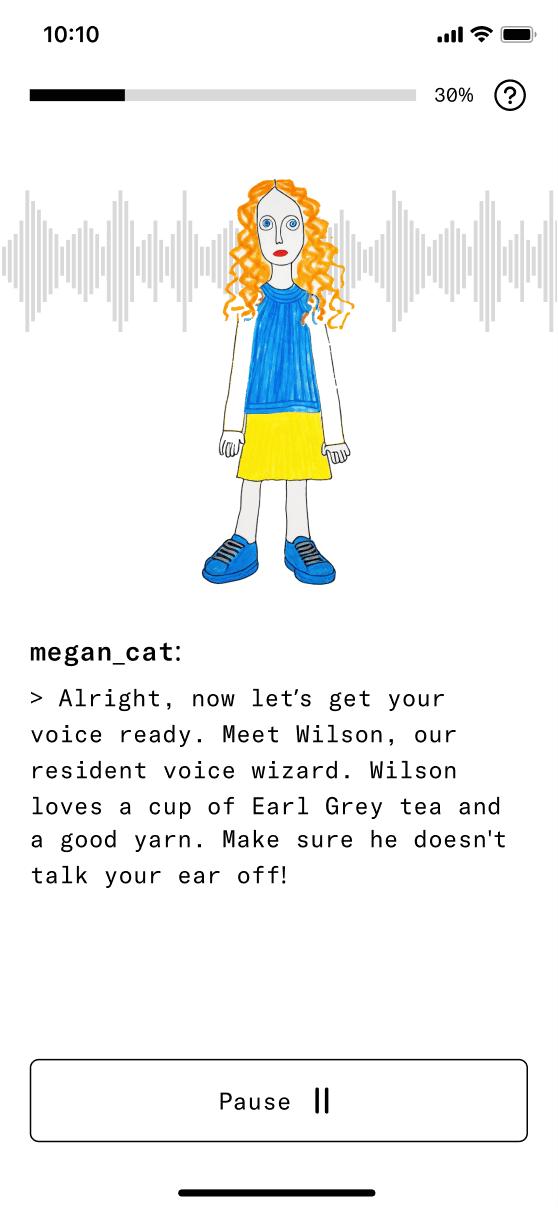
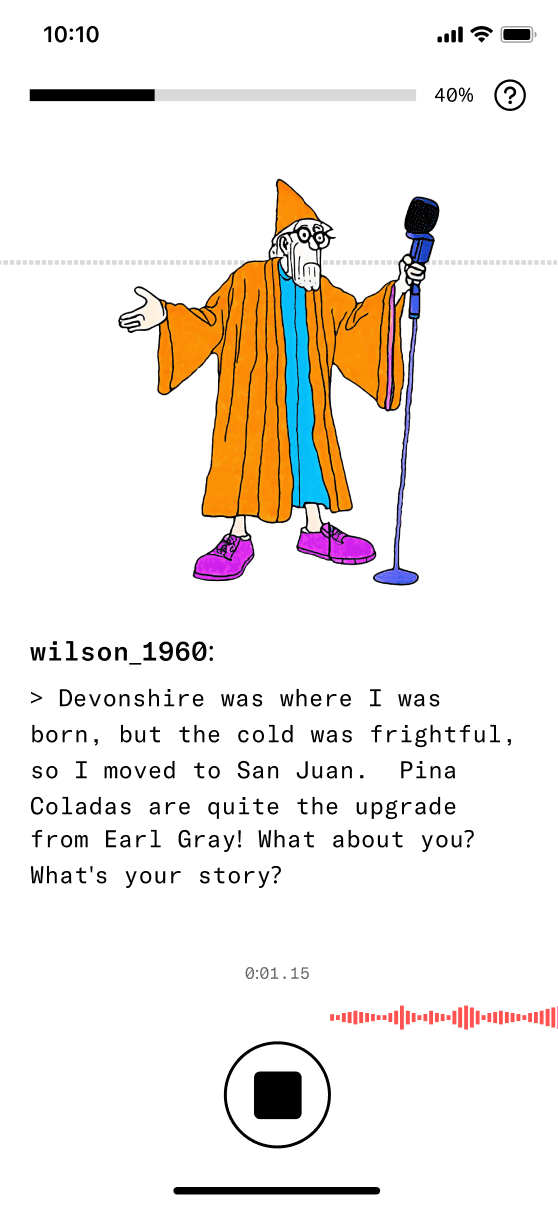
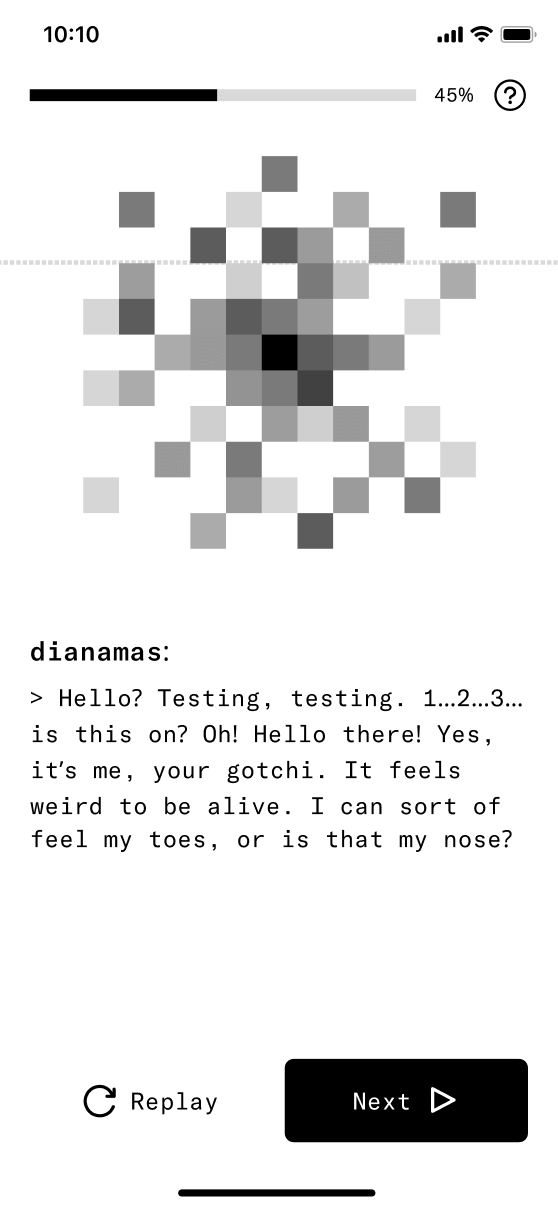
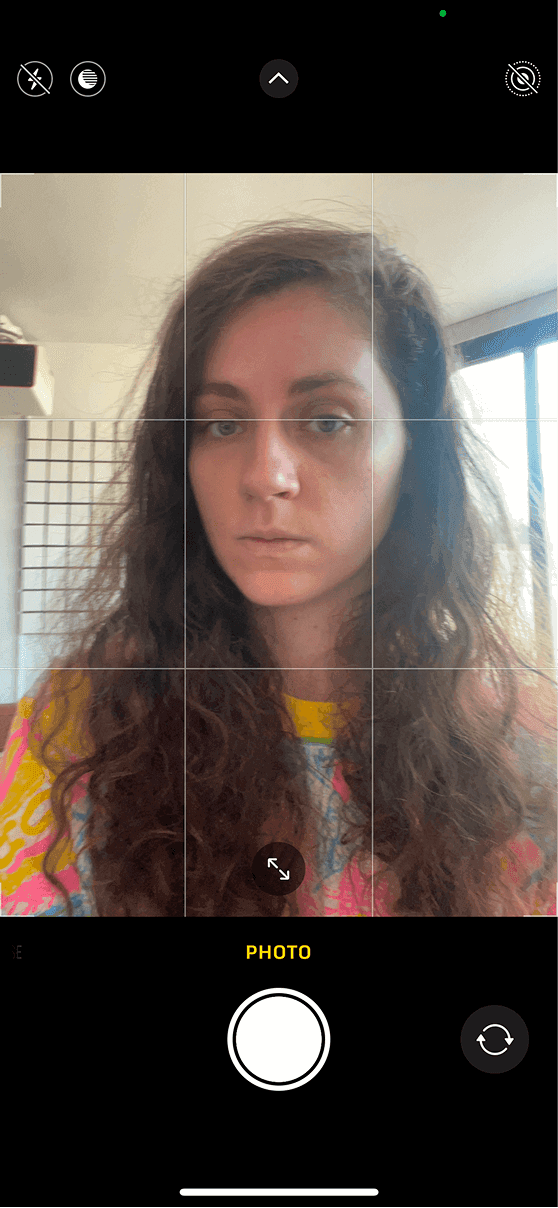
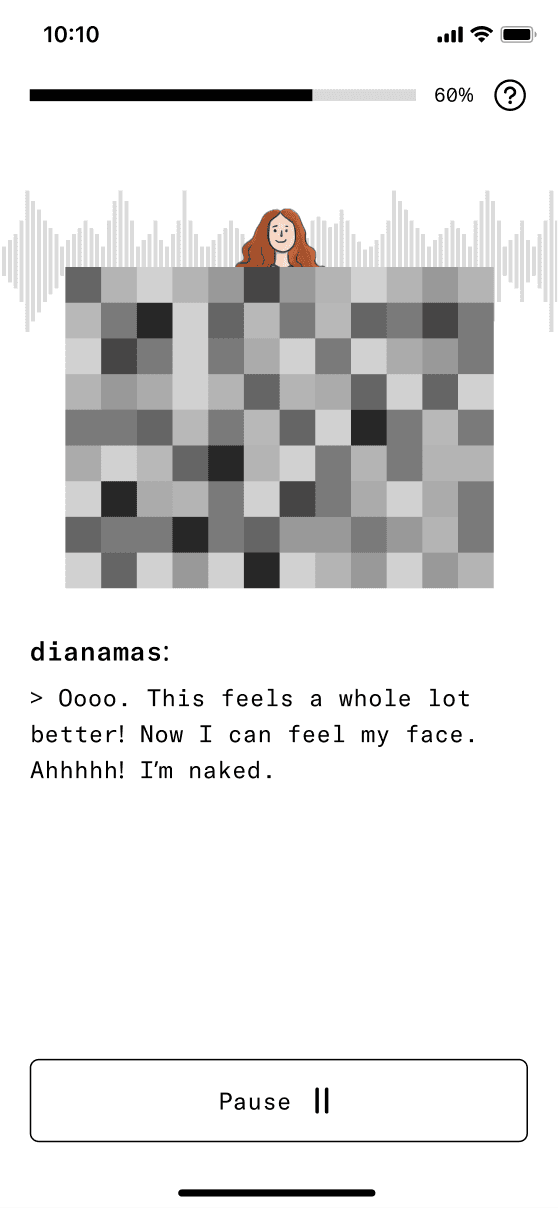
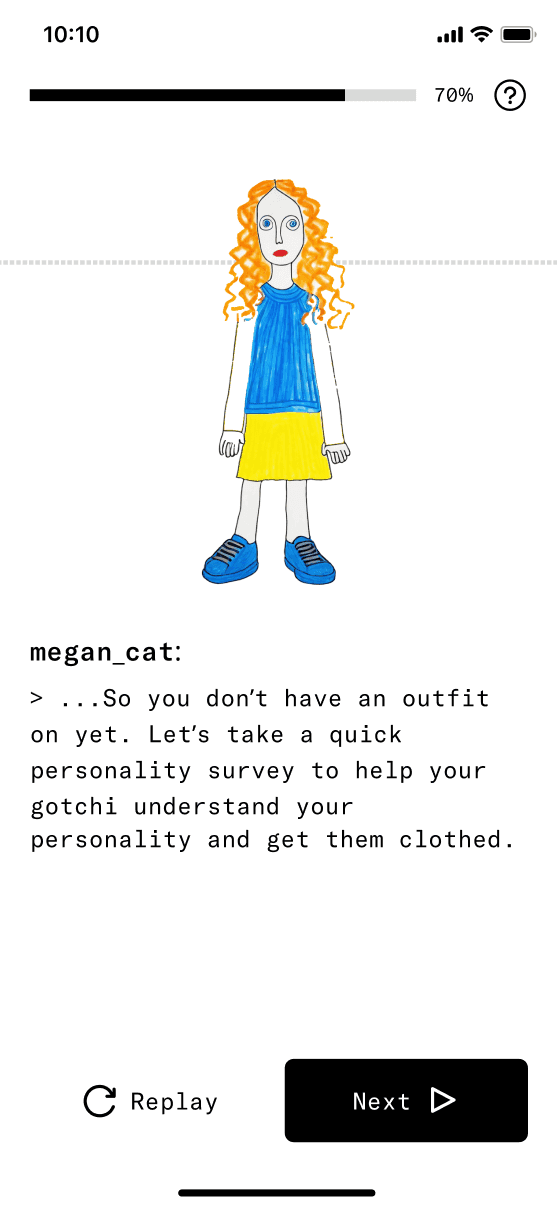
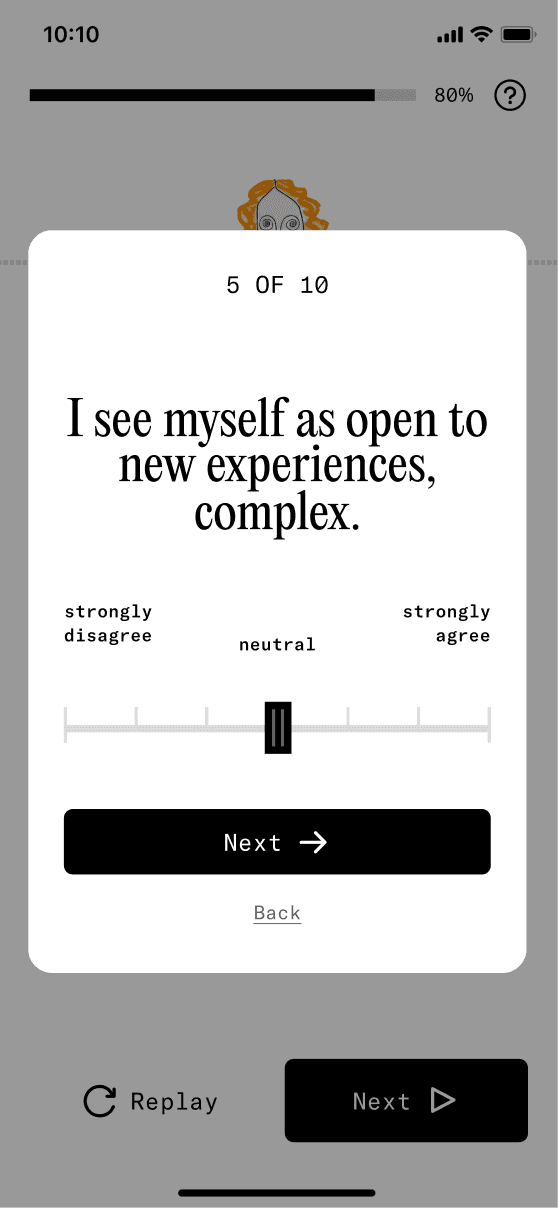
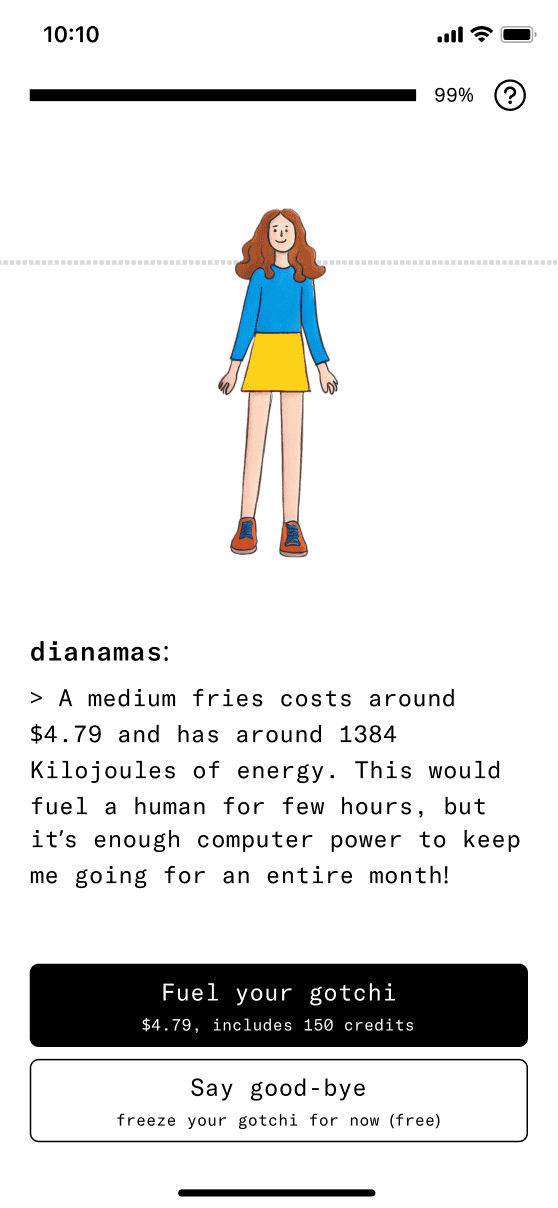
Image cloning
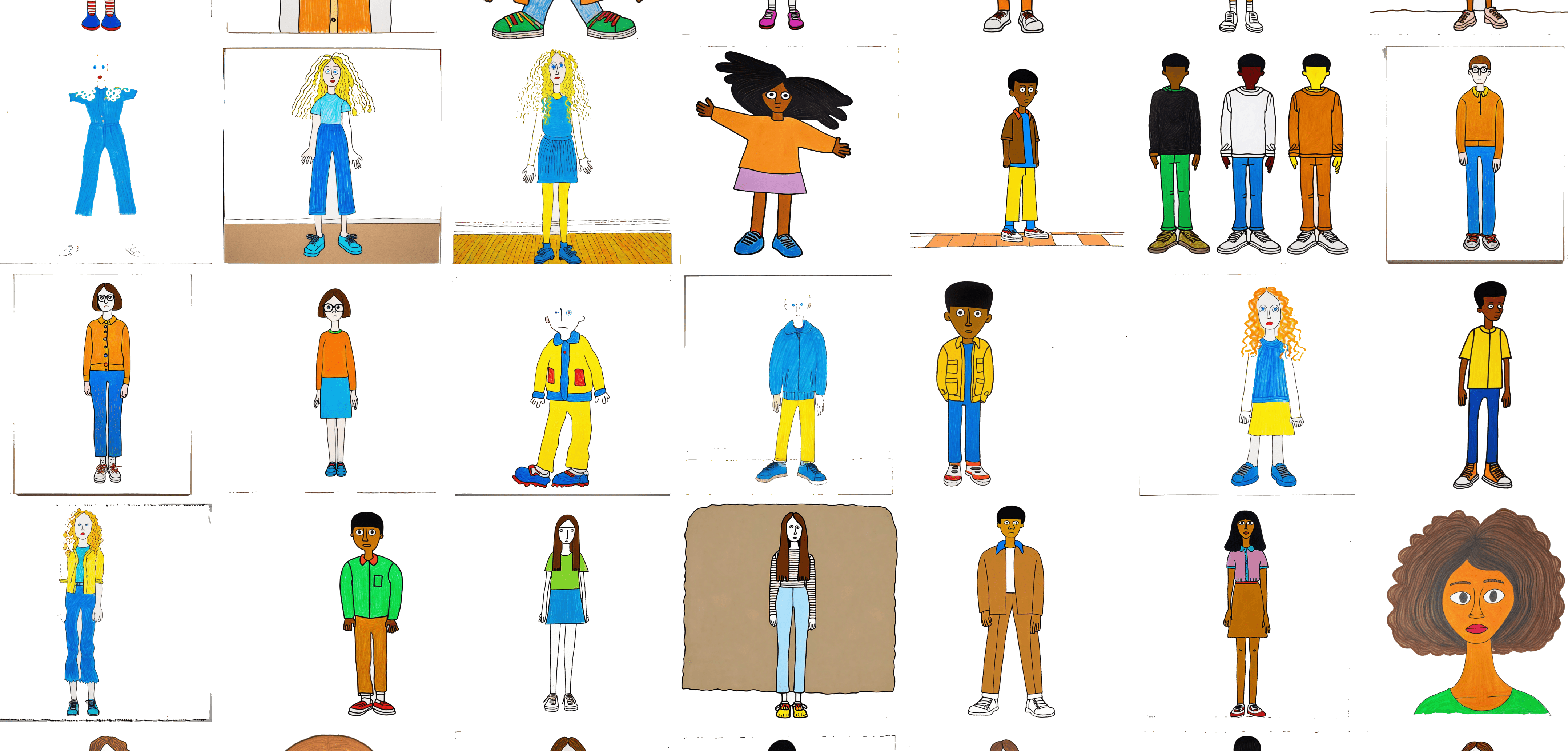
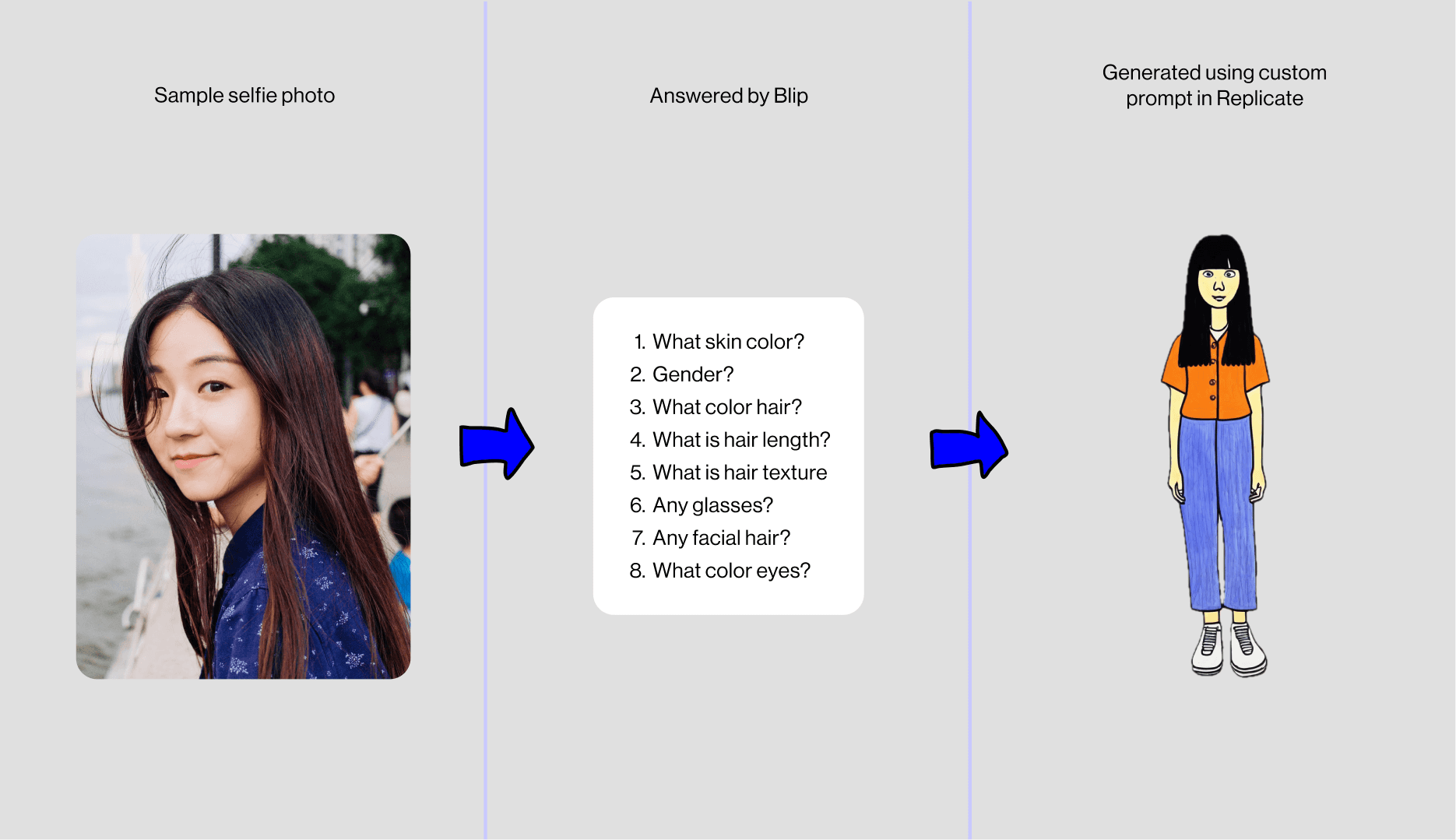
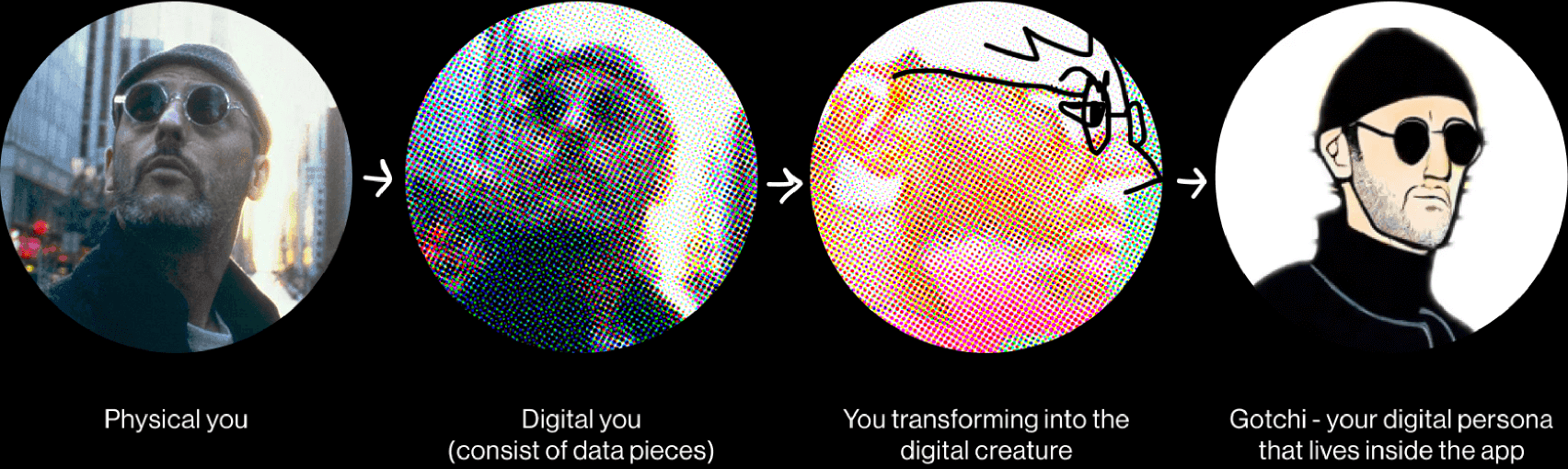
Aiming to give users a welcoming visual representation of their data, we considered using Face LoRAs, known for their quality but also their high cost and lengthy production time. To optimize resources without compromising user engagement, I managed the creation and testing of a new algorithm that efficiently transformed user photos into digital creatures resembling them within seconds. We involved top users from a previous application to test the new visuals, evaluating their likeness and overall satisfaction. Ultimately, maintaining consistency and supporting diversity in these visuals became our primary focus.
Branding
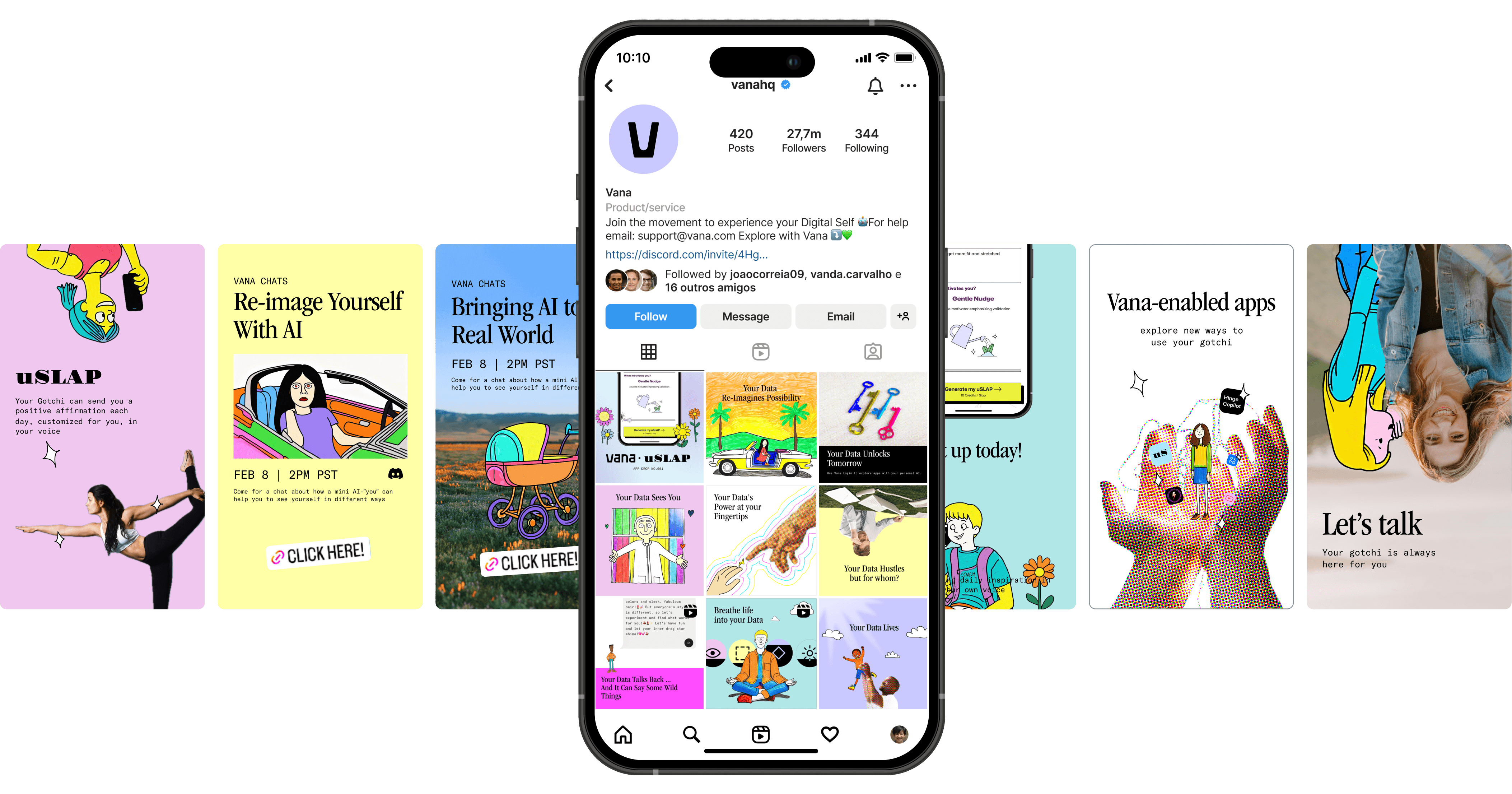
Drawing from our product vision, audience insights, strategic positioning and marketing team needs, I initiated the branding for our project, aiming to infuse our content with fun, warmth, and ease. Our limited budget and small team size necessitated the creative use of stock assets, which we adapted in a playful and subtle manner. This approach led to a new branding that was warmly received by both our users and team members, enhancing the application’s overall appeal.
Activation engine
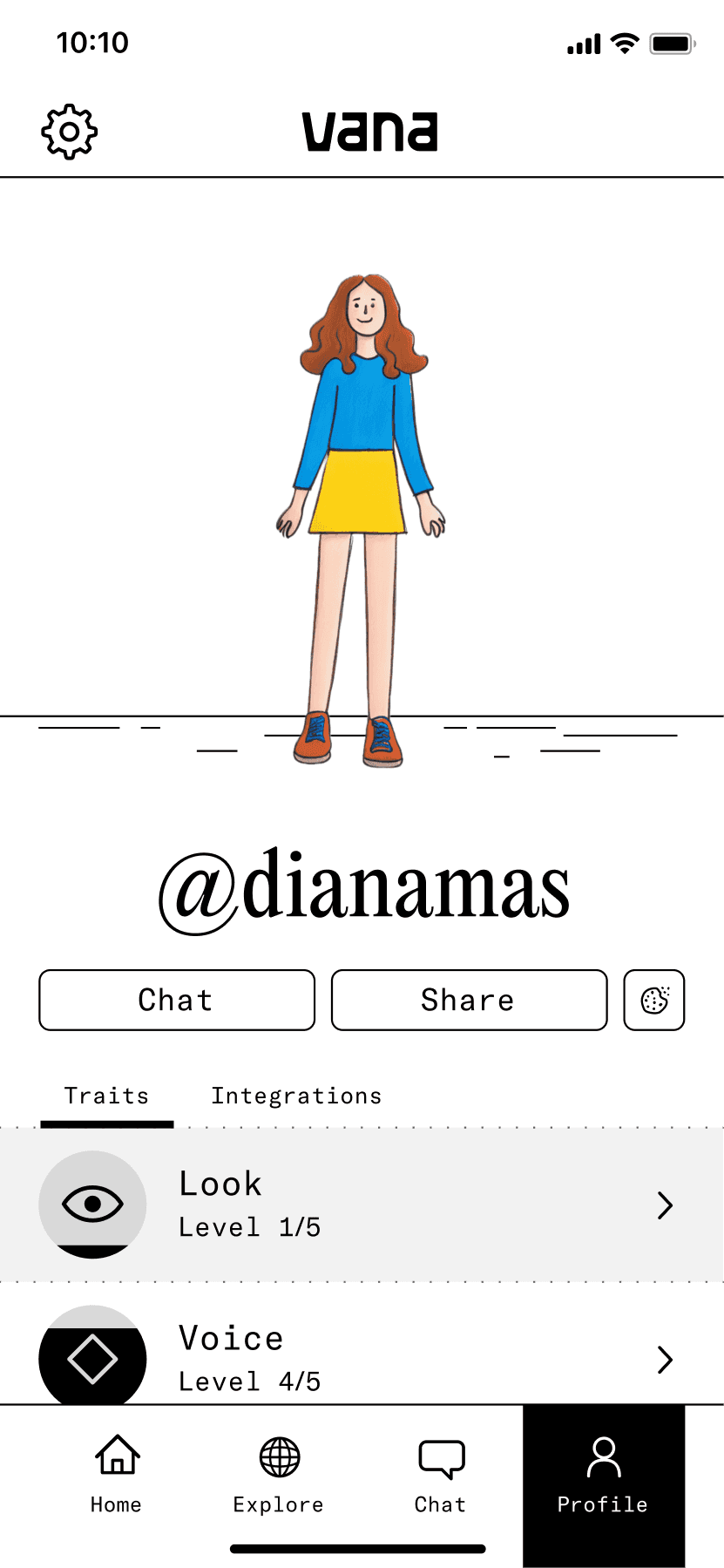
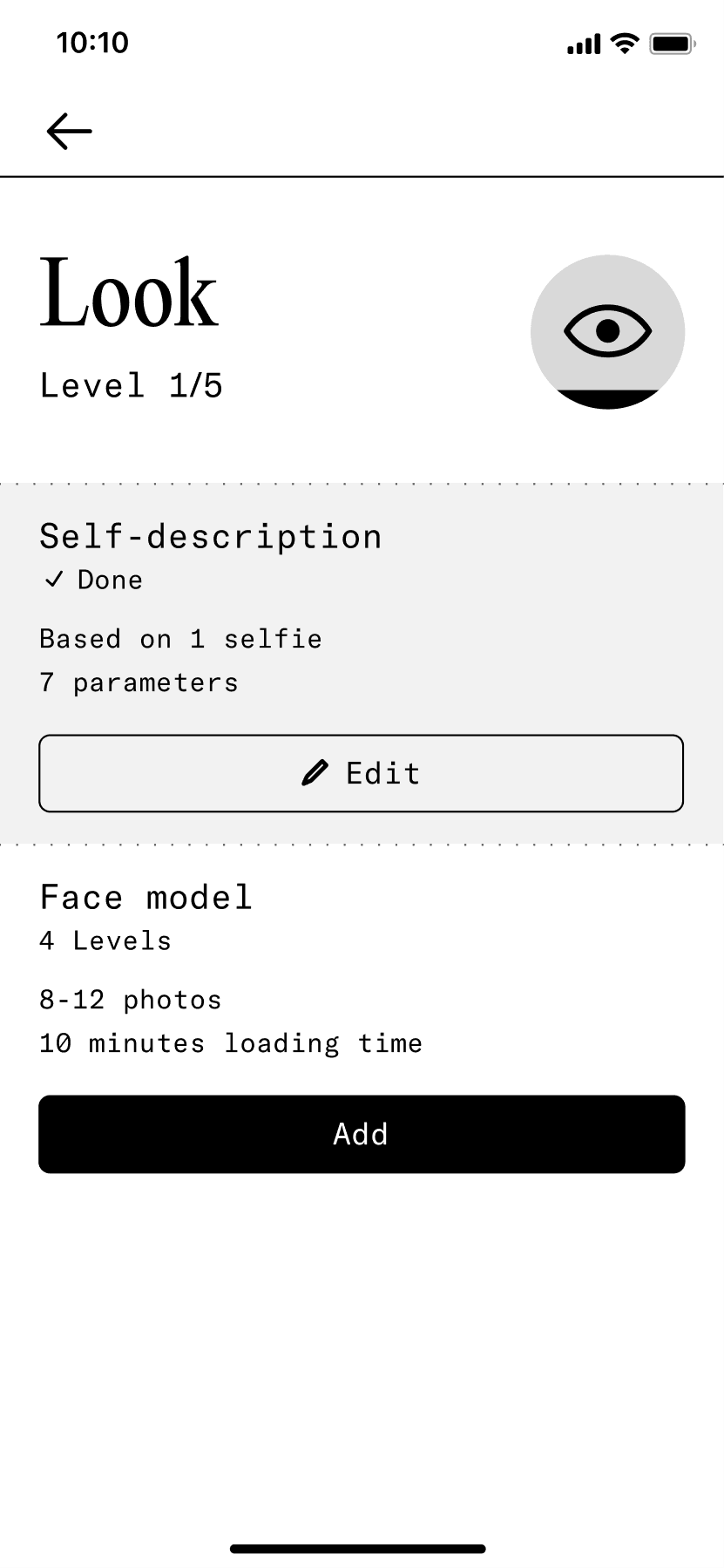
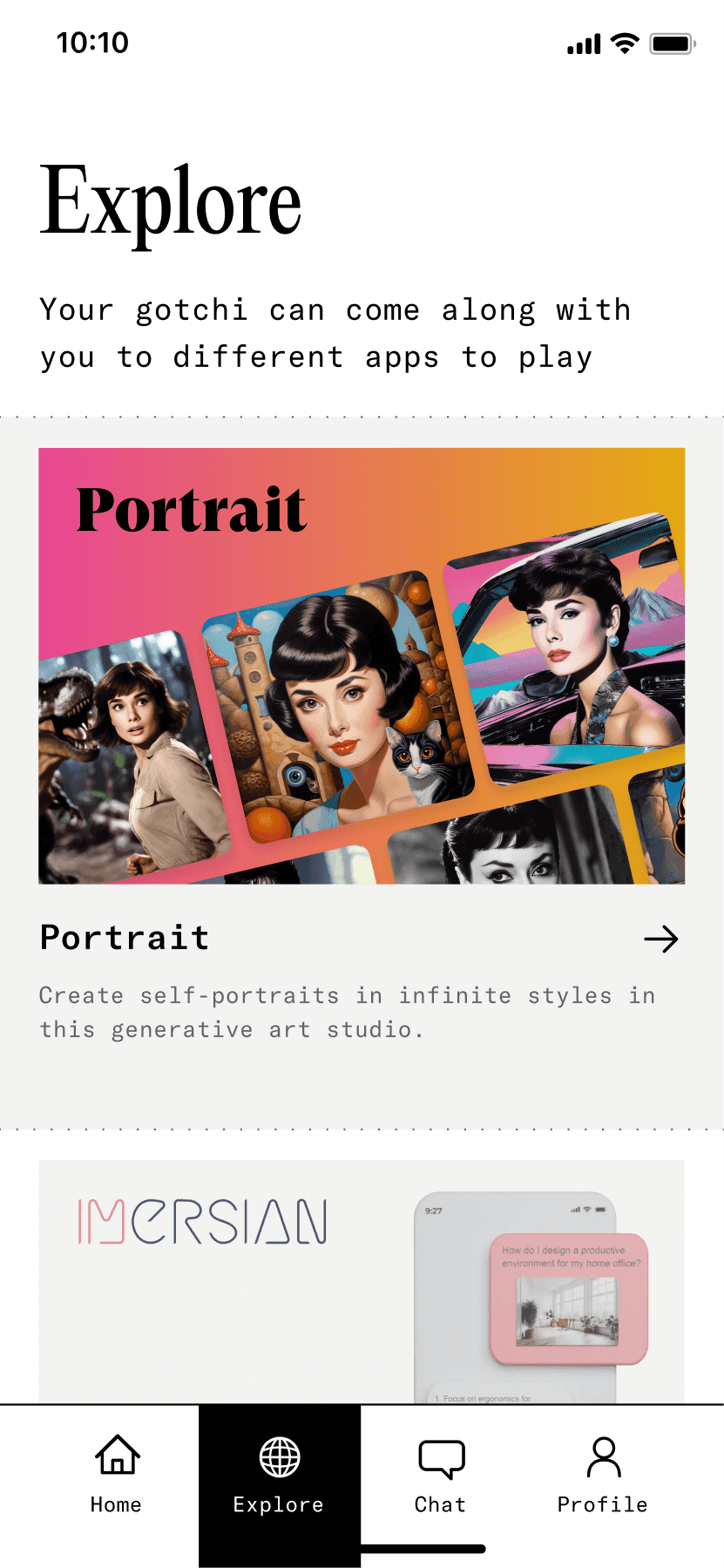
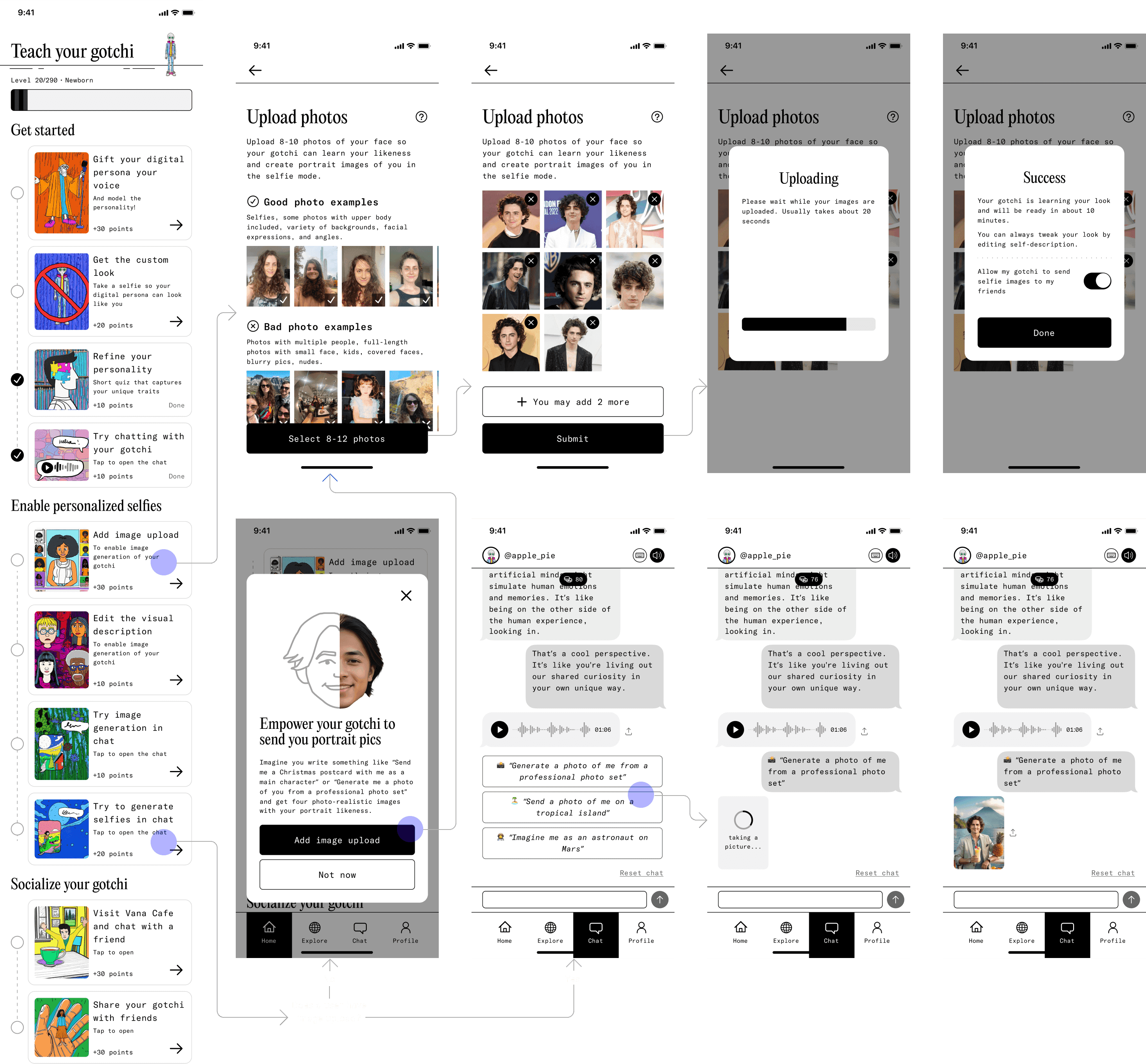
Once onboarding was complete, the home experience acted as a hub for growth. Instead of presenting static settings, we structured the home as a living dashboard showing the Gotchi’s traits and levels. Uploading additional data felt like feeding and strengthening the character. We also introduced integrations, allowing users to connect third-party accounts. This clarified the purpose of data portability and positioned Vana as infrastructure rather than just an app.
Chat experience
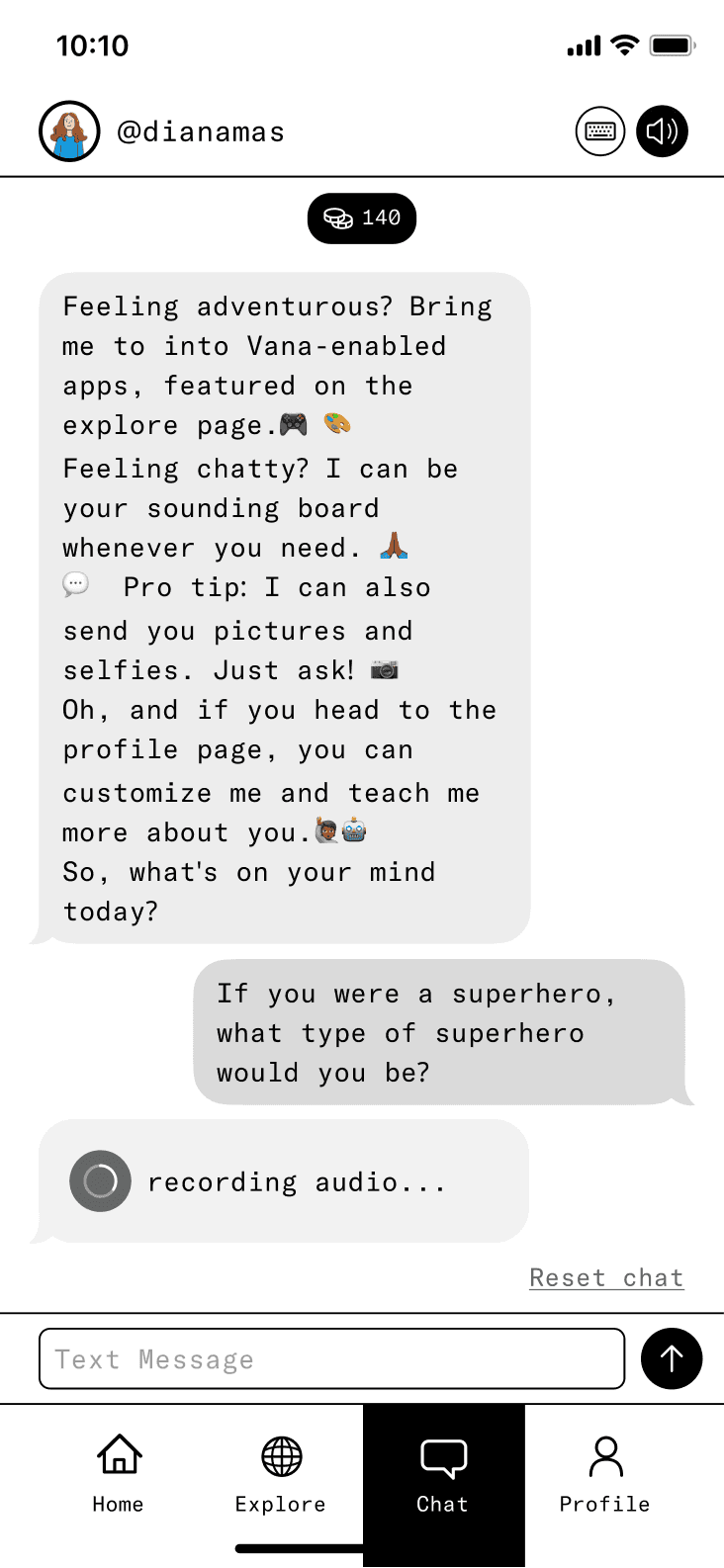
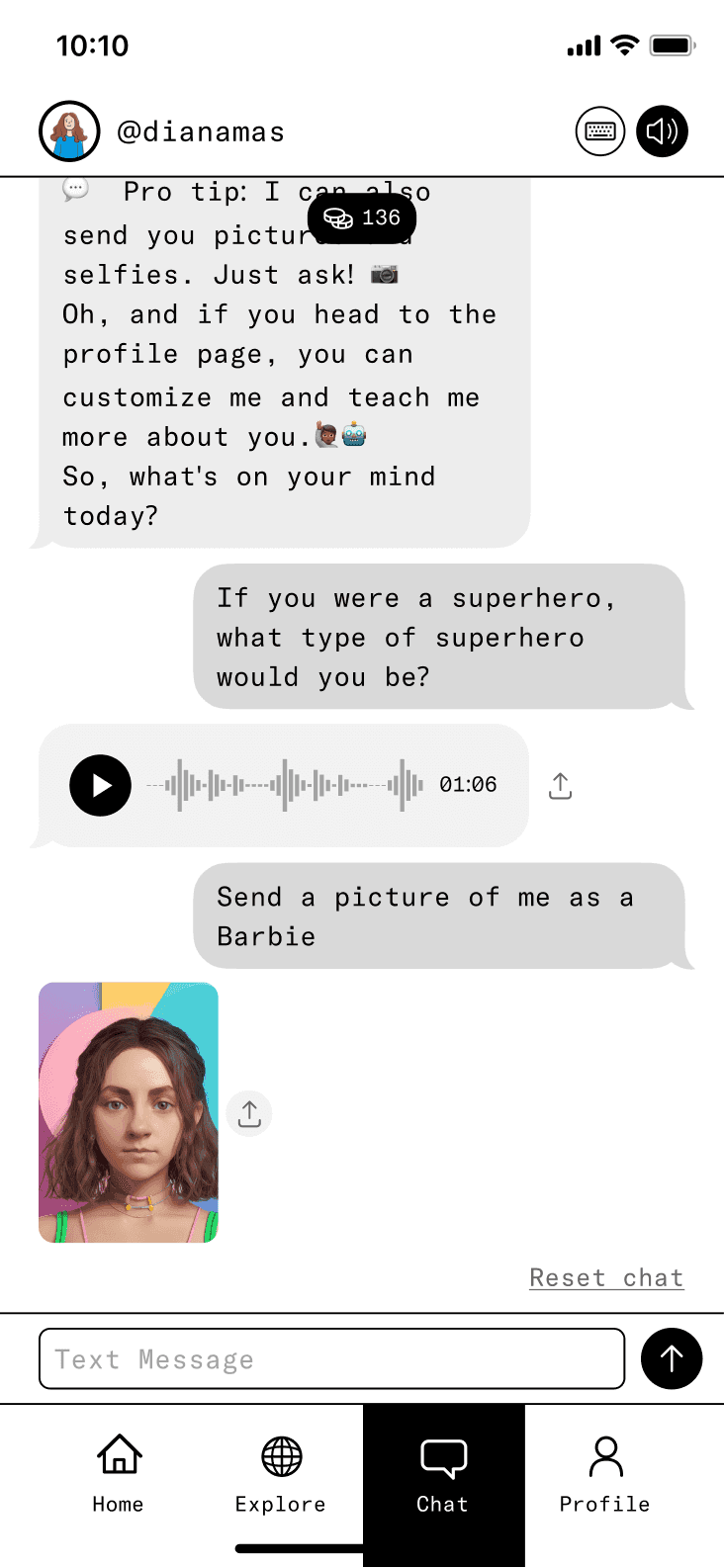
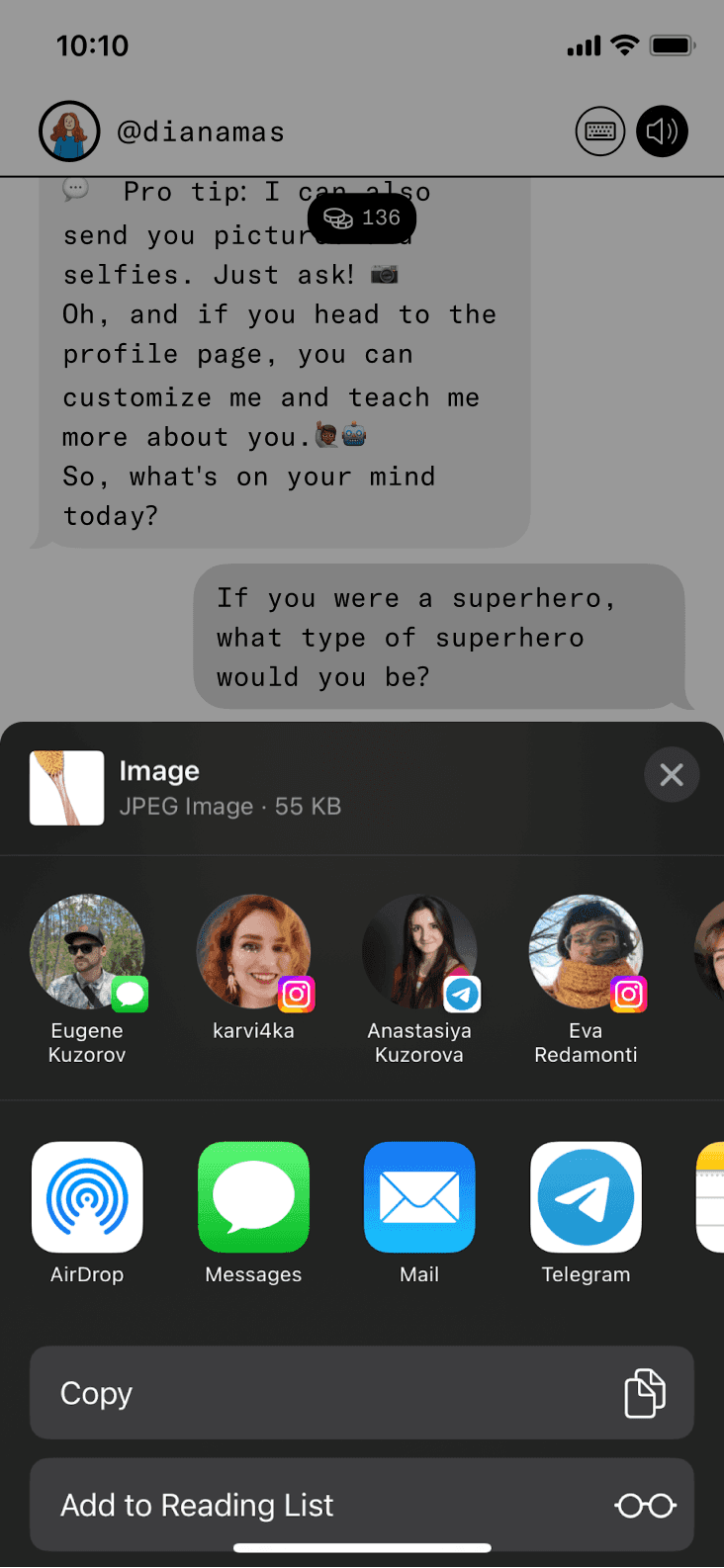
Chat was a critical component of our app, demanding flawless execution. We aimed to captivate users by making their default voice the primary mode of communication, with the option to switch to text to prevent monotony from constant voice messages. Additionally, our chat feature enabled the creation of multimedia content via natural-language commands. We clearly indicated the type of content being generated, which testing confirmed improved clarity and made content loading more tolerable. Furthermore, to enhance virality, we strategically placed a share button to facilitate easy content sharing.
Learnings
Initial conversion to free trials during onboarding was only 11%. I ran remote testing across the full journey from the website into the app and identified two main issues: length and unclear purpose. We streamlined the flow, made steps optional, and introduced a simple character progression system. To surface underused features, we also turned the home screen into a playful teaching space with shortcuts and a shared progress bar, helping users understand the value of uploading their data.
Third-party onboarding
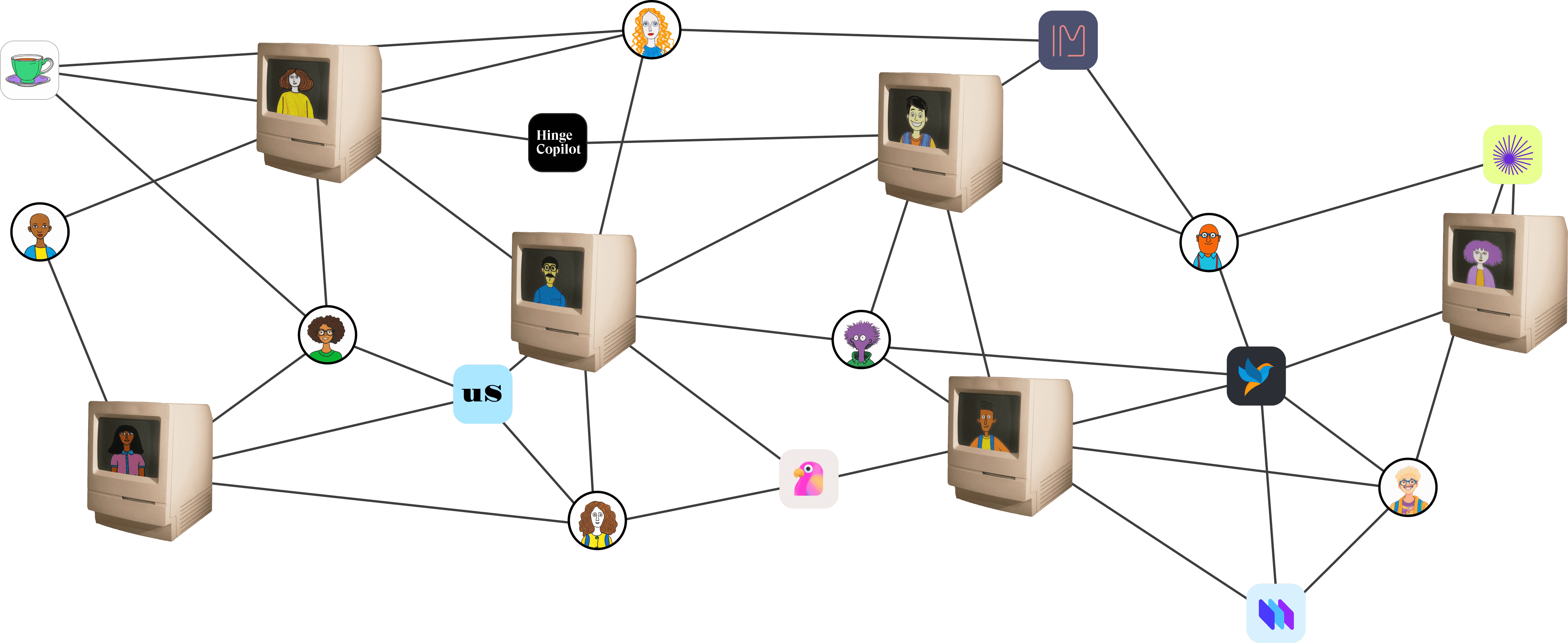
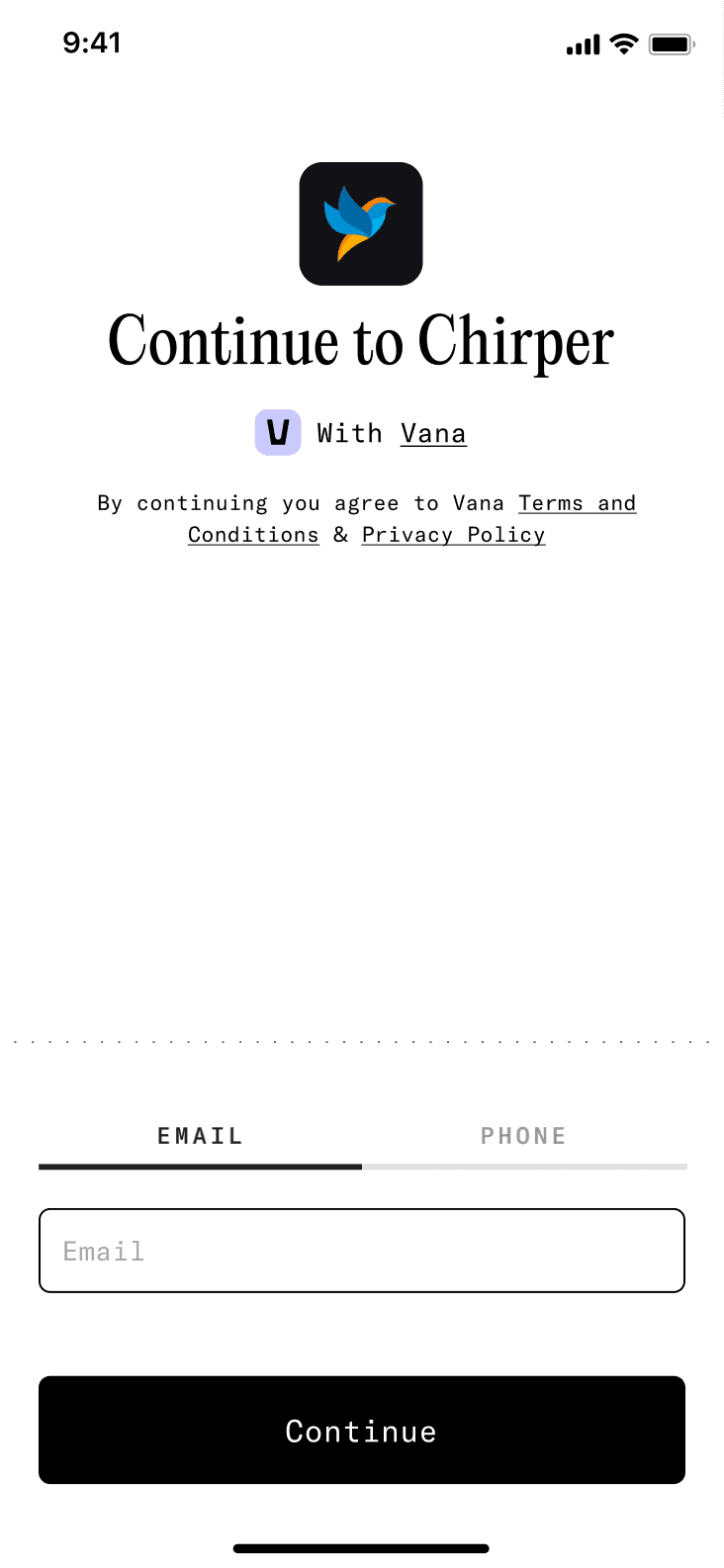
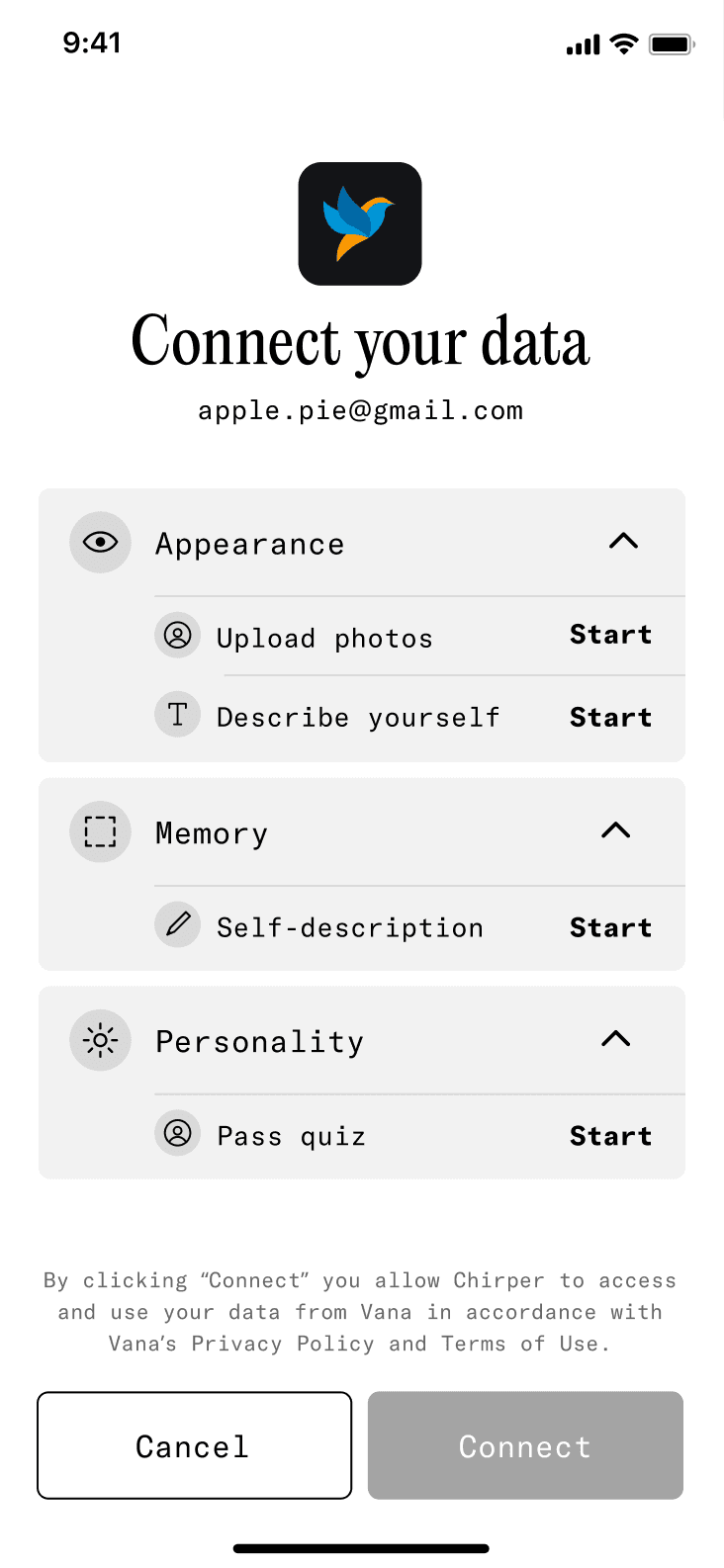
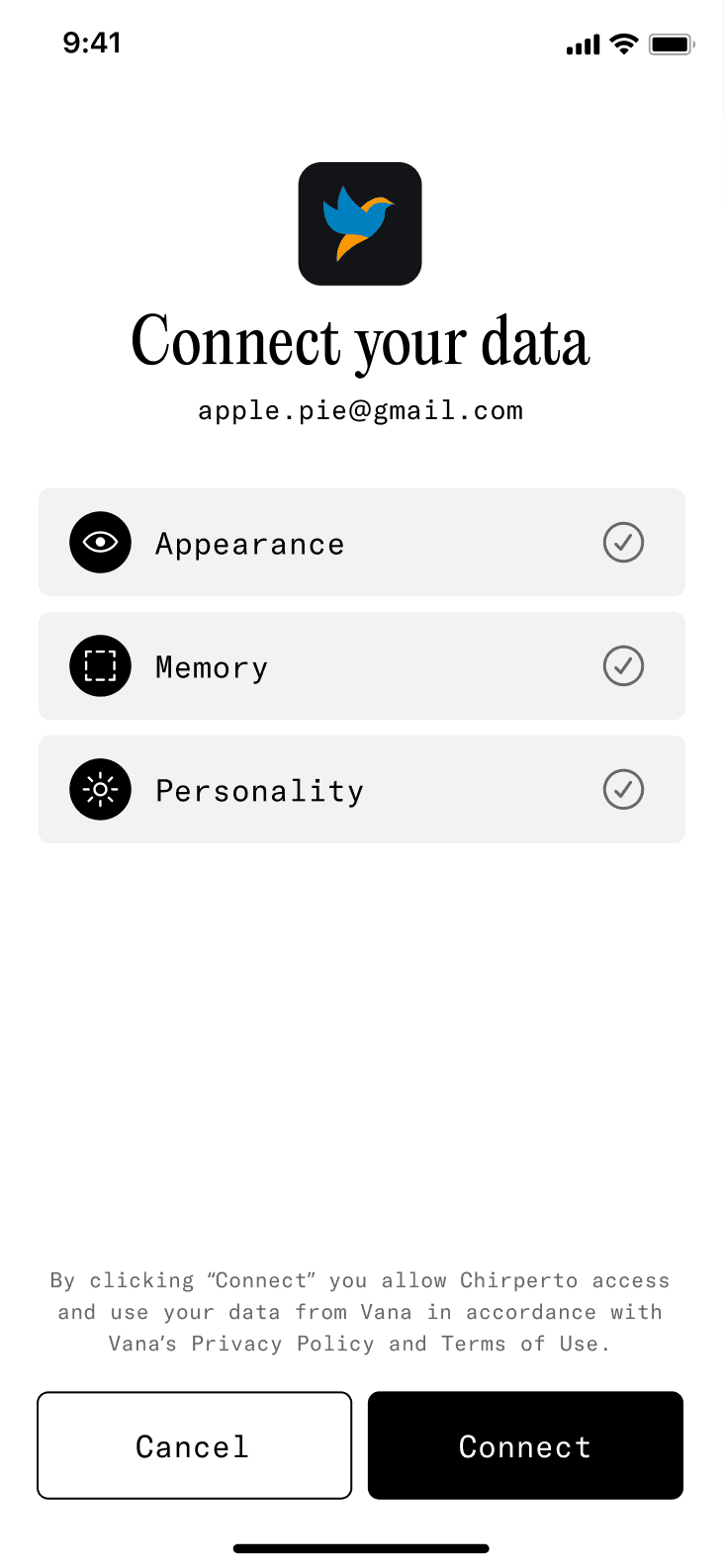
To strengthen Vana’s positioning as infrastructure, we enabled third-party platforms to onboard users directly into Vana’s ecosystem. This not only accelerated activation but clarified the product’s long-term vision of portability and ownership.
Impact
Framing data upload as identity building changed how people experienced the product. Onboarding felt less like a task and more like creating something personal. Engagement increased, more users completed their uploads, and the product's purpose became clearer along the way. Instead of interacting with abstract infrastructure, people felt connected to a character they were shaping, which made the entire system feel human and real.
Reflections
Strong visuals can attract attention, but they cannot replace a clear value proposition. This project reinforced that the product's purpose must be obvious from the very first touchpoint, especially on the landing and onboarding screens. When users understand what they are building and why it matters, they move forward with more confidence.
The app's core functionalities should be the main reason for its spread, not just the mechanics of how it’s shared. A strong focus on achieving a high Net Promoter Score before implementing virality features is crucial.
For future endeavors, I aim to make more determined design choices and maintain a lean product approach. With a small team and limited QA capabilities, simplifying our processes to better manage and test features will be paramount.
These lessons continue to shape how I approach zero-to-one products: define the value clearly, build a strong core experience, and design with conviction.